Safari Baby Shower Food Ideas
Baby Shower · Food Guide
Safari Baby Shower Food Ideas
The safari food styling principle most hosts miss, five food table directions from neutral brunch to boho grazing table, genuine quantity planning numbers, and the stationery that makes the food table part of the designed world.
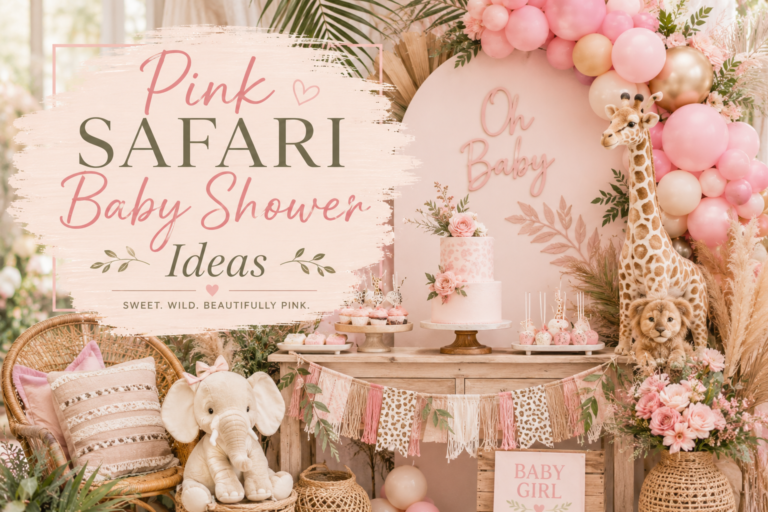
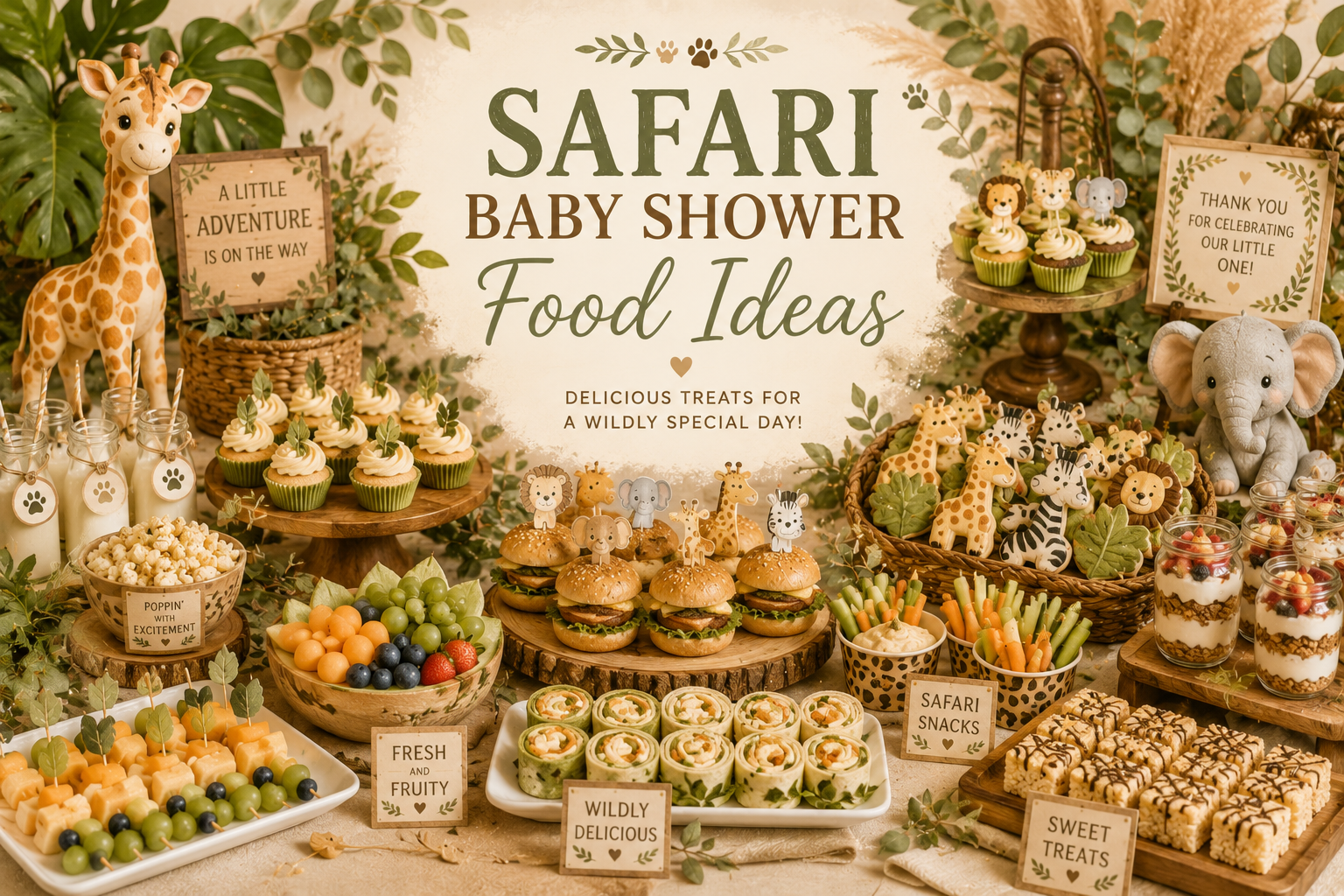
The safari baby shower food table is not a catering decision — it is a design decision. The most visited surface at any shower, the food table receives more guest attention than any other element in the room, and it reads as either part of the designed celebration or as a separate food service that happens to be happening in the same space. The difference between these two outcomes is not the quality of the food: it is the quality of the presentation. This guide covers how to make the safari food table read as part of the designed world, five specific food table directions matched to every safari aesthetic, and the practical planning numbers that make the abundance look real rather than calculated.
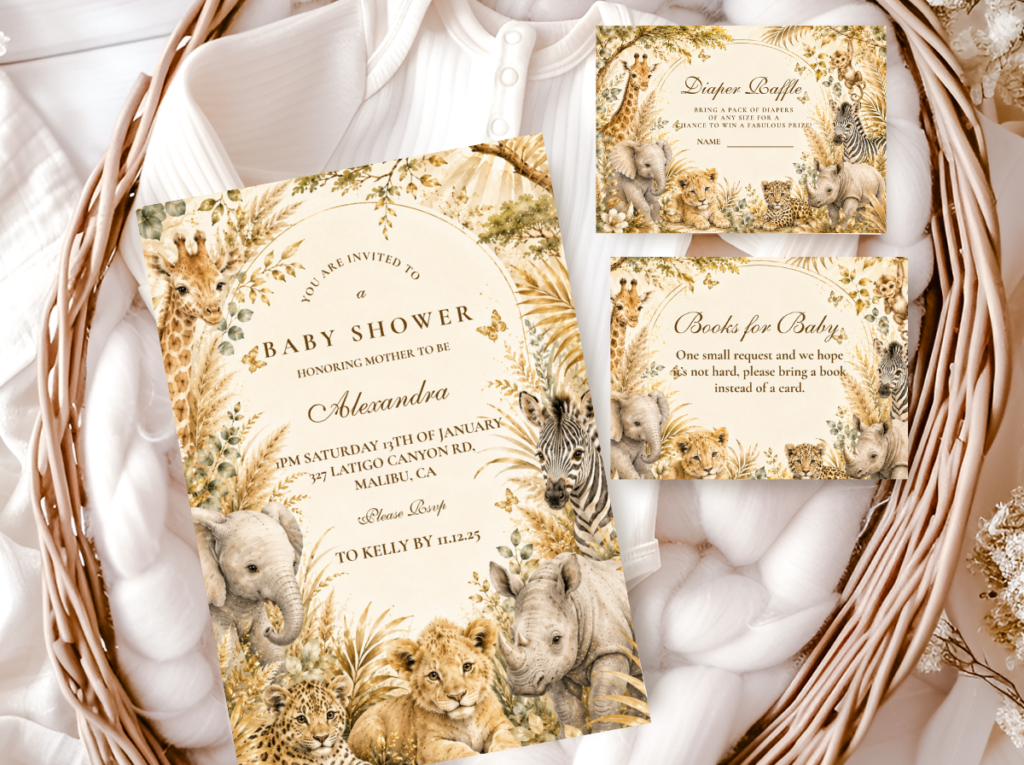
Browse the complete safari stationery collection
Food labels, menu cards, and every printed table element — all coordinated and customisable.
⚠ This post contains affiliate links. As an Amazon Associate, I earn from qualifying purchases at no extra cost to you. I only recommend products I genuinely believe will add value for my readers. Thank you for supporting Baby Wonderland Studio.
“A safari food table at its best looks like a feast laid out on the plains — abundant, warm, and styled with the same intention as every other detail in the room.”
Section 01 The Safari Food Styling Principle
Principle 1
Serving Ware Matters More Than Food Shapes
Rattan serving boards, warm wood platters, linen napkins, terracotta serving bowls, and warm ceramic dishes belong to the safari aesthetic because they share the material language of the safari world — natural, warm, organic, and earthy. White plastic serving trays, chrome-finish serving stands, and bright synthetic textiles do not belong to the safari aesthetic regardless of what food is placed on them. A standard selection of finger foods — sandwiches, fruit, light bites — presented on warm rattan and wood serving boards on a linen runner reads as a safari food table. The same food on white plastic trays under a safari banner reads as a party with a safari theme. The serving ware is the decoration decision, not the food shapes.
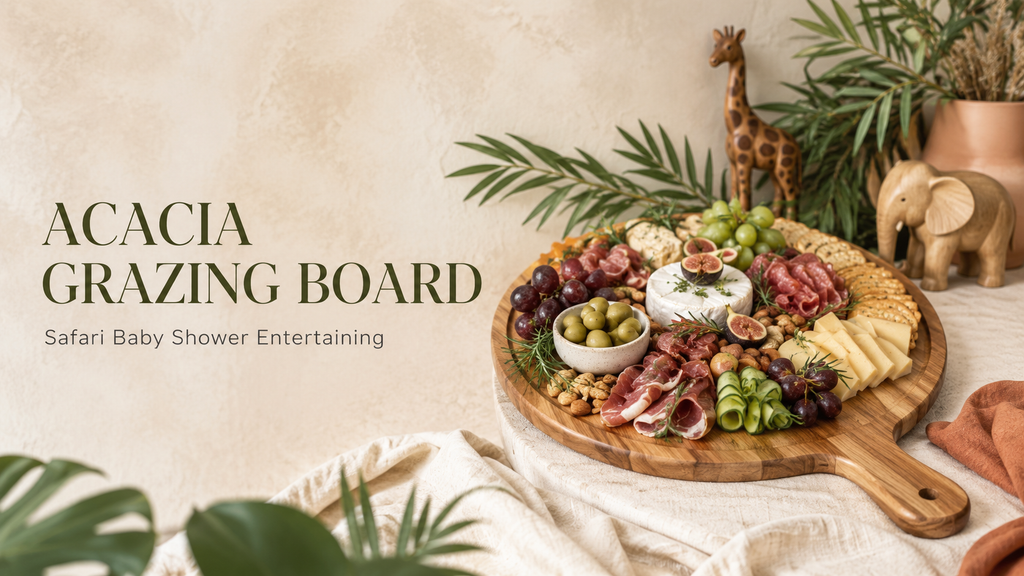
🪵 Large rattan or wood grazing board: This is the centerpiece the Boho Safari Grazing Table is built around — a large board gives cured meats, cheeses, and fruit room to be arranged rather than crammed onto small platters, and it doubles as everyday entertaining decor long after the shower.
Principle 2
Garnish Is the Palette Bridge
The visual connection between the food display and the safari palette is provided by garnish — not by food dye or shaped food. Fresh herbs in warm green tones (rosemary, thyme, sage) scattered beside and beneath food items bridge the botanical element of the safari palette to the food surface. Edible flowers in warm tones (nasturtium in orange and honey; pansies in warm yellow and deep mauve; borage in the specific blue-violet that reads as botanical against a warm cream base) placed on or beside food items carry the specific botanical quality of the safari aesthetic onto the table. A drizzle of warm honey over a cheese board provides both the warm honey-amber tone of the safari palette and a serving gesture that reads as specifically warm and generous. Dried botanical garnish — a small sprig of dried rosemary, a scattered dried flower petal — extends the safari’s botanical material vocabulary onto the food surface without requiring any food preparation time.
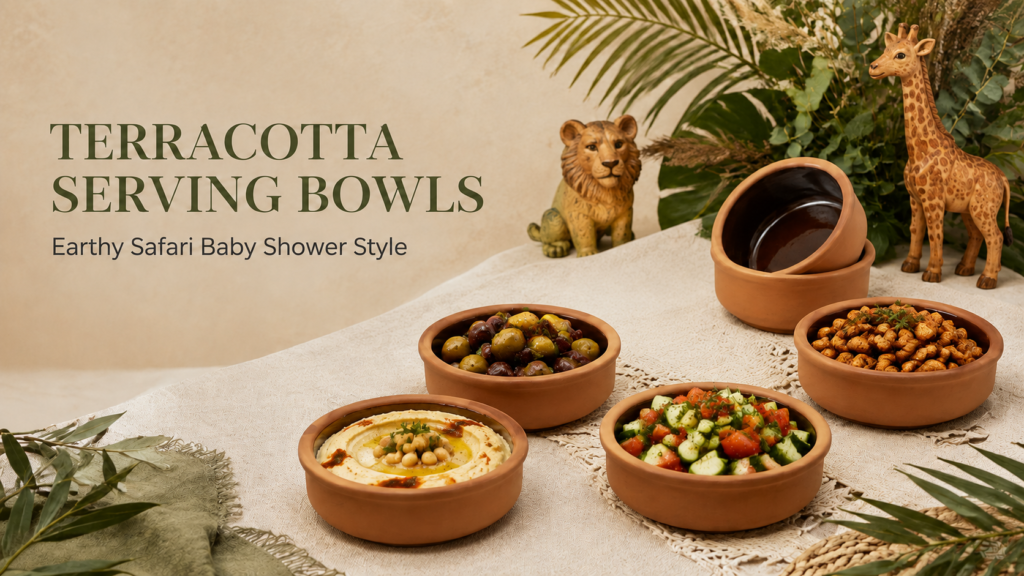
🥣 Terracotta or ceramic serving bowl set: Terracotta and ceramic bowls are what the article recommends for dips, nuts, and fruit instead of plastic catering bowls — the warm earthy tone reinforces the safari palette without adding any extra pattern or print.
Principle 3
Labeling Is a Stationery Decision
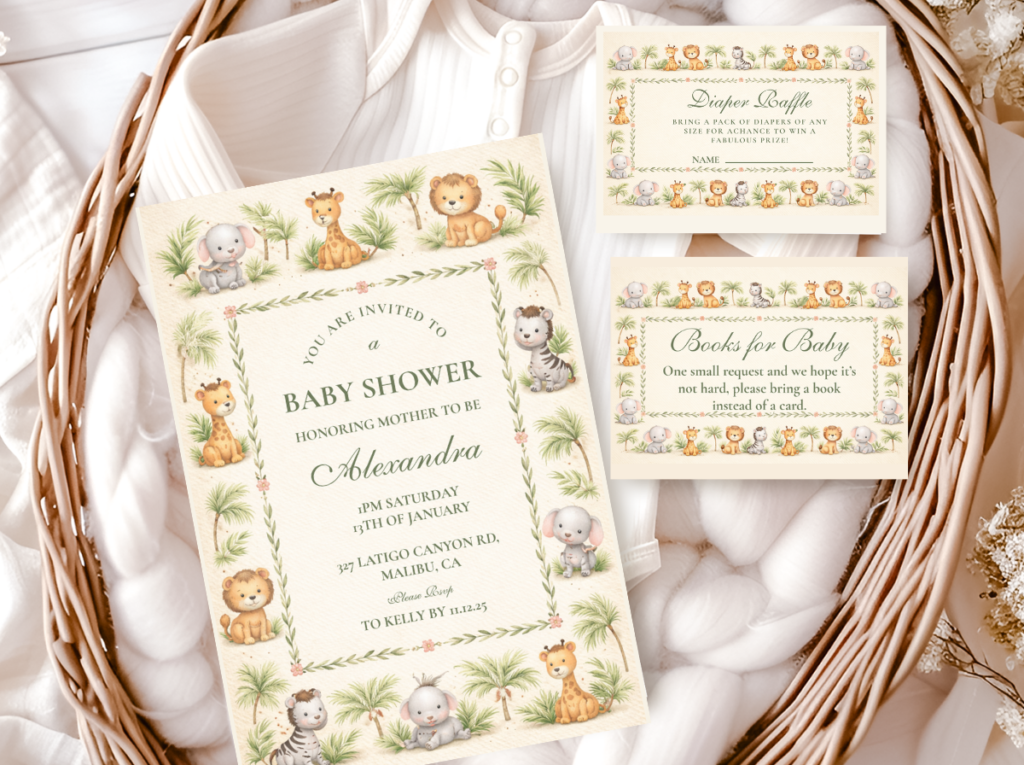
Every food label and tent card on the safari food table is a stationery decision with the same aesthetic weight as the place card at the guest table. A food label in the same watercolour illustration style as the invitation, on the same warm ivory stock, with the same warm brown typography, tells every guest at the food table that they are still inside the designed world of the celebration — that the food table is part of the aesthetic, not an afterthought placed nearby. A generic black-text label on a white folded card tells the guest the opposite: that the food table was not included in the design brief. The food label is the stationery element with the lowest production cost and the highest food table impact — a set of printed tent cards in the invitation’s illustration style, positioned in front of every food item, completes the food table design for a negligible additional investment.
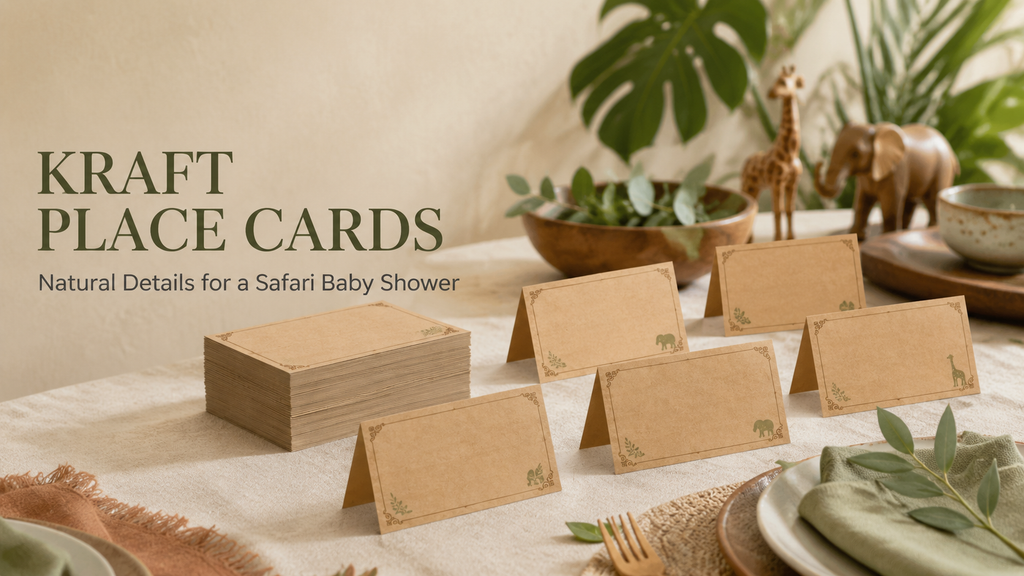
🏷 Kraft food tent cards & label set: Coordinated food labels are called out specifically for dietary labeling and stationery matching — blank kraft tent cards let you hand-letter or print each dish name in the same warm cream-and-brown style as your invitations.
✨ Styling Tip
The food table is the most visited surface at the shower — every guest returns to it multiple times throughout the celebration, which means it receives more total viewing time than the backdrop, the centrepiece, or the welcome sign. It deserves the same palette attention. One linen runner in the shower’s textile direction, one warm wood or rattan serving board as the primary surface material, food labels that match the invitation suite, and fresh herb garnish scattered at the serving board edges: these four changes transform a food table from catering into design. The food itself — its content, its arrangement within the serving pieces — is secondary to these four presentation decisions.
Section 02 Five Safari Food Table Directions
Five complete food table directions, each matched to a specific safari palette and a specific aesthetic register. In all five: warm serving ware, botanical garnish, and matching printed food labels are the consistent presentation requirements.
Most Versatile
The Neutral Safari Brunch Spread
Warm Cream Serving Ware · Linen Runner · Fresh Herb Garnish · Honey Warm Tones
The Neutral Safari Brunch Spread is the most broadly appropriate and most universally appealing of the five directions — it suits any guest list, any time slot from mid-morning to early afternoon, and any safari palette direction because its serving ware and garnish palette are warm neutral rather than directionally accented. The food content: a selection of finger sandwiches on warm cream or ivory platters (three varieties minimum, arranged in rows that allow each variety to be clearly identifiable from the serving position); a fresh fruit display on a rattan or warm wood board (seasonal fruit arranged by colour temperature — warm-toned fruit such as peaches, apricots, strawberries, and mango at the centre of the display, with cooler-toned fruit at the periphery so the display reads as warm from the most viewed centre angle); a selection of light bites (warm cheese wedges, honey and walnut clusters, and savoury bite-sized items in warm cream ceramic dishes). The garnish: fresh rosemary sprigs, fresh thyme, and a honey drizzle over the cheese board. The serving board surface: warm wood or natural rattan, never white plastic, never chrome.
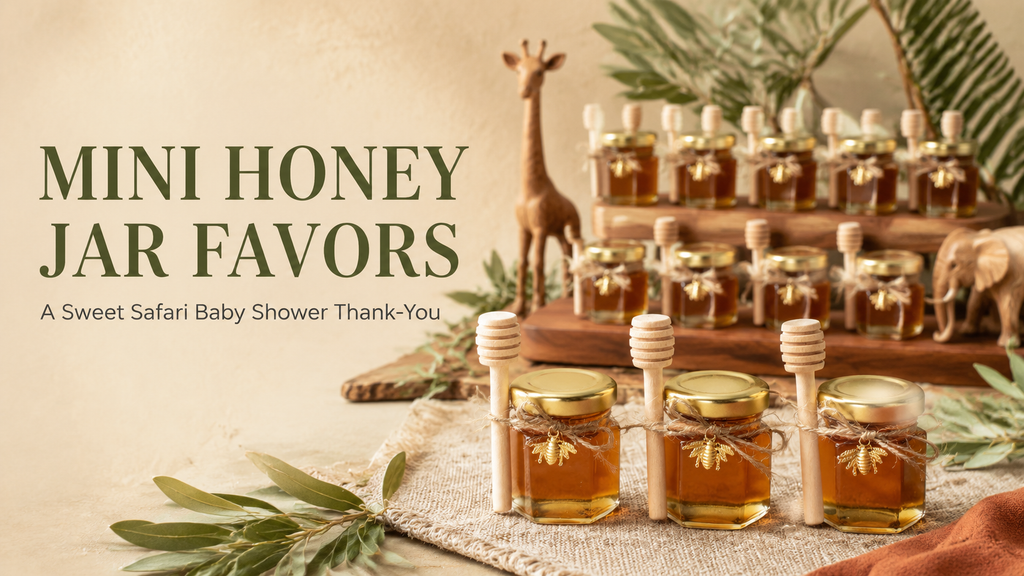
🍯 Honey dipper & jar set: Honey drizzle is named as a go-to garnish for bridging the safari palette across dishes — a proper wooden dipper with a small glass jar makes serving it look intentional instead of squeezed from a plastic bear.
✨ Styling Tip
For a safari brunch, arrange food in odd numbers — three sandwich varieties, five fruit types, seven herb garnish elements. Odd numbers read as organic and abundant; even numbers read as measured and institutional. A fruit display with five varieties reads as natural and gathered; the same display with four varieties reads as a curated selection. The savanna is never symmetrical and never perfectly even-numbered — the food table should have the same quality of natural abundance that results from odd-number arrangement at every level of the display.
🧀 Cheese knife serving set: A dedicated knife set for soft and aged cheeses keeps the grazing table functional as well as pretty — guests can serve themselves cleanly instead of hacking at a wheel with one shared knife.
Boy Direction
The Jungle Safari Boy Spread
Dark Serving Boards · Rattan Baskets · Hearty Savory Bites · Warm Brown Tones
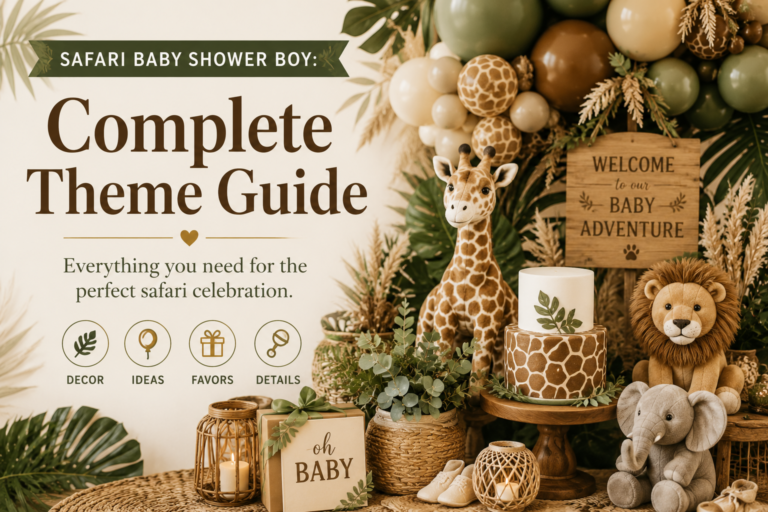
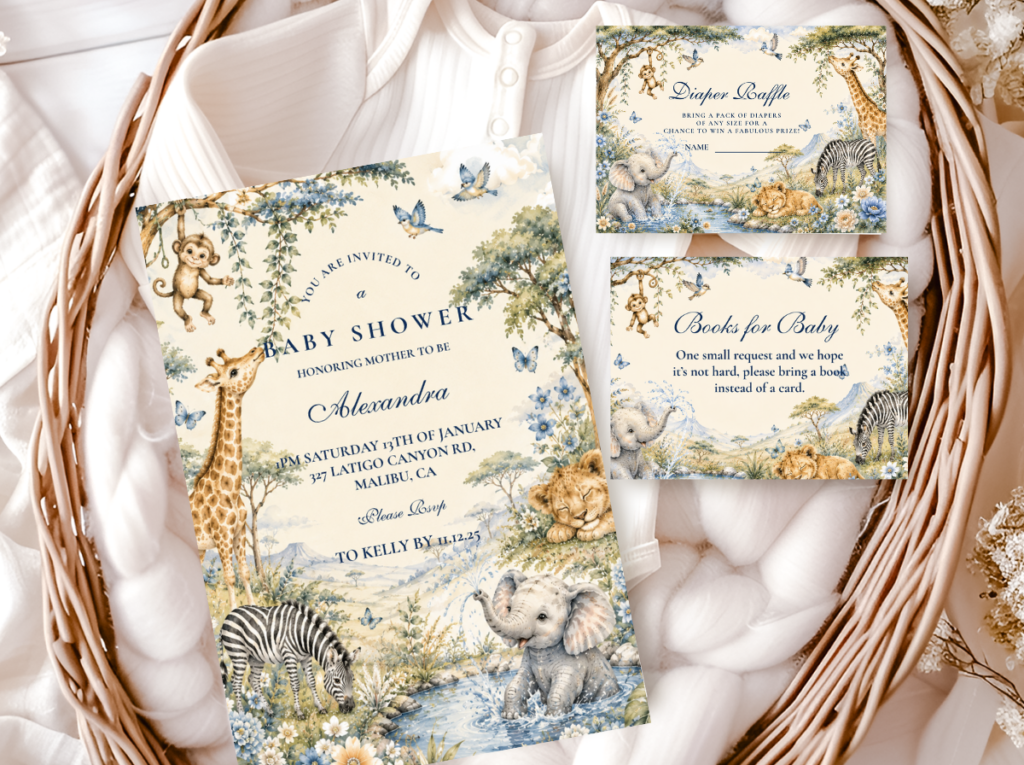
The Jungle Safari Boy Spread is the most adventure-forward and the most hearty of the five directions — it suits a late morning or early afternoon shower time slot where a slightly more substantial food offering reads as appropriate. The serving ware palette: dark-stained wood boards (the specific dark warm brown of the jungle safari palette, rather than blonde wood), rattan baskets lined with warm linen or parchment paper, and terracotta serving dishes. The food content: warm savoury bites (mini quiches, small savoury pastries, cheese and meat rolls) alongside a selection of heavier sandwich varieties and a warm savoury dip with vegetable and bread accompaniments. The garnish: fresh rosemary and thyme scattered on the dark wood boards; small bunches of warm herb greenery (sage, thyme) at the corners of the serving areas. The tent card labels in the deep olive and warm brown palette of the Jungle Safari Boy collection make the food table part of the adventure-forward aesthetic rather than a neutral addition to it.
Most Refined
The Elegant Safari Tea Spread
Fine Warm Ceramic · Tiered Display · Delicate Finger Foods · Antique Gold Accents
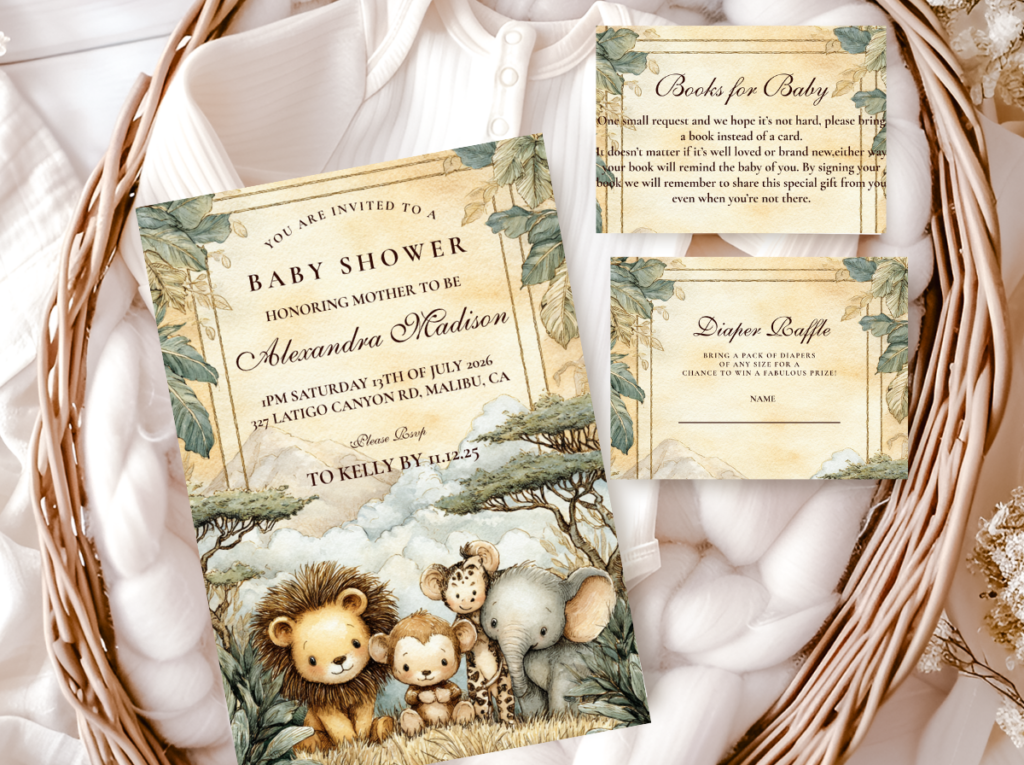
The Elegant Safari Tea Spread is the most refined and the most formally beautiful of the five directions — it takes the specific warmth and natural quality of the safari palette and applies it at the register of a formal afternoon tea presentation. The serving ware: warm cream fine ceramic plates and tea service (the warmth of the ceramic is as important as the ceramic quality itself — a warm ivory tea service reads as specifically elegant safari; a cool white tea service reads as a generic tea party); a two or three-tier stand in warm brass or antique gold finish holding finger sandwiches on the lower tier and sweet finger foods on the upper tiers; and warm ceramic teacups with a honey amber accent in their colouring. The food content: finger sandwiches cut to even dimensions and arranged in consistent rows on the ceramic plates (the only food table direction in which even numbers and symmetry read as appropriate, because the elegant register requires precision rather than organic abundance); delicate savoury bites; and small warm biscuits with honey. The garnish: one fresh rose petal or one fresh herb sprig per serving plate — minimal, precise, and specifically intentional.
🥄 Acacia wood serving utensil set: Matching wood-handled spreaders and tongs finish the board’s look and keep every element — board, bowls, utensils — in the same warm wood family the article’s styling principles call for.
Most Textured
The Boho Safari Grazing Table
Rattan & Wood · Charcuterie Style · Dried Botanical Garnish · Earthy Warm Tones
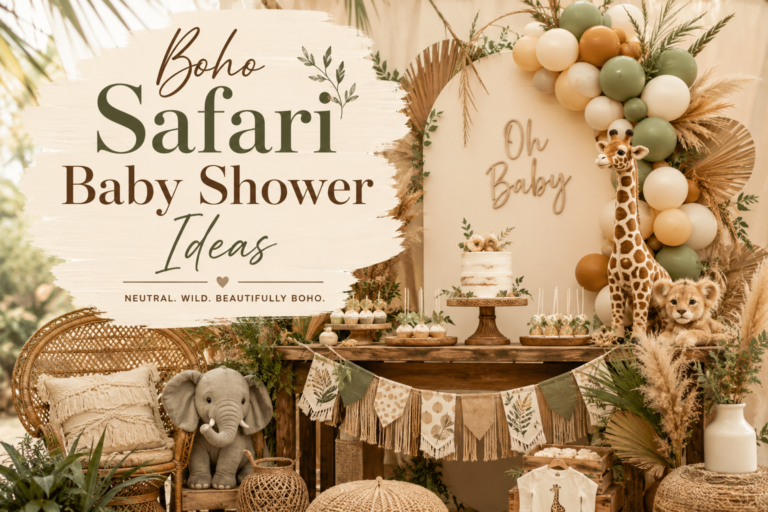
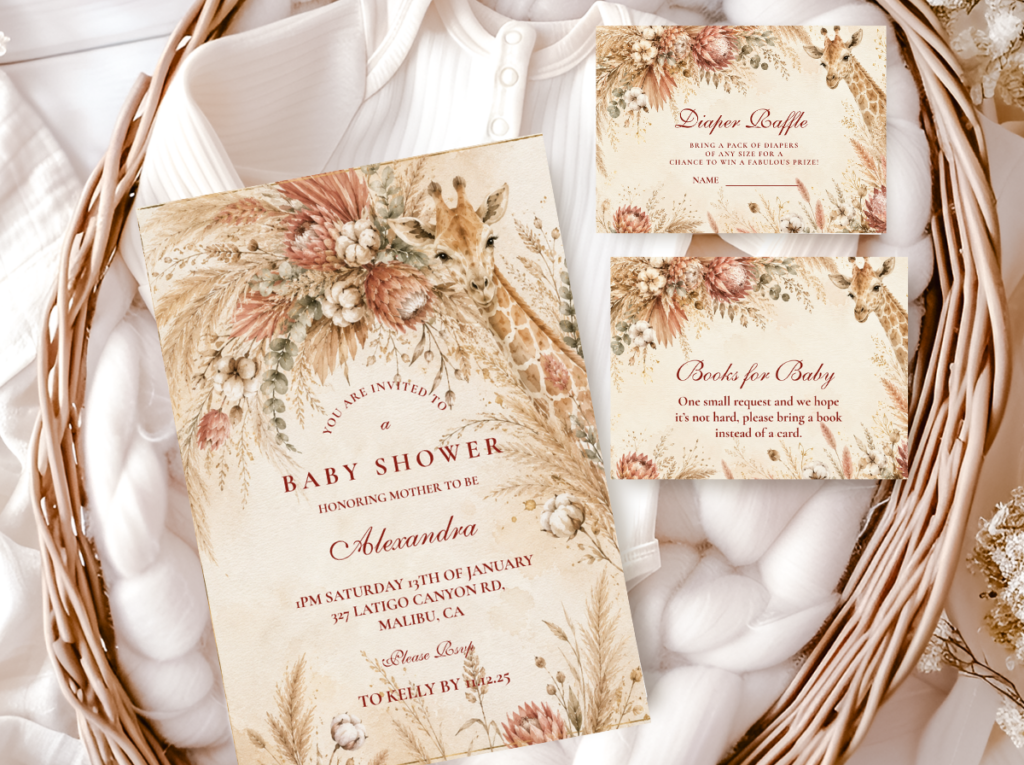
The Boho Safari Grazing Table is the most texture-forward and the most Instagram-photographed of the five directions — it applies the boho safari material vocabulary (rattan, wood, linen, dried botanical) directly to the food surface, creating a food display that reads as a continuation of the centrepiece and backdrop rather than as a separate catering arrangement. The serving surface: a large continuous wooden board or a collection of smaller boards arranged in an organic (slightly irregular) continuous surface, with food items placed directly on parchment paper on the board rather than in separate serving dishes. The food content: a charcuterie-style spread — a varied selection of cheeses in warm tones (aged cheeses in warm amber rind, soft cheeses in warm ivory paste), cured meats, honey, warm-toned fruit, crackers, and nuts — arranged in the organic, slightly asymmetric layout of the boho aesthetic. The garnish: dried rosemary sprigs, dried lavender buds, dried botanical petals scattered at the board edges, and fresh fig halves (their warm amber-pink interior is one of the most specifically beautiful food garnish elements available in a warm safari palette).
Most Garden-Fresh
The Watercolour Safari Brunch
Light Bright Foods · Botanical Garnish · Seasonal Ingredients · Warm Watercolour Tones
The Watercolour Safari Brunch is the most garden-fresh and the most seasonally specific of the five directions — it takes the warm, organic, slightly painterly quality of watercolour illustration and translates it into a food display that prioritises fresh seasonal ingredients in warm tones, presented with botanical garnish that references the same organic illustration quality as the stationery. The serving ware: warm cream ceramic bowls and platters with a visible handmade quality (slightly irregular in form, with a warm matte glaze rather than a commercially smooth finish); natural linen or cotton serving cloths; and small glass vessels holding fresh herbs or edible flowers at intervals across the display. The food content: seasonal fresh items in warm tones — stone fruit in warm amber and blush; warm honey-drizzled yoghurt pots; freshly baked pastries in warm golden tones; and a selection of light seasonal sandwich varieties. The garnish: edible flowers in warm tones placed at intervals across the food surface, fresh herb sprigs, and a honey drizzle visible on any item that accommodates it. The overall impression should be of a garden breakfast brought indoors: light, fresh, and specifically warm in its colour temperature.
Section 03 Food Styling & Serving Tips
Quantity Planning per Guest
The following quantities are per person, for a shower where the food is the primary eating opportunity (not preceded or followed by a full meal). Adjust downward by approximately 20% if the shower is positioned between main meals (e.g. 11am–1pm brunch where most guests will also eat lunch or dinner within a few hours):
Finger sandwiches — 2hr shower: 4–5 halves 3hr shower: 6–7 halves
Each sandwich half = one serving unit. Three varieties: allow 2 halves per variety for a 2hr shower.
Savoury bites (quiches, pastries, rolls) — 2hr shower: 3–4 pieces 3hr shower: 5–6 pieces
Higher for a brunch-time shower where savoury food replaces a morning meal.
Fresh fruit — 2hr shower: 80–100g 3hr shower: 120–150g
Whole fruit weight before slicing. Pre-sliced fruit loses volume quickly — slice day-of and keep cool until display.
Cheese (for grazing table or cheese board) — 2hr shower: 40–50g 3hr shower: 60–80g
Three varieties minimum. One soft, one semi-firm, one aged.
Crackers and bread — 2hr shower: 6–8 pieces 3hr shower: 10–12 pieces
Mix of two cracker varieties plus small bread slices if serving a full grazing table.
Sweet finger foods (excluding cake) — 2hr shower: 2–3 pieces 3hr shower: 3–4 pieces
Excludes the main cake. Includes biscuits, small pastries, fruit tarts.
Dietary Labeling Within the Safari Aesthetic
Dietary labels — vegetarian (V), vegan (VE), gluten-free (GF), and nut-free (NF) — should appear on every food item without exception, regardless of whether the guest list appears to require them: guests with dietary needs should not have to ask at a buffet table, and the visual confirmation of dietary information on the label is the most respectful approach. The label format that works within a safari aesthetic: a small warm ivory tent card with the food name in the primary typography of the invitation suite and the dietary abbreviation (V, VE, GF, NF) in warm brown below the name — not in bright colours (green for vegetarian, red for allergy-containing), which immediately break the palette, but in the warm typography of the stationery suite. A small warm brown circle or honey amber dot beside the dietary abbreviation is sufficient visual differentiation without introducing a contrasting colour that fights the palette.
Make-Ahead Planning
Safari food items that can be made or sourced 24–48 hours ahead and stored refrigerated without quality loss: finger sandwiches (wrapped tightly in damp paper towel and then cling film; avoid fillings with high moisture content such as fresh tomato that soften the bread overnight); savoury pastries and quiches (baked ahead and reheated for 10 minutes at 160°C on the day, which also improves the aroma at the time of serving); cheese boards (assembled boards can be covered and refrigerated overnight, brought to room temperature 30–45 minutes before serving); and crackers and bread (stored separately from the cheese board to avoid softening, combined at setup). Items that must be day-of: fresh fruit displays (cut fruit deteriorates within 4 hours at room temperature; prepare and display no more than 90 minutes before guests are expected); garnish herbs and edible flowers (these wilt within 2–3 hours once placed; add to the display in the final 30 minutes before the shower begins); and any item with fresh cream or fresh pastry that softens on exposure to air. The make-ahead plan should be coordinated with the setup schedule: food table setup typically happens in the final 60–90 minutes before the shower, and the day-of items should be timed to arrive at the table within 30 minutes of the first guests.
✨ Styling Tip
Order or prepare 15% more food than the guest count suggests for every item on the table. A food table that looks abundantly supplied for the first guest who arrives and the last guest who returns for seconds photographs more beautifully and feels more generous than one that visibly depletes as the shower progresses. Prepare backup supply quantities for high-consumption items (sandwiches and fruit disappear fastest) and replenish the serving boards from the backup supply rather than allowing visible gaps to develop in the display. The appearance of ongoing abundance — a full board at 90 minutes as much as at the start — is the food table quality most associated with the feeling of a genuinely generous celebration.
Section 04 Invitations & Stationery
The food label, the menu card, and the napkin ring tag are the three stationery elements of the food table — and they are the elements most likely to be overlooked in favour of the food content itself. This is the exact reversal of the correct priority: the food content changes from hour to hour as items are consumed and replenished, but the food label remains in position throughout the shower, visible to every guest who approaches the table at any point. A food label in the invitation’s illustration style is present at the food table for the entire duration of the shower; the food behind it is transient. The label is the permanent design decision; the food is the temporary content.
The menu card — a single card positioned at the beginning of the food table listing every item available — is the food table’s equivalent of the event program: it tells every guest what the celebration has prepared for them before they begin serving themselves, and when it is in the same illustration style as the invitation, it communicates that the same level of care that went into the invitation went into the food selection. A menu card in warm ivory stock with a small watercolour safari animal illustration and the food items listed in warm brown serif typography is a menu card that belongs to the designed world of a safari shower.
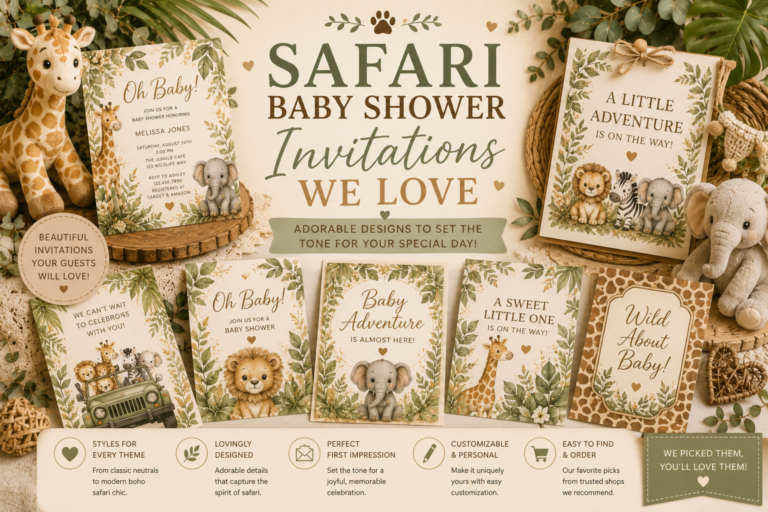
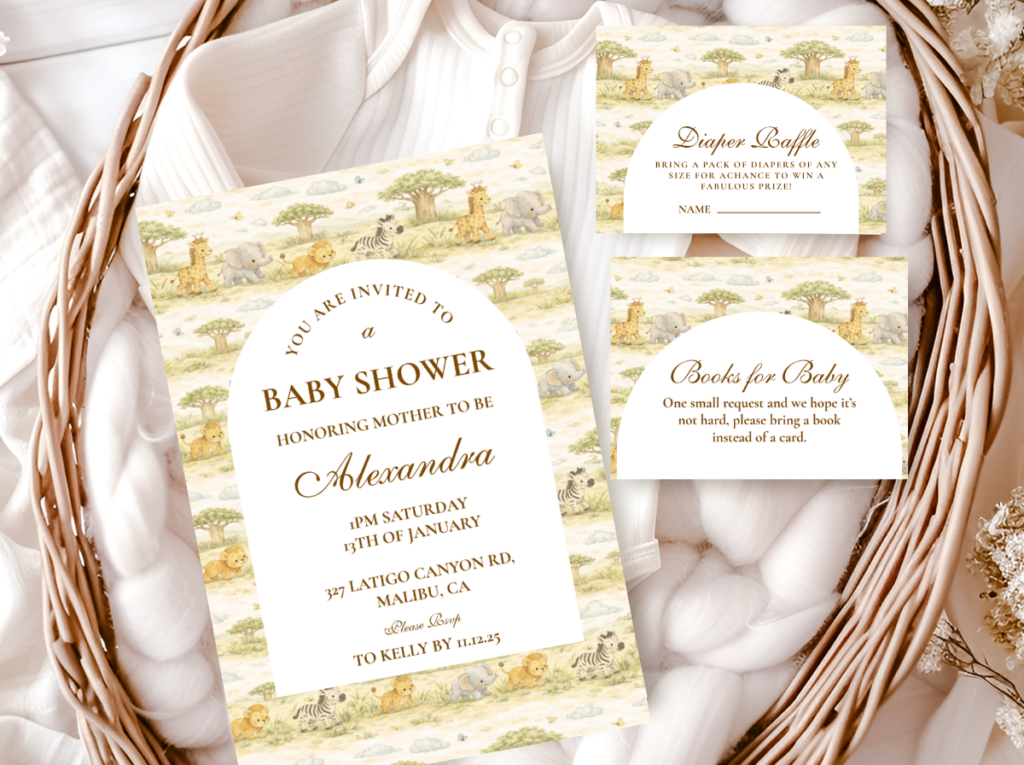
The napkin ring tag — a small printed tag tied around a rolled linen napkin — is the stationery element that extends the designed world to the napkin itself, transforming a functional item into a printed object that guests notice and sometimes keep. In the safari aesthetic, a small rolled oatmeal linen napkin tied with warm twine and a personalised safari tag in the invitation’s illustration style is one of the most consistently appreciated and most consistently photographed table details at any safari shower. Browse all six collections below for food labels, menu cards, and every table stationery piece.
All Safari
Safari Theme Collection
The complete umbrella collection — food labels, menu cards, and every food table stationery piece.
Neutral
Neutral Safari Baby Shower
Warm cream and antique gold — the most versatile food label direction for any safari palette.
Elegant
Elegant Safari Baby Shower
The most refined stationery direction — tent cards and menu cards at the highest illustration quality.
Jungle Boy
Jungle Safari Boy Baby Shower
Deep olive and warm gold — most aligned with the Jungle Boy food spread direction.
Boho
Boho Safari Girl Baby Shower
Warm earthy botanical — most aligned with the Boho Grazing Table direction.
Watercolour
Watercolour Safari Baby Shower
Warm watercolour illustration — most aligned with the Watercolour Brunch direction.
Frequently Asked Questions
Brunch vs. lunch timing for a safari baby shower — which works better?
Brunch timing (10am–12pm or 10:30am–12:30pm) is the most consistently successful timing for a safari baby shower food spread for three specific reasons. First, guests arrive with genuine appetite (having not eaten a full morning meal) which means the food table looks actively engaged throughout rather than approached tentatively by guests who have already eaten; second, the natural light quality of mid-morning is the most specifically beautiful for both the safari palette (warm, slightly golden, horizontal) and for photography; and third, the brunch food vocabulary (finger sandwiches, fruit, light bites, pastries) naturally aligns with the warm, natural quality of the safari aesthetic more directly than lunch-specific food items. Lunch timing (12pm–2pm or 1pm–3pm) requires slightly more substantial food content (see Section 3.1 for quantity adjustments) and competes with the natural meal timing of guests, which can reduce engagement with the food table. Afternoon timing (2pm–4pm or 3pm–5pm) suits a tea spread format — the Elegant Safari Tea direction (Section 2.3) is most specifically appropriate for an afternoon time slot.
How much food per person for a safari baby shower?
The specific per-person quantities in Section 3.1 are the most reliable planning baseline. In summary: for a standard 2-hour brunch shower, plan for 4–5 finger sandwich halves, 3–4 savoury bites, 80–100g of fresh fruit, 40–50g of cheese, 6–8 crackers or bread pieces, and 2–3 sweet finger items per person. Add 15% to all quantities for the backup supply (Section 3.3). Adjust downward by 20% if the shower is positioned immediately between two main meals where guests will also eat elsewhere. Adjust upward by 20% if the shower is the primary eating occasion of the day for most guests (e.g. a mid-morning shower on a weekend where guests may not eat breakfast before arriving). These adjustments are cumulative: a 25-guest mid-morning weekend shower with no other main meal context requires sandwich quantities of approximately 4.5 halves × 25 guests × 1.15 backup = 130 halves, or approximately 65 sandwiches.
What dietary-friendly food options suit a safari aesthetic?
A safari shower’s warm, natural food palette is naturally accommodating of a wide range of dietary needs without requiring separate visible ‘dietary option’ sections that break the aesthetic cohesion of the display. The most naturally dietary-inclusive safari food directions: fresh fruit (universally appropriate and visually beautiful in warm safari tones); nut-free antipasto and vegetable bites (serve with clear individual labels); rice paper or lettuce wrap alternatives to sandwich bread (visually appropriate on warm wood serving boards and naturally gluten-free); warm hummus with vegetable dippers (earthy, warm in tone, and visually appropriate to the safari table); and selection of cheese and honey combinations (vegetarian, photographically beautiful in warm cream and amber tones). The most important principle: every dietary option should look as considered and as beautiful as every other item on the table. A labelled gluten-free option on the same warm wood board as the standard option, garnished with the same fresh herb garnish as everything else, reads as part of the curated display. A separate ‘dietary options’ plate placed to the side reads as an afterthought.
What are simple menu ideas for a small safari baby shower gathering?
For a gathering of 8–12 guests, a three-component food display is sufficient and more cohesive than a complex multi-item spread: one serving board with three sandwich varieties (allow 4 halves per person total); one rattan bowl or warm ceramic dish with fresh seasonal fruit in warm tones (strawberries, peaches, melon, mango — approximately 100g per person); and one small cheese board with two cheese varieties, honey, and crackers (40g cheese per person, 6 crackers per person). These three components, presented on warm wood or rattan serving surfaces with a linen runner and fresh herb garnish, constitute a complete safari food display that reads as specifically designed and specifically generous without requiring complex preparation. For the stationery layer: three food tent cards (one per component) and one small menu card at the table entrance are the minimum stationery elements that make the food table part of the designed world. Total preparation time for a 10-guest gathering using this format: approximately 90 minutes day-of (slicing fruit, assembling sandwiches, composing cheese board) plus the tent cards and menu card prepared in advance.
Complete Your Food Table
Safari Baby Shower Food Table Stationery
Food labels, menu cards, and napkin ring tags — all coordinated, fully customisable, and matched to every safari palette direction.