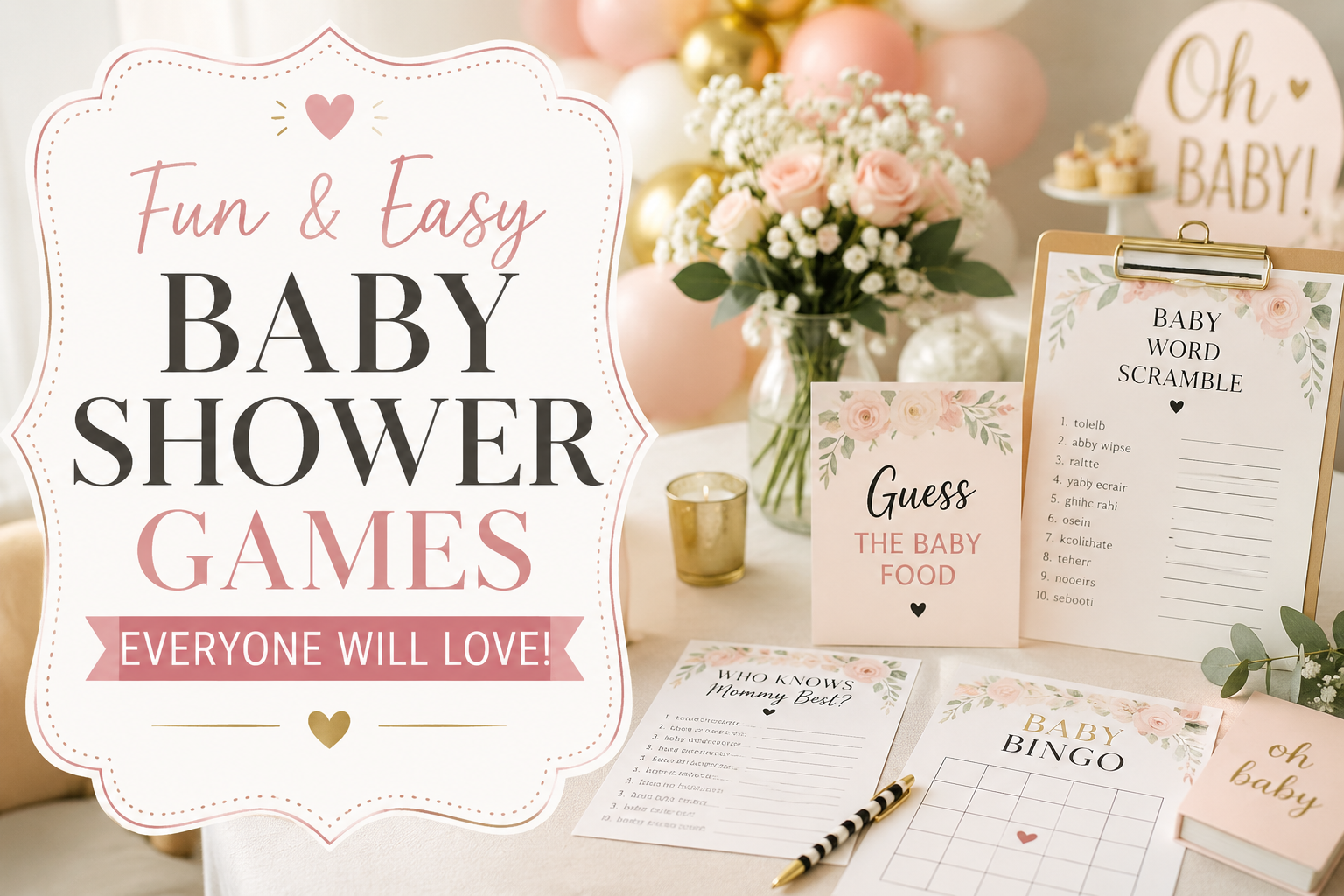
Fun & Easy Baby Shower Games Everyone Will Love
Complete Baby Shower Games Guide
Fun & Easy Baby Shower Games Everyone Will Love
Organized by game type with a complete planning formula — so you can build a games plan for any shower length, any guest list, and any comfort level.
Not all baby shower games are created equal. Some become the moment everyone talks about afterward — the prediction that turned out to be exactly right, the game that broke the polite conversation into genuine laughter, the activity that produced a keepsake the parents still have years later. Others produce a collective cringe that the host spends the rest of the event recovering from. The difference between the two is almost never the game itself; it is almost always the planning decisions that surround it.
This guide organizes the best baby shower games by type, provides the complete planning formula for how many to plan and when to run them, and covers prizes, styled game cards, and the stationery connection that makes every printed game element feel like part of the designed celebration.
⚠ This post contains affiliate links. If you click and purchase through these links, I may earn a small commission at no extra cost to you. I only recommend products I genuinely believe will add value for my readers. Thank you for supporting Baby Wonderland Studio.
“The difference between a game guests enjoy and one they endure is almost always the same thing: whether it asks them to be themselves or to perform for the room.”
Section 01 The Games Planning Formula
The most common games planning mistakes are over-scheduling (too many games make the shower feel processed rather than celebrated) and under-scheduling (too few produce the awkward stall after food and gift-opening that no amount of pleasant music rescues). The formula below gives specific time allocations, game type guidance, and group size rules for every shower format.
1.5-Hour Shower
1 game maximum — 15 min
Run during food service, not as a separate event. Choose a simultaneous game only (bingo, prediction cards, price guessing) — sequential games cannot be completed before the event ends. Don’t Say Baby works as a passive game that runs without taking any dedicated slot. If the available time is tight, one passive game and no structured game is a completely valid plan; this format is too short for games that require introduction, materials, and facilitation.
2-Hour Shower
2 games — 25 min total
One game before food service (while guests arrive and settle — bingo distributed at seats works well here), one game during or after gift-opening (prediction card reveal or price guessing). Do not run both games consecutively — separate them by at least one natural event break. The passive game (Don’t Say Baby) can run alongside both without counting against the 25-minute allocation because it requires no facilitation time.
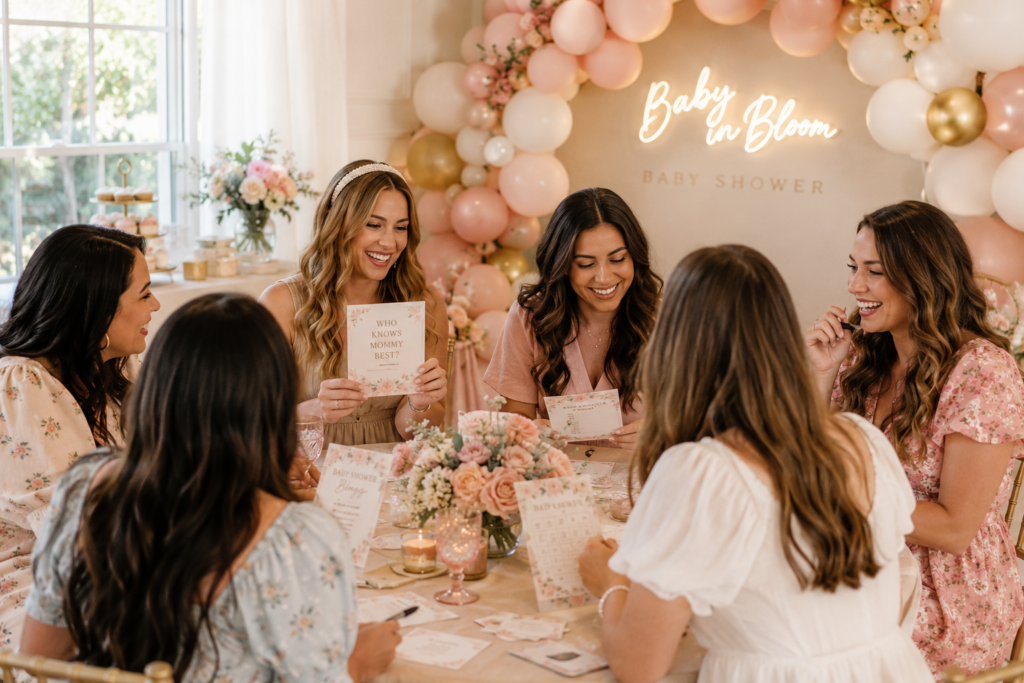
2.5-3 Hour Shower
2-3 games — 35 min total
Space games across three distinct moments: arrival, mid-event after food, close. At least one game should be passive (Don’t Say Baby, onesie decorating station) so guests who prefer not to play structured games participate naturally rather than visibly opting out. The wish jar and advice card station run passively throughout without taking any game slot — position them near food or drinks so guests encounter them naturally rather than making a dedicated trip.
Group Size Guide
Under 12 vs 20+
Under 12 guests: conversational and interactive games (Mommy or Daddy quiz, memory tray, charades) — the group is small enough for everyone to be in the same moment simultaneously. 20+ guests: simultaneous games only (bingo, prediction cards, price guessing) — sequential games create dead time for guests who finish early or wait their turn, and that dead time kills atmosphere faster than no game at all. Mixed ages and comfort levels: always include at least one passive game with no wrong answers and no performance requirement.
Styling Tip — Announcing Games
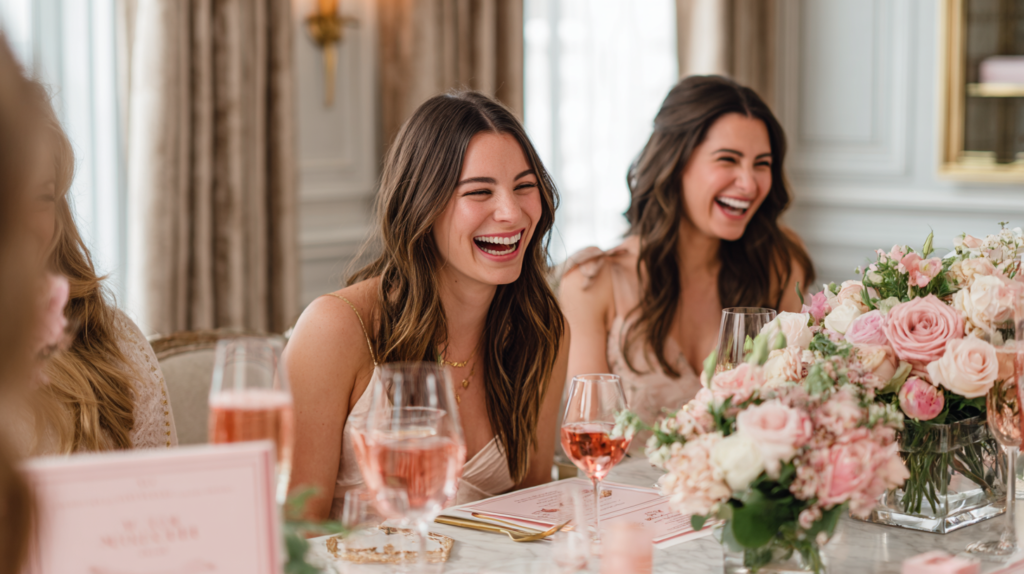
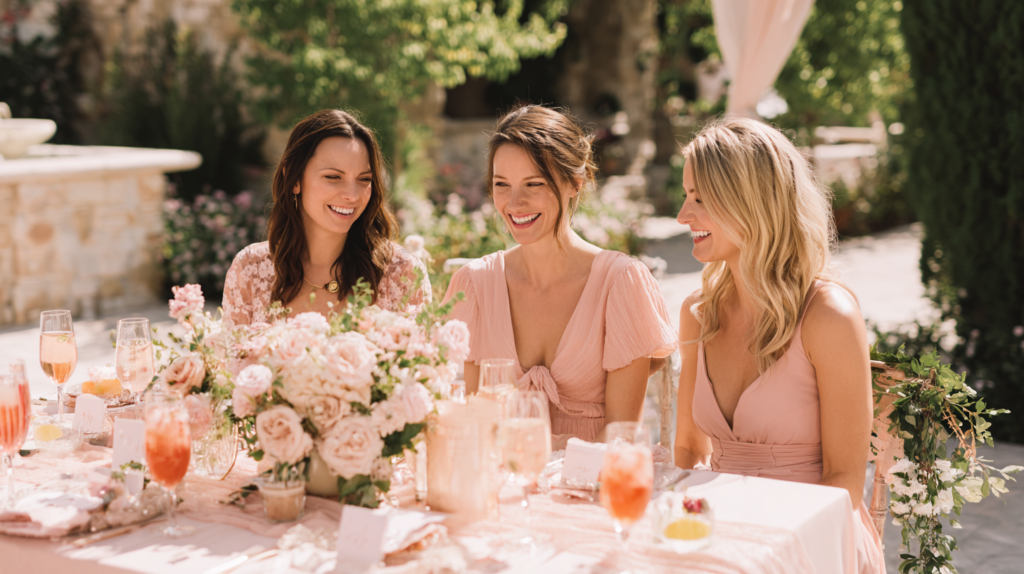
Tell guests about games before the shower starts — not at the moment the game begins, but at the opening of the event. A brief, warm announcement (“we have two games planned today, starting after we eat, nothing that requires you to do anything embarrassing”) removes the anxiety of not knowing what’s coming and gives guests who are less comfortable with group participation a moment to mentally orient. Guests who know a game is planned participate with more generosity than guests who feel ambushed mid-conversation, because participation feels like a choice rather than a conscription. The host’s enthusiasm in the announcement also sets the tone for the room’s participation: a genuine, warm “I found this one and I think you’ll enjoy it” produces more engagement than a tentative “we’re going to do a game if that’s okay with everyone.”
Section 02 Classic Crowd-Pleaser Games
2.1 Baby Bingo
Baby bingo is the most reliable large-group game available because it scales to any guest count, runs simultaneously during gift-opening without requiring any separate event slot, and produces a natural competitive arc without the host needing to actively facilitate beyond the initial distribution. The bingo squares are baby gift categories (nappy cream, muslin square, plush toy, bath set, sleepsuit) rather than numbers — guests fill their cards as gifts are unwrapped, and the first to complete a line wins. Every guest has a reason to pay close attention to each gift being opened, which transforms the gift-opening sequence from a passive audience experience into a participatory one.
The design of the bingo card determines whether it reads as part of the shower or as an afterthought. A card printed on warm ivory card stock with a bear motif, floral detail, or ocean illustration in the shower’s palette — with the grid in warm cream rather than stark white and the typography matching the invitation suite — reads as a designed element that belongs to the celebration. The same content on standard bright white printer paper reads as a utility handout. The paper stock is the variable: warm ivory card stock costs the same as standard printer paper and produces a completely different guest experience. The card is in guests’ hands for the entire gift-opening sequence; it deserves the same design attention as any other printed element in the room.
🎲 Ready-made baby bingo cards: If you want game cards that look designed without the printing effort, these pre-made baby shower bingo sets come on quality card stock and are ready to use straight out of the pack.
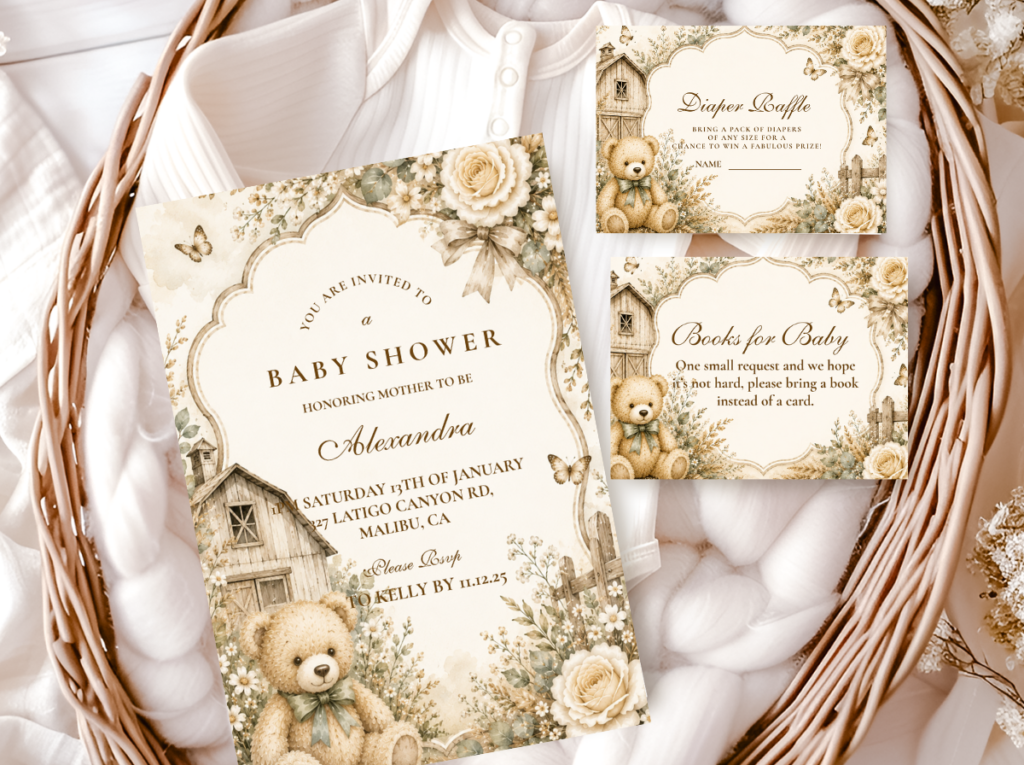
The Bear Theme collection shows how theme-matched bingo cards work in practice — honey tones, warm cream grid, and a bear motif that makes the game card a natural extension of the shower’s visual identity rather than a separate paper activity.
2.2 Don’t Say Baby
Don’t Say Baby is the game with the highest return on facilitation effort of any shower game — which is to say, it requires almost none. Each guest receives a token at arrival; the rule is that no guest may say the word “baby” during the shower. Any guest who catches another using the forbidden word takes their token; the guest with the most tokens at the end of the event wins. The game runs itself. It creates organic moments of laughter throughout the event as guests catch each other mid-sentence, and it gives every guest something to pay attention to and engage with even during the quieter stretches of the event — without requiring any structured game time at all.
The token is the design decision that matters. A standard clothespin is the conventional choice; it works and carries no aesthetic connection to the shower. A small cut-out tag in the shower’s palette — a bear silhouette in kraft card, a small flower shape in warm ivory, a wave shape in soft blue — worn as a pin or held on a short ribbon, reads as part of the designed celebration and is more likely to be noticed and remarked on when forfeited than a generic clothespin. The token does not need to be elaborate; it needs to be consistent with the rest of the shower’s visual world. Announce the winner at the closing of the event with the same warmth as any other game — count total tokens, present the prize, and move on crisply.
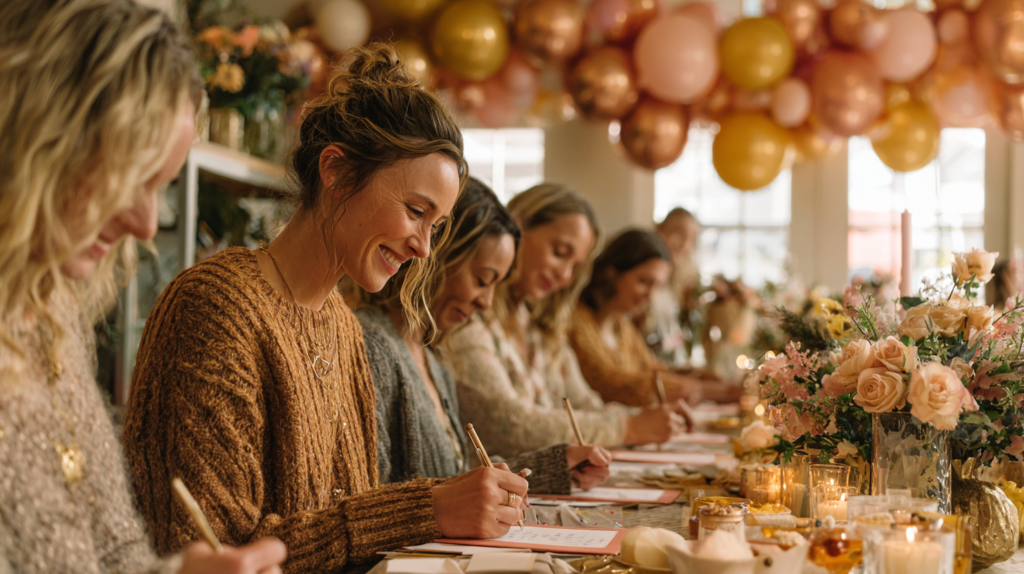
2.3 Baby Price Is Right
Baby Price Is Right presents five to seven common baby products and asks guests to guess the retail price of each; the guest who comes closest without going over wins. The product selection is the most important preparation decision: choose items with genuine price variation and some tactile ambiguity — items where the correct price is neither immediately obvious nor completely unknown. A basic nappy from a well-known brand (low, obvious), an organic cotton muslin set (mid, genuinely uncertain for most guests), a natural beeswax teething toy (higher, unexpected) — this range produces the competitive tension and genuine uncertainty that makes the reveal sequence entertaining. Avoid items so obscure that no guest will have any reference point for pricing, and avoid items so common that every guest knows exactly what they cost.
Curate the product list to belong to the shower’s aesthetic direction — items that a bear-themed nursery or a botanical-themed nursery would actually contain rather than a generic selection of baby products. This connection between the game’s content and the shower’s theme is the small detail that makes the game feel integrated rather than generic. Run as a group exercise for under fifteen guests (verbal guesses, discuss and negotiate) or as an individual written exercise for larger groups (printed guess sheets, reveal all at once). Best run time: ten to twelve minutes including distribution, completion, and reveal sequence.
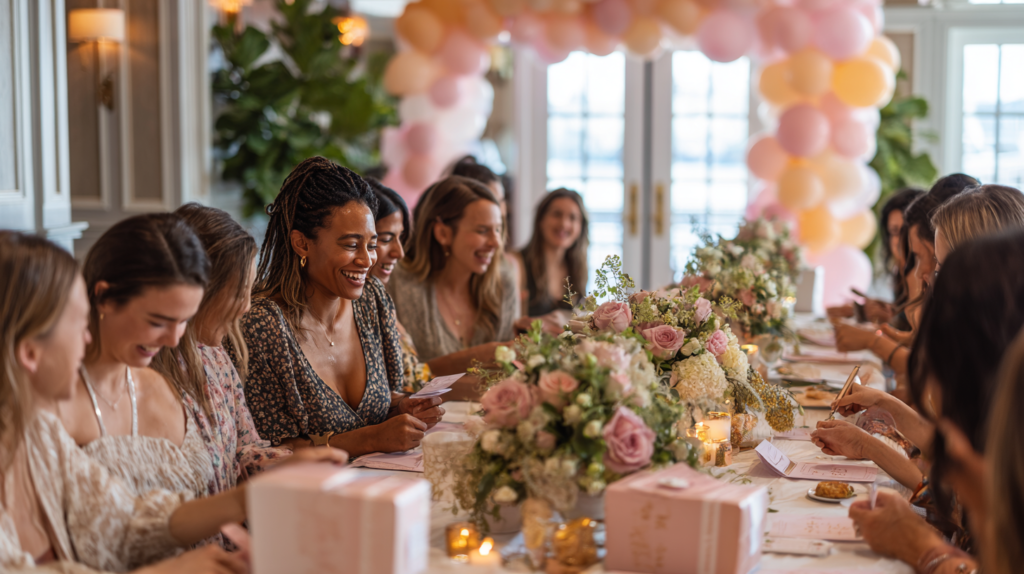
Styling Tip — Game Card Paper
Print game cards on paper that matches your shower palette — warm ivory or kraft for a warm theme, soft sage-toned card for a botanical shower, pale seafoam for an ocean theme. A game card in a guest’s hands for twenty minutes is a decoration as much as it is a game. Bright white cardstock in a carefully styled shower is a small detail that registers as “off” even when guests cannot name why — the same temperature conflict as a bright white linen tablecloth in a warm honey palette. The fix is identical: warm ivory card stock costs the same as standard printer paper, takes exactly the same time to print, and produces a completely different quality of guest experience. Carry the palette into every printed element including the ones that seem too utilitarian to matter — because from the guest’s perspective at the table, they all matter equally.
Section 03 Prediction & Guessing Games
3.1 Baby Stats Predictions
The baby stats prediction card is the shower game with the longest post-event life — because the parent-to-be holds the cards after the birth and contacts the closest predictor weeks later, which means the game creates a connection between the shower and the actual arrival of the baby that no other game achieves. Guests record their predictions for birth date, time, weight, length, and sometimes hair color, first word, or personality prediction. The closest overall predictor wins; the parent keeps all the cards as a record of the collective anticipation of the room.
The specific design qualities that make a prediction card a keepsake rather than a discarded sheet: quality warm ivory card stock with a slight texture rather than standard printer paper; a guest name field at the top in a slightly prominent font position so it reads as a personal record; a small theme motif at the header or corner (a botanical sprig, a floral detail, an ocean wave) that connects the card to the shower’s visual world; and a warm closing message at the bottom from the host — “Thank you for being here to celebrate the arrival of this little one.” Cards with these qualities get put in pockets and bags; cards without them get left on the table. Providing a small envelope for guests to seal their predictions and write their name on the outside adds a narrative quality — the envelopes are kept unopened until after the birth, when the parent opens each one to find the closest guess.
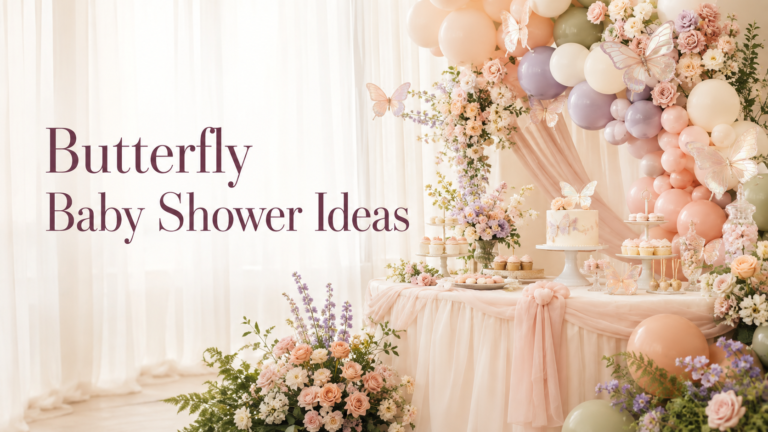
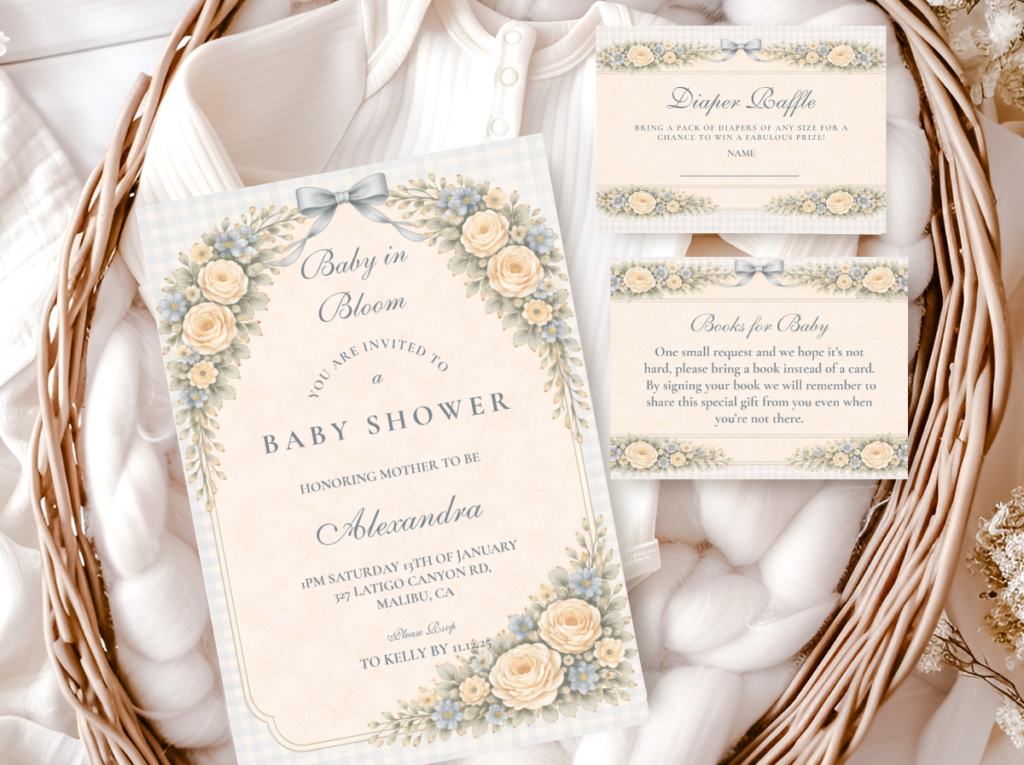
The Baby in Bloom collection shows floral-themed prediction cards in practice — soft botanicals and warm pastel tones that transform a standard prediction sheet into a keepsake card guests genuinely want to keep rather than leave on the table.
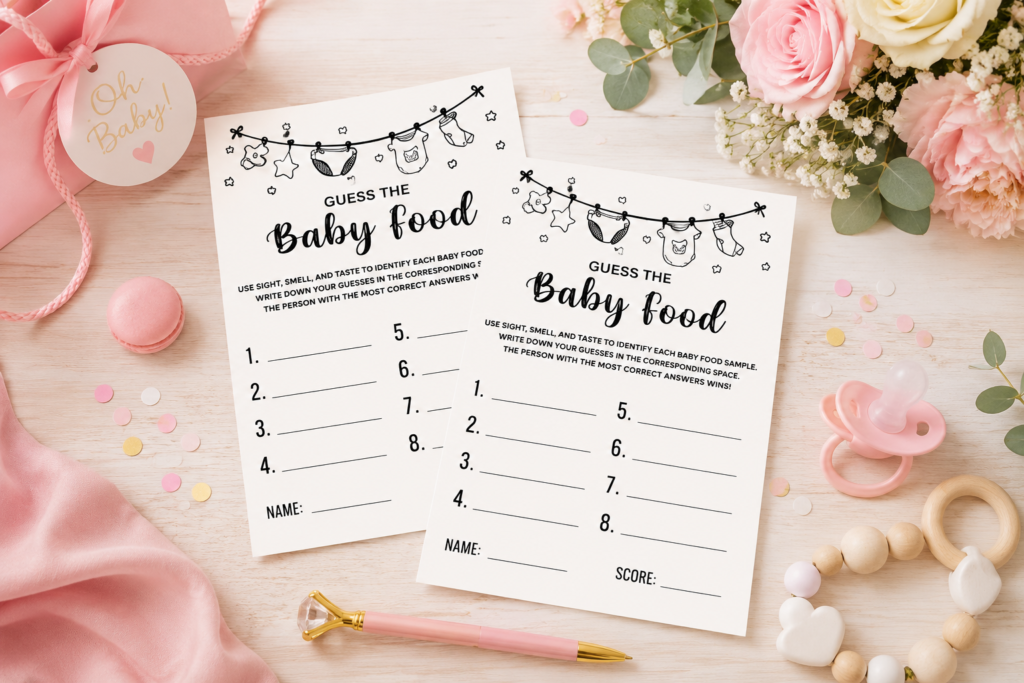
3.2 Guess the Baby Food
Guess the Baby Food is the game most likely to produce genuine, unscripted laughter — and the one most often executed in a way that looks improvised rather than planned. The game presents unlabelled small portions of baby food purees; guests taste and guess the flavor. The laughter comes from the universally surprising quality of some baby food flavors and the confident misidentification of others. It is genuinely funny in a way that does not require performance or embarrassment from any guest, because the humor comes from the food rather than from the people eating it.
For hygienic presentation: small ceramic ramekins or spoons rather than communal jars; a dedicated tasting spoon per person or a small spoon per ramekin rather than shared utensils. Select six to eight flavors that include some easily identifiable ones (sweet potato, banana) and some genuinely ambiguous ones (pear and parsnip, chicken and vegetable). Present them numbered rather than labeled, with a printed guess sheet in the shower’s palette at each seat. Guests fill in their guesses independently, then the reveal is done flavor by flavor with the actual labels shown. The game takes ten to twelve minutes and requires no facilitation beyond distributing materials and conducting the reveal — but all materials should be prepared in advance rather than assembled mid-event, because the presentation quality (small ceramic vessels, printed sheets, dedicated tasting spoons) is what makes this game look considered rather than improvised.
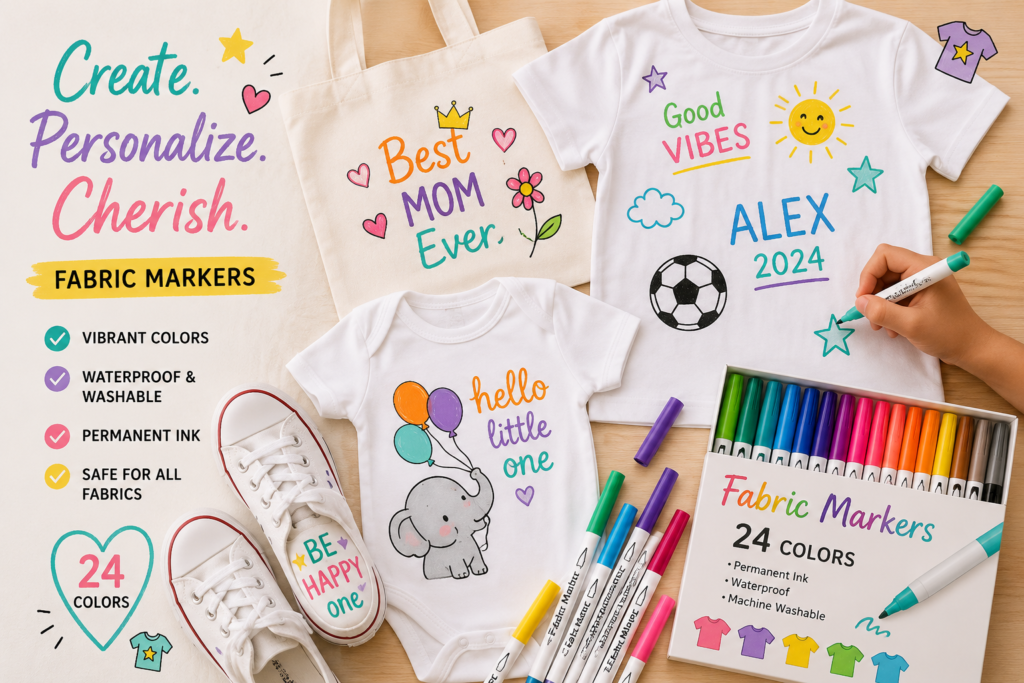
👕 Fabric markers for onesie decorating: The most important supply at the onesie station — these permanent, machine-washable fabric markers come in 24 colors including warm pastels that suit any shower palette. Test every marker before guests arrive.
3.3 Mommy or Daddy Quiz
The Mommy or Daddy quiz presents statements about the parents-to-be and asks guests to decide which parent they apply to. It works for any group size, produces consistent engagement, and generates the warmest moments of any structured game because every question is, implicitly, a celebration of the specific people at the center of the event. The tone rule is simple: every question should make the guest of honor smile, not squirm. Questions that reveal warmth, humor, and the specific character of the couple (“who is already the bigger fan of the name they chose?” “who cried watching baby videos on YouTube to prepare?”) belong in the game. Questions that probe privacy, create embarrassment, or position one parent as the butt of a joke do not belong in any form.
Prepare eight to ten questions. For small groups, run verbally: the host reads each question and guests hold up a card reading “Mum” or “Dad” simultaneously. For larger groups, distribute a printed question sheet and run as a written exercise before revealing the parent’s answers all at once. The reveal sequence — going through each question with the correct answer — is where the game’s warmth concentrates, so pause after each answer to allow the room to react before moving to the next. Run time: eight to ten minutes, including the reveal. Do not extend beyond ten minutes regardless of how many questions are prepared; the game’s quality is in its best questions, not its longest run.
Section 04 Wishes & Memory Activities
4.1 Advice Cards Station
The advice cards station is the activity with the highest value to the parents in the months after the shower — they read the cards again in the exhausted early weeks of new parenthood, and specific, genuine advice from people who know them has real meaning at that moment. The station works best when it is positioned adjacent to the food or drinks table where guests naturally pause, when the pens have been tested before the event (a pen that fails mid-card produces a guest who abandons the station), and when the prompt wording is specific enough to generate genuine rather than generic responses.
Prompt wording that generates generic responses: “Write your advice for the new parents.” Prompt wording that generates specific, memorable responses: “The best thing anyone ever told you before your first child arrived” — “One thing you wish someone had told you before parenthood” — “A small thing that made the biggest difference in the early weeks.” These prompts require the respondent to think about their own experience rather than to reproduce a platitude, which produces cards that are genuinely worth reading. Match the prompt wording to the shower’s theme for an additional layer of integration: a safari-themed shower might use “wisdom for the wild adventure ahead” as the prompt framing; an ocean theme might use “navigational wisdom for the voyage ahead.” This thematic alignment makes the activity feel like part of the designed celebration rather than a generic station that could have appeared at any shower.
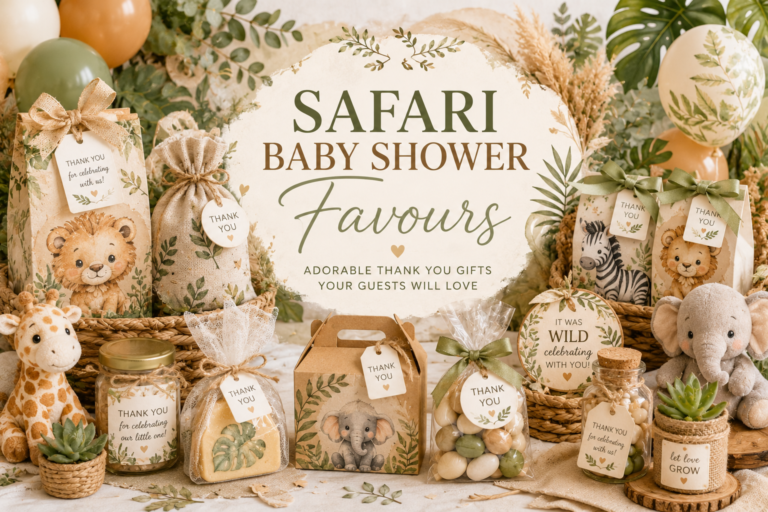
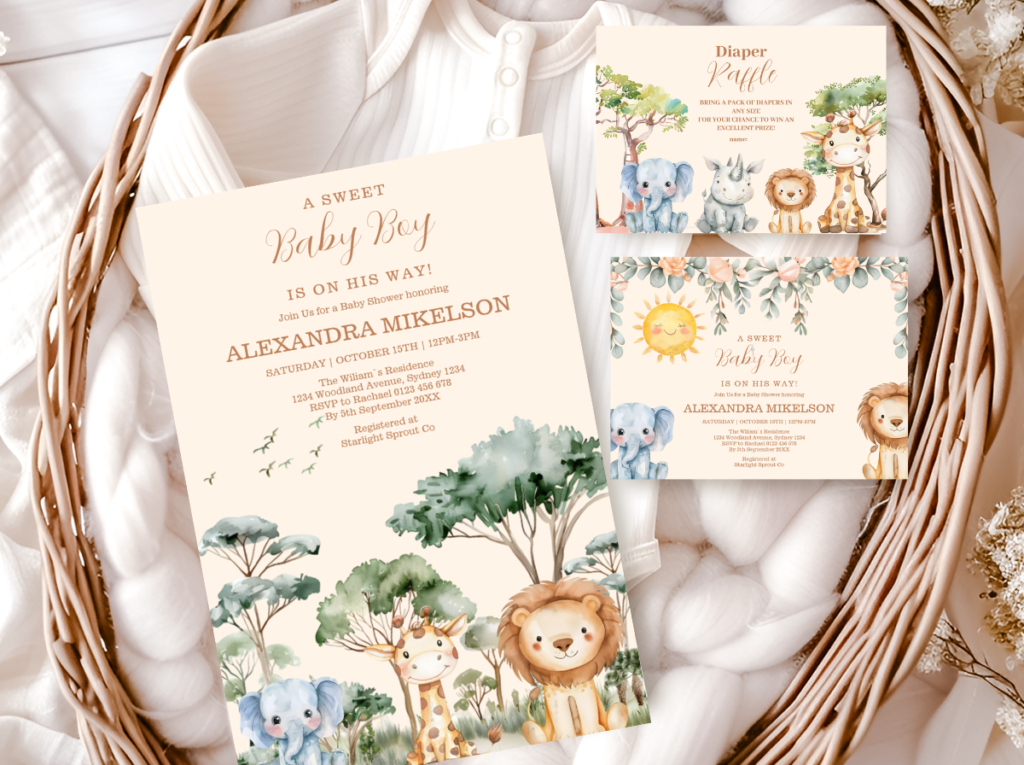
The Safari Theme collection demonstrates adventure-themed advice card framing — warm naturals and safari motifs that give the station a “wisdom for the wild adventure ahead” quality that matches the shower’s narrative without requiring any additional customization.
4.2 Wishes Jar
The wishes jar is the activity most often mentioned by parents years after a shower — not as “the game we played” but as “the jar we still have.” Guests write a wish for the baby on a small card or tag and add it to a wide-mouth glass jar that the parents take home. The distinction between advice cards and wishes is the temporal orientation: advice looks backward (drawing on the respondent’s experience) while wishes look forward (imagining the baby’s life ahead). Both activities belong in the same shower; they ask different things from guests and produce cards that read differently and complement each other when the parents re-read them.
The jar itself should be a clear wide-mouth glass jar large enough that rolled tags can be extracted and re-rolled easily — not a decorative jar with a narrow opening that traps the cards inside. A theme-motif tag in the shower’s palette (a cut-out flower shape for a botanical shower, a small bear silhouette for a bear shower, a wave shape for an ocean shower) is the thematic integration detail that transforms a standard wish card into a specific, designed object. The prompt “Write a wish for this little one’s life ahead” works for any theme; theme-specific framings (“Write a wish for the little explorer” / “Write a wish for the tiny dreamer” / “Write a wish for the little adventurer”) add the narrative quality that makes the jar feel like it belongs to this specific celebration.
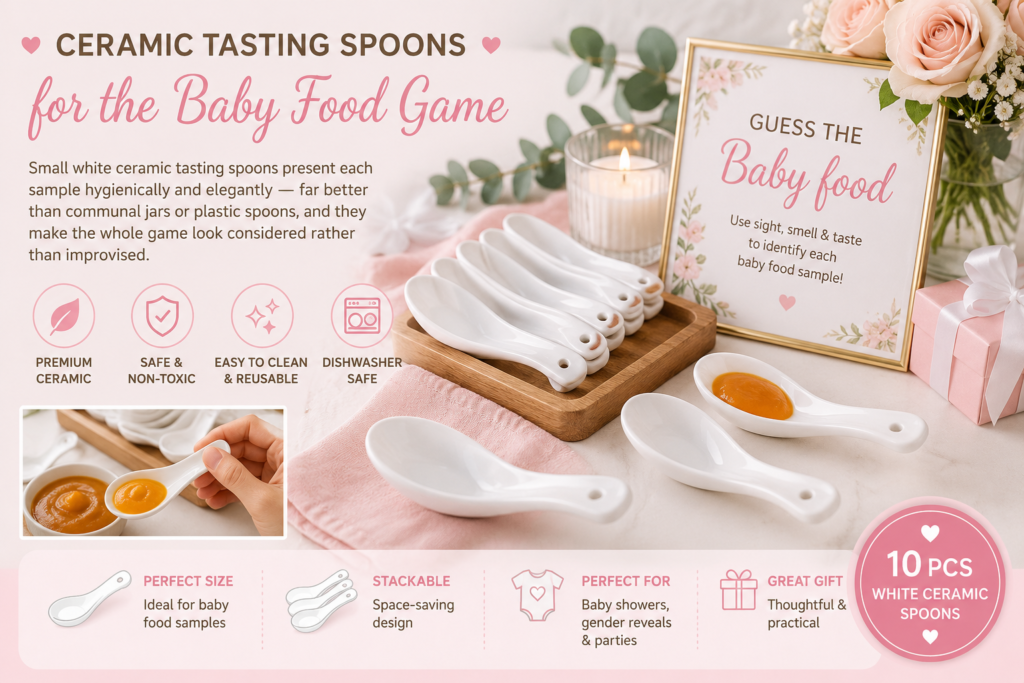
🥄 Ceramic tasting spoons for the baby food game: Small white ceramic tasting spoons present each sample hygienically and elegantly — far better than communal jars or plastic spoons, and they make the whole game look considered rather than improvised.
4.3 Onesie Decorating Station
The onesie decorating station is the only activity in this guide that runs passively for the entire duration of the shower — guests visit when they choose, spend as much or as little time as they want, and produce a physical keepsake the baby will actually wear. Because it requires no facilitation, no dedicated time slot, and no group participation, it is the most inclusive activity available for a mixed-age or mixed-comfort-level guest list: the guest who does not enjoy structured games can spend twenty minutes at the onesie station without ever feeling excluded from the event’s social activities.
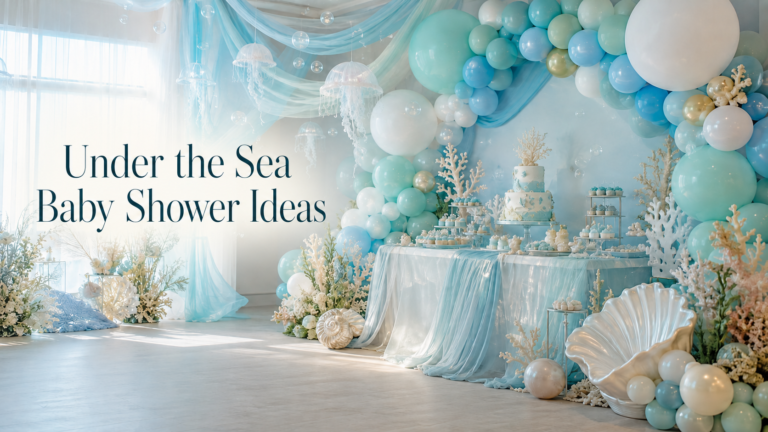
Setup requirements: plain onesies in a range of sizes (newborn through 6 months), permanent fabric markers in the shower’s palette colors (test every marker before the event to confirm they write smoothly), a flat cardboard insert inside each onesie to prevent marker bleed-through, and a display surface where completed onesies can be seen by other guests throughout the event — a short clothesline strung between two fixed points with small wooden pegs creates the most visually appealing display and encourages guests who have not yet visited the station to do so. The ocean theme creates a particularly strong visual coherence between the activity and the shower aesthetic: guests decorating sea creature onesies alongside a styled ocean-themed table produces the cohesive visual world that all the best shower activities achieve.
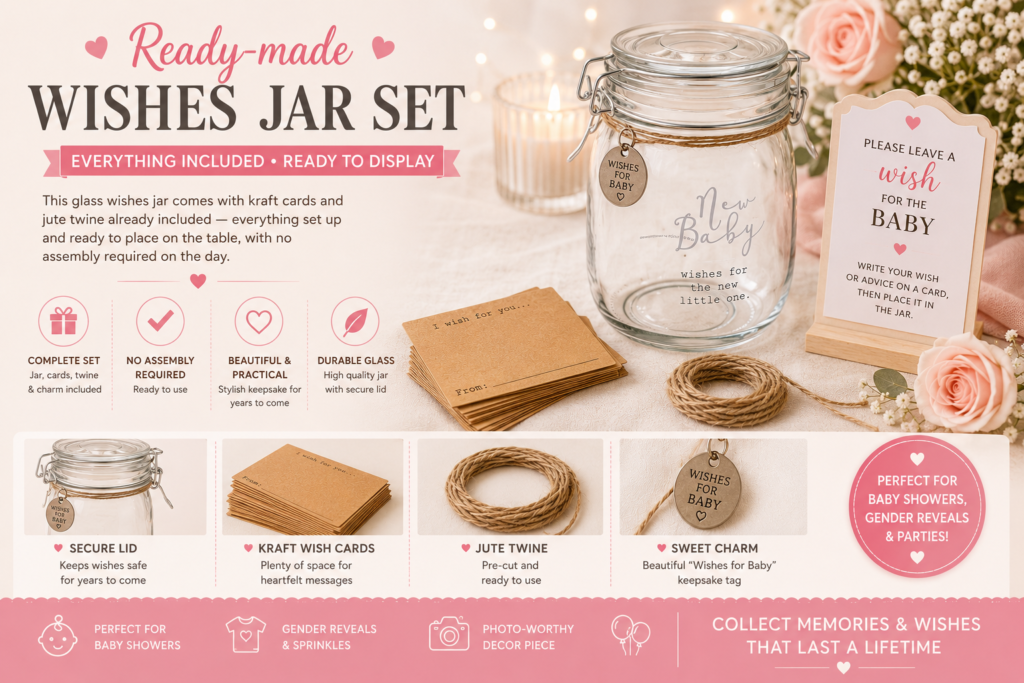
🫙 Ready-made wishes jar set: This glass wishes jar comes with kraft cards and jute twine already included — everything set up and ready to place on the table, with no assembly required on the day.
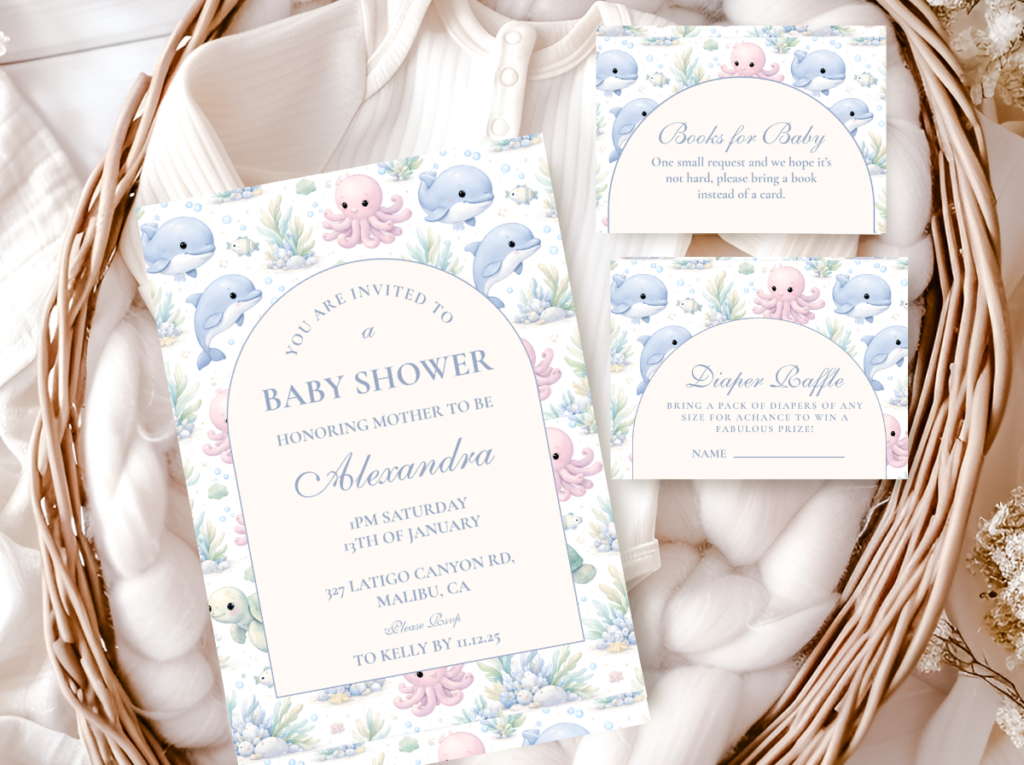
The Sea Animals collection demonstrates how an ocean-themed onesie station can be styled to match the shower aesthetic — sea creature illustrations and coastal palette tones that make the activity table a natural extension of the designed room rather than a separate craft corner.
Section 05 Light Interactive Activities
5.1 Baby Item Memory Tray
Fifteen to twenty baby items are displayed on a tray for sixty seconds; the tray is covered or removed; guests list as many items as they can remember. This game works for groups of any size, requires no team play or performance, and produces the specific satisfaction of recognition without the pressure of performing in front of other guests. Curate the tray to include items that belong to the shower’s theme direction — a honey-brown plush bear, a botanical-print muslin cloth, a wooden rattle, a small shell-shaped teether for an ocean shower — which makes the tray a styled display as well as a game prop. Present the tray on a wooden board or tray in the palette’s neutral tone rather than a bare table, so the setup reads as curated before the game begins. Run time: approximately eight minutes including tray viewing, listing, and reveal sequence.
5.2 Baby Shower Charades
Baby shower charades works best for groups under fifteen, where everyone can see the performer and no one is waiting too long between turns. Baby-related actions only: changing a nappy, giving a bath, rocking to sleep, trying to assemble flat-pack furniture, sending a three-word text one-handed while holding the baby — these are the actions that produce laughter because they are recognizable to almost every guest regardless of their own experience with babies. Keep the turns moving: thirty seconds per guess attempt, three clue attempts maximum, then move on regardless of whether the answer was found. A stalled charades round that the group cannot guess and the facilitator cannot rescue is the most atmosphere-killing outcome available at any shower game — the hard time limit prevents it.
5.3 Name That Baby Tune
Name That Baby Tune presents short clips of songs with “baby” in the title or lyrics; guests identify the song as quickly as possible. Run from a phone playlist through a portable speaker, with guests calling out answers verbally for small groups or writing on a printed sheet for larger ones. Prepare a playlist of twenty songs to allow for a good mix of obvious (immediately recognizable pop classics) and challenging (less familiar songs where the “baby” lyric is a genuinely obscure detail). This game works across all age ranges because the playlist can be curated to include songs from different decades, giving older and younger guests equally recognizable material. Run time: approximately ten minutes for fifteen songs at thirty seconds each; stop at whatever point the energy peaks rather than exhausting the full playlist.
Section 06 Prize Ideas & Game Styling
6.1 Prize Ideas That Suit Any Shower Aesthetic
The prizes that are most appreciated at baby showers are the ones that feel chosen rather than grabbed — items that could have appeared at a specific gift shop rather than a generic party supply bin. Botanical soy candles in warm ivory or sage vessels, honey products (artisan honey, honey and beeswax hand balm, honeycomb in a jar), premium loose-leaf or pyramid tea selections, small dried botanical arrangements, and seed packets in quality kraft packaging are the prize categories that consistently read as considered across all five aesthetic directions in this guide. The self-test for any prize: would you be genuinely pleased to receive this item yourself? If yes, it belongs in the prize selection. If no — if you would quietly put it in a drawer and forget about it — it does not, regardless of price.
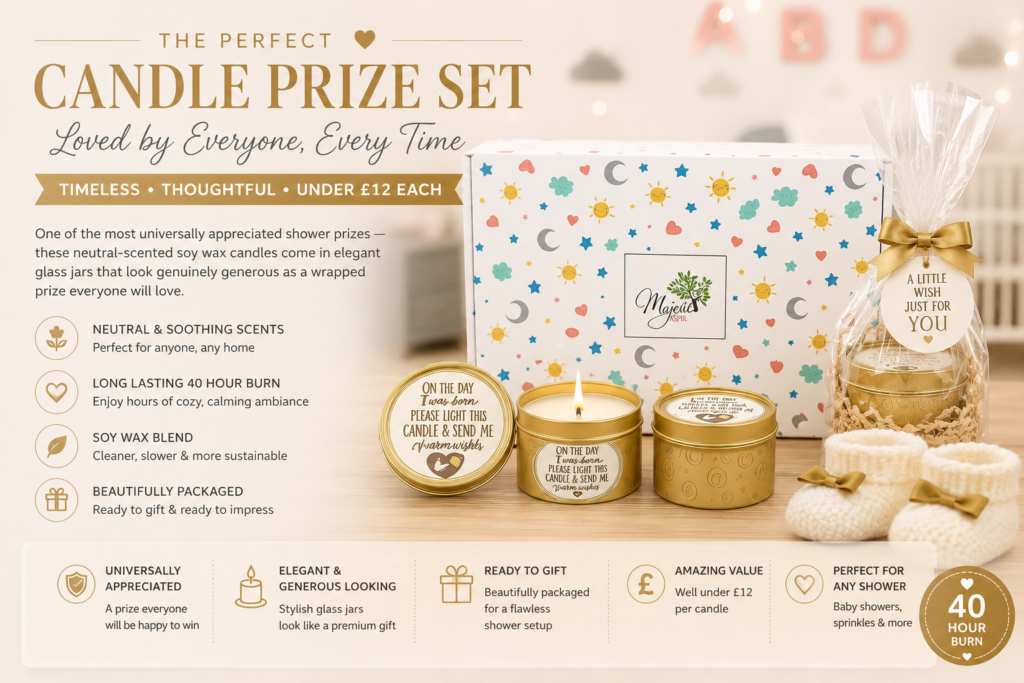
🕯️ Soy candle prize set: One of the most universally appreciated shower prizes — these neutral-scented soy wax candles come in elegant glass jars that look genuinely generous as a wrapped prize, at well under £12 per candle.
6.2 Displaying Prizes Before the Game
A prize displayed before the game starts creates anticipation that improves participation before a single rule has been explained. Guests who see a beautifully wrapped prize on a small wooden tray or tiered stand before the game is announced have a reason to want to win that is independent of the game itself — the prize becomes part of the room’s visual world and part of the event’s narrative arc. A prize produced from a bag at the moment of winning is appreciated; a prize that has been visible and building anticipation for twenty minutes is remembered. Wrap all prizes before guests arrive, display them at the game station or near the main table, and refer to them warmly when announcing the game: “and the winner takes this home.”
6.3 Styling Game Cards and Printables to Match the Shower
Every printed game element — bingo card, prediction sheet, guess sheet, advice card prompt, wishes tag — belongs to the stationery layer of the shower. When these elements share the same illustration style, typography, and palette as the invitation suite, the games feel like part of the designed celebration rather than a separate activity category that was planned after everything else. When they are in a different visual register, the transition from “beautiful shower” to “paper game activity” is visible to every guest in the room, and it diminishes the quality of both elements.
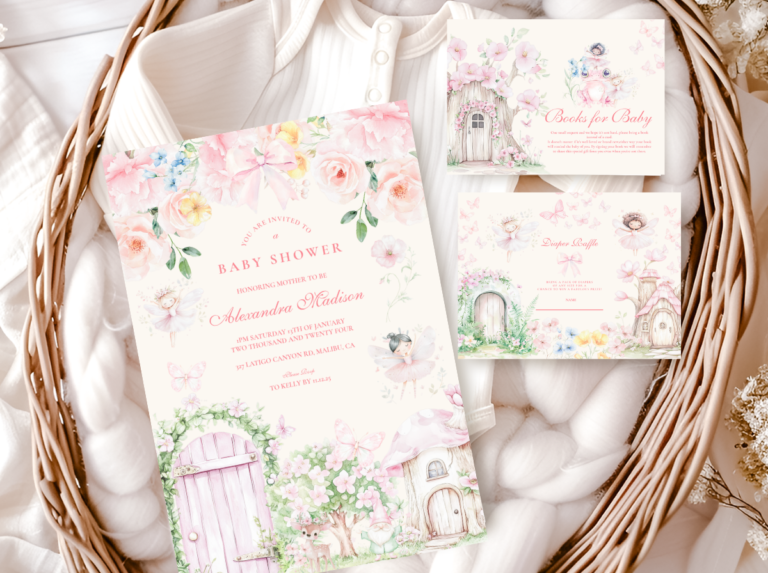
The practical implementation is straightforward: use the same card stock and the same palette colors for every printed element, whether that element is a formal place card or a bingo sheet. A fairy-themed shower uses the same soft dusty rose and sage palette, the same botanical motif, and the same hand-lettered typography quality for the bingo cards as for the invitation — not because bingo cards require that level of design investment to function, but because the guest receiving both will notice the consistency and it contributes to the overall quality impression of the celebration. The stationery suite is the simplest tool available for achieving this consistency across every printed element.
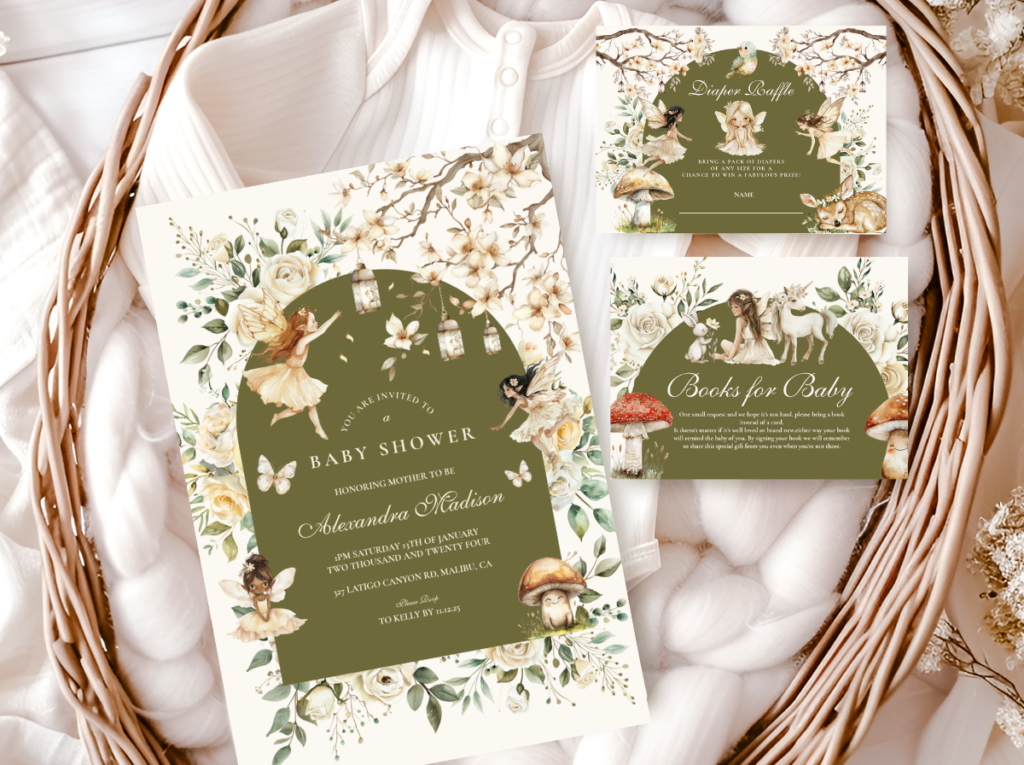
The Fairy Theme collection demonstrates fully themed game stationery — soft enchanted motifs in dusty rose and sage across bingo cards, prediction sheets, advice cards, and every other printed game element, so the games feel woven into the fairy world of the shower rather than layered on top of it.
Styling Tip — Prize Budget
Budget £5–£12 per prize — and spend more on the wrapping than the item if the total budget is tight. A £6 soy candle wrapped in tissue paper in the shower’s palette color, tied with a satin ribbon and finished with a handwritten tag reading “with love from the host,” reads as a significantly more generous prize than a £15 item in a standard cellophane gift bag with a pre-printed label. Presentation is as much of the prize as the object inside it, because the guest’s first interaction with the prize is visual — they see it wrapped on display before they receive it, and the quality of the wrapping sets the expectation before the unwrapping begins. A beautiful wrapping job takes approximately three minutes per prize; the return on those three minutes in terms of the winner’s experience is among the highest available anywhere in shower planning.
Section 07 Invitations & Stationery
Matching game cards, bingo sheets, prediction cards, and advice cards to the invitation suite transforms the games from a separate activity category into part of the designed celebration. This is not a decorative decision — it is a structural one. When every printed element in the room shares the same visual identity, the shower reads as a single designed world from arrival to departure rather than a well-decorated room with games bolted on. The game card a guest holds for twenty minutes during gift-opening is part of the room’s visual world in exactly the same way as the place card at their seat; it deserves the same design intention.
The practical value of using a stationery suite for game printables is the same as its value for any other printed element: palette consistency is automatic rather than coordinated. The bear motif on the bingo card matches the bear motif on the invitation and the favor tag because they were all produced from the same collection. The soft sage on the botanical advice card matches the soft sage on the menu card and the envelope liner because they share the same color file. This consistency is free to achieve when the suite is used and expensive to achieve any other way — because manually matching colors across independently sourced printed elements requires both effort and luck.
Each collection below includes coordinating printed elements across the full suite — invitation through game card through favor tag. The five directions below cover the bear, botanical, safari, ocean, and fairy aesthetic registers; choose the one that matches the shower’s theme and use its palette and illustration as the reference for every game element from bingo card to wishes tag.
Browse all five before deciding — each shows what a fully themed game stationery world looks like in a specific aesthetic direction, from the warmth of the bear collection to the enchanted quality of the fairy collection to the coastal softness of the sea animals direction.
Warm Nostalgic
Bear Theme
Honey tones and bear motifs — game cards that extend the warmth of the bear shower into every printed game element.
Garden & Floral
Baby in Bloom
Botanical motifs and soft pastels — prediction cards and advice cards that match the garden and floral shower direction.
Adventure
Safari Theme
Warm naturals and safari motifs — advice card framing and game cards for the wild adventure shower direction.
Coastal
Sea Animals
Sea creature illustrations in coastal tones — game cards and onesie station styling for the ocean shower direction.
Enchanted
Fairy Theme
Woodland magic in dusty rose and sage — the most fully themed game stationery direction, from bingo cards to wishes tags.
Frequently Asked Questions
How many games should I plan for a 2-hour baby shower?
Two games maximum for a 2-hour shower, with a total combined game time of no more than 25 minutes. The most effective combination is one simultaneous game distributed at the start (baby bingo placed at seats before guests arrive, run during gift-opening so it takes no additional time slot), Don’t Say Baby as a passive game running throughout, and if a second structured game is wanted, baby stats predictions distributed during food service with a reveal before the event closes. These three activities occupy approximately 20 minutes of active facilitation time across the full two hours and leave the remaining time for food, conversation, gift-opening, and the organic social moments that are, ultimately, the point of the event. Three or more structured games in a two-hour format is too many; guests spend more time being managed through an agenda than celebrating, and the quality of both the games and the social time suffers.
How do I make games feel inclusive for guests who don’t enjoy party games?
Two design choices guarantee inclusivity regardless of guest comfort levels. First, always include at least one passive activity — Don’t Say Baby, the onesie station, the advice card station, the wishes jar — that participates at the background of the event without requiring any active engagement from guests who would prefer not to play. These activities have no wrong answers, require no performance, and create no social pressure; guests who find structured games uncomfortable will typically engage readily with passive activities and feel fully part of the celebration as a result. Second, choose games that ask guests to be themselves rather than to perform: prediction cards ask for genuine guesses (no performance), memory tray asks for genuine recall (no embarrassment possible), Mommy or Daddy asks for warm opinion (no wrong answer). Games that require performance in front of the group — charades, singing, acting — should be reserved for groups where you know the guest list is genuinely comfortable with that register. For a mixed-comfort guest list, no game in this guide requires performance, and any event that combines two passive activities with one quiet simultaneous game will produce a thoroughly pleasant experience for every guest regardless of how they feel about games.
What prizes are appropriate for a baby shower?
Appropriate prizes are ones that any adult guest would genuinely be pleased to receive regardless of their age, lifestyle, or relationship to the guest of honor. This means consumable items (soy candles, honey products, artisan tea, botanical soap), functional items with wide appeal (a quality notebook, a seed packet, a small succulent), and sensory items that work for almost everyone (a scented candle, a hand cream, a bath product in a natural scent). It rules out items that are age-specific, highly personal (no clothing, no personalized jewelry for a stranger), novelty items that are funny in the moment but have no function afterward, or anything that would create social awkwardness when received. The £5–£12 budget range produces prize options that feel genuinely generous within those constraints. The self-test that applies to every prize decision: would you be genuinely pleased to receive this at a shower you attended as a guest? If the honest answer is yes, it belongs in the prize drawer. If the honest answer is “I’d smile and set it down,” it does not.
How do I run games smoothly without killing the atmosphere?
Five specific practices prevent games from interrupting atmosphere rather than contributing to it. First, prepare all materials completely before guests arrive — game cards at seats, tokens distributed at the entrance, tray set up, onesie station ready — because any setup that happens while guests wait creates dead time that kills momentum instantly. Second, keep rules introductions to under two minutes; any game that requires more than two minutes of explanation before it starts is too complex for a shower context or is being over-explained. Third, assign a helper (a willing guest or co-host) to distribute materials during the game while you facilitate verbally — the host who simultaneously explains rules and hands out materials loses the room’s attention at the exact moment it should be highest. Fourth, close each game crisply: announce the winner, present the prize, start the applause, and transition within thirty seconds. A game that lingers past its natural end becomes awkward. Fifth, never apologize for a game or check whether guests want to play — commit to the game with genuine enthusiasm and the room will follow. Tentative facilitation produces tentative participation; confident facilitation produces confident participation.
Ready to Build Your Games Plan?
Find the Stationery Suite That Ties Every Printed Game Element Together
From bingo card to wishes jar tag — every printed element in the same visual world.