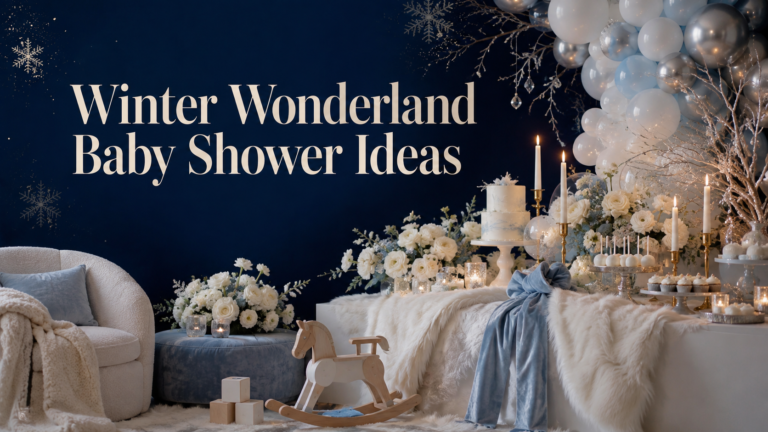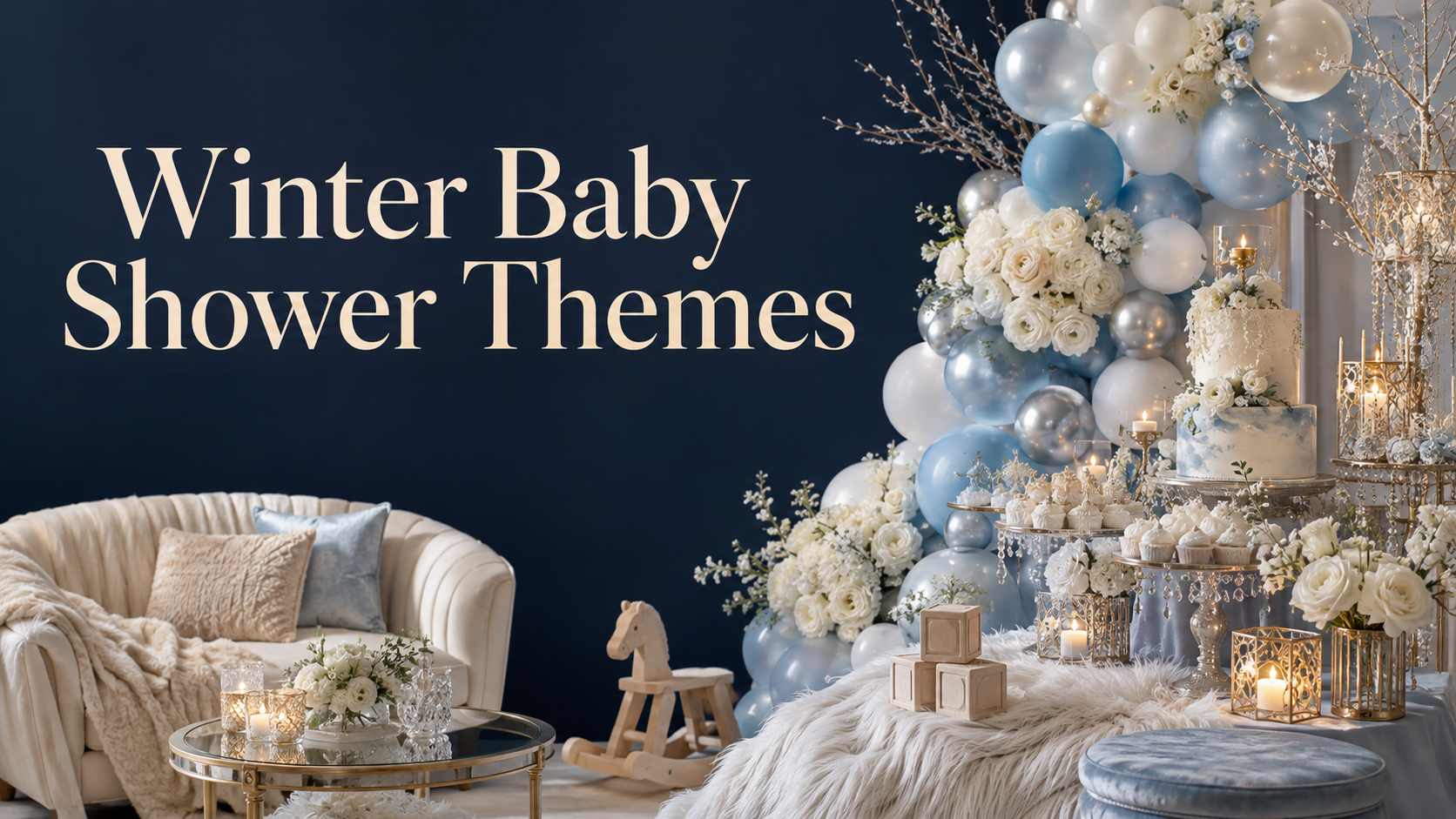
Winter Baby Shower Themes
Baby Shower · Winter Themes · Full Guide
Winter Baby Shower Themes
Why winter theming works from November through February, five distinct aesthetic directions, and the palette and candlelight rules that make a winter baby shower feel genuinely atmospheric.
Winter is a genuinely exceptional season for a baby shower, for a reason that has nothing to do with decoration: the season itself creates the atmosphere. The world contracts indoors, warmth becomes both literal and figurative, and the combination of candlelight, soft white, and cool air outside produces a specific quality of gathered coziness that no other season replicates. A well-executed winter baby shower does not work against the season — it works with it, choosing a palette and motifs that belong to the winter world and letting the season do the atmospheric work that no amount of decoration can fully manufacture.
This guide covers five distinct winter baby shower directions with their palettes and collections, the specific differences between a winter shower and a Christmas shower, and the styling decisions that most consistently produce a beautiful winter celebration.

❄️ Shop This Theme
Browse the Winter Baby Shower collection — the umbrella collection covering cool, elegant winter stationery for every direction in this guide.
“Winter is the most atmospheric season for a baby shower — the world goes quiet and warm indoors, and everything about that feeling belongs to a celebration of new life arriving into the coldest and most tender time of year.”
Section 01 Winter vs. Christmas Baby Shower: Three Concrete Differences
The single most useful distinction a host can make before choosing a theme for a cold-season baby shower is whether to go winter or Christmas. The two feel related because they share a season, but they are different aesthetics with different palettes, different motifs, and different calendar constraints. Three differences determine which is the right choice:
Winter is evergreen; Christmas is December-only. A winter baby shower works beautifully in November, December, January, and February — any month where the season is genuinely present. A Christmas baby shower works in December. Outside of December, Christmas theming creates a temporal mismatch: guests arriving at a Christmas-themed shower in January register — consciously or not — that the holiday has already passed and the celebration is out of season. Winter theming has no such constraint. A Little Snowflake shower in February reads as perfectly appropriate; the same shower decorated in Christmas motifs reads as a delayed holiday celebration rather than a fresh winter one. For any baby due in November or in the January-February window, winter theming is the more versatile and more temporally coherent choice.
The palettes are different. Winter’s palette is cool and luminous: pale blue, soft silver, icy white, and warm gold as the warming accent. Christmas’s palette is warm and traditional: deep red, forest green, cranberry, and warm ivory. The gold accent appears in both, but its role differs — in Christmas it reinforces warmth; in winter it prevents the cool palette from reading as cold. Mixing these palettes produces neither a winter shower nor a Christmas shower but an uncertain hybrid that reads as decorations from two different aesthetic worlds placed in the same room. Choosing the palette first is the most efficient way to determine which theme you are executing: if your instinct is toward pale blue and silver, you are in winter territory; if your instinct is toward deep red and green, you are in Christmas territory.
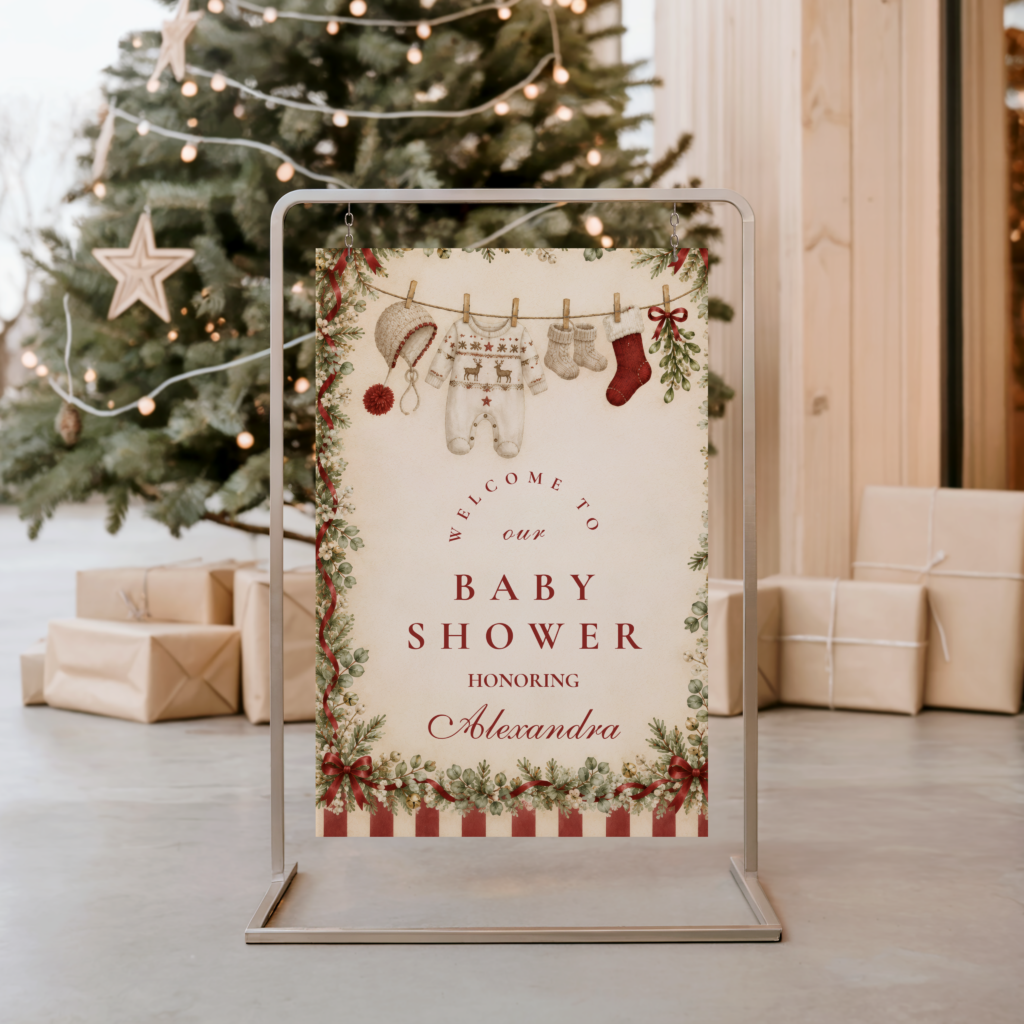
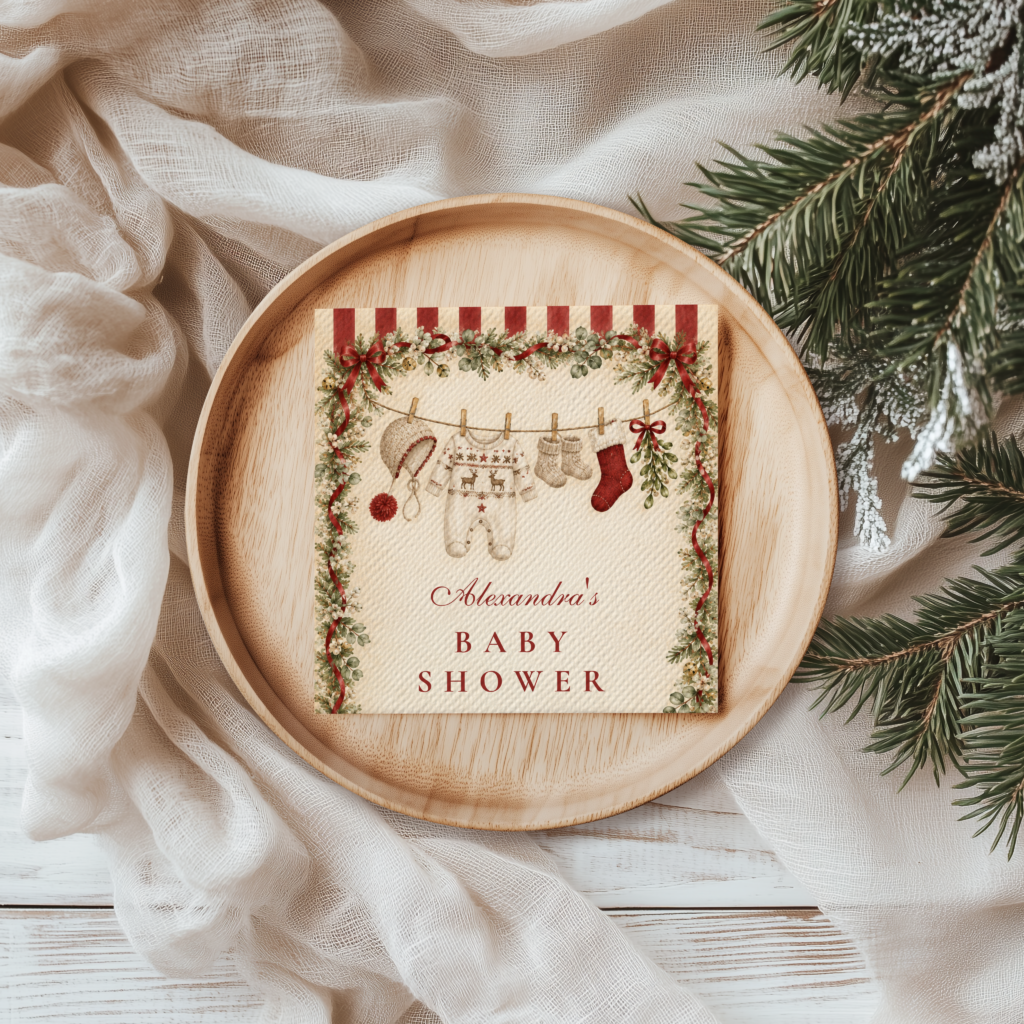
The motifs are different. Winter motifs are natural and atmospheric: snowflakes, icicles, bare silver branches, frost patterns, and the specific botanical quality of a frozen landscape. Christmas motifs are narrative and cultural: reindeer, ornaments, stockings, and the specific iconography of the holiday celebration. A snowflake belongs to both December and January equally; a reindeer belongs only to Christmas. This motif distinction is the fastest way to determine whether a specific decoration or stationery element belongs to a winter shower or a Christmas one. If removing the decoration from December makes it read as out of season, it is a Christmas motif; if it reads as appropriate in any winter month, it is a winter motif.
❄ Styling Tip
If the shower is in January or February, choose winter theming rather than Christmas. Guests arrive to a winter celebration feeling appropriately seasonal; the same celebration in Christmas motifs registers as a holiday that has already ended. Winter theming ages gracefully through the season; Christmas theming outside of December ages in the opposite direction.
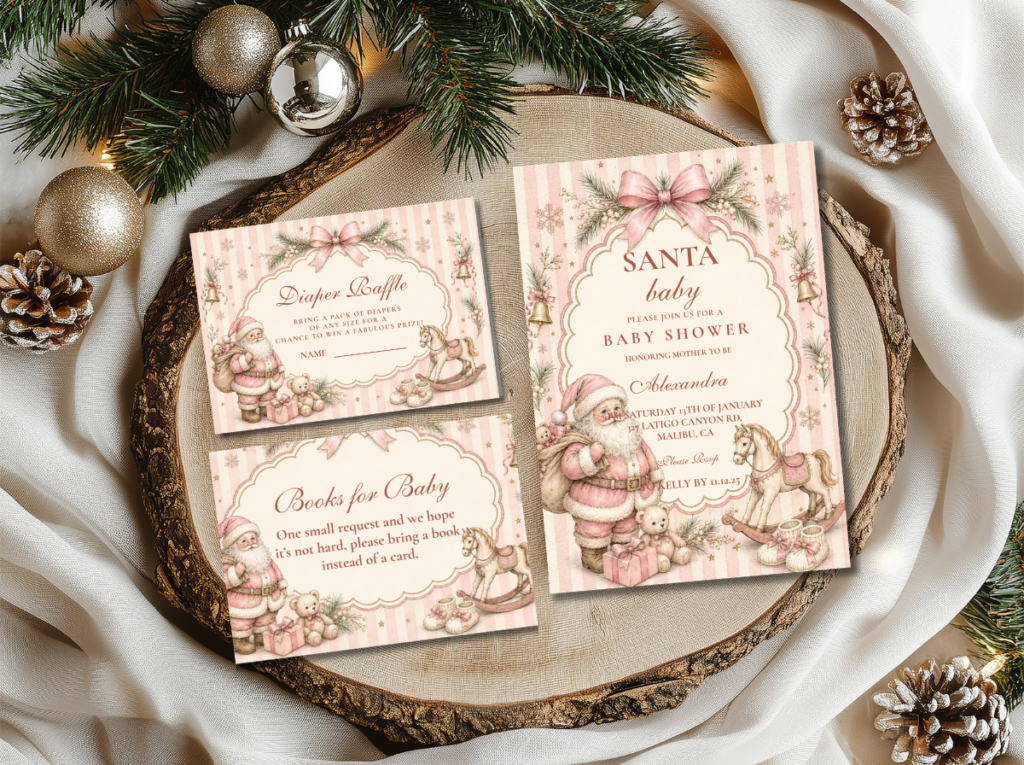
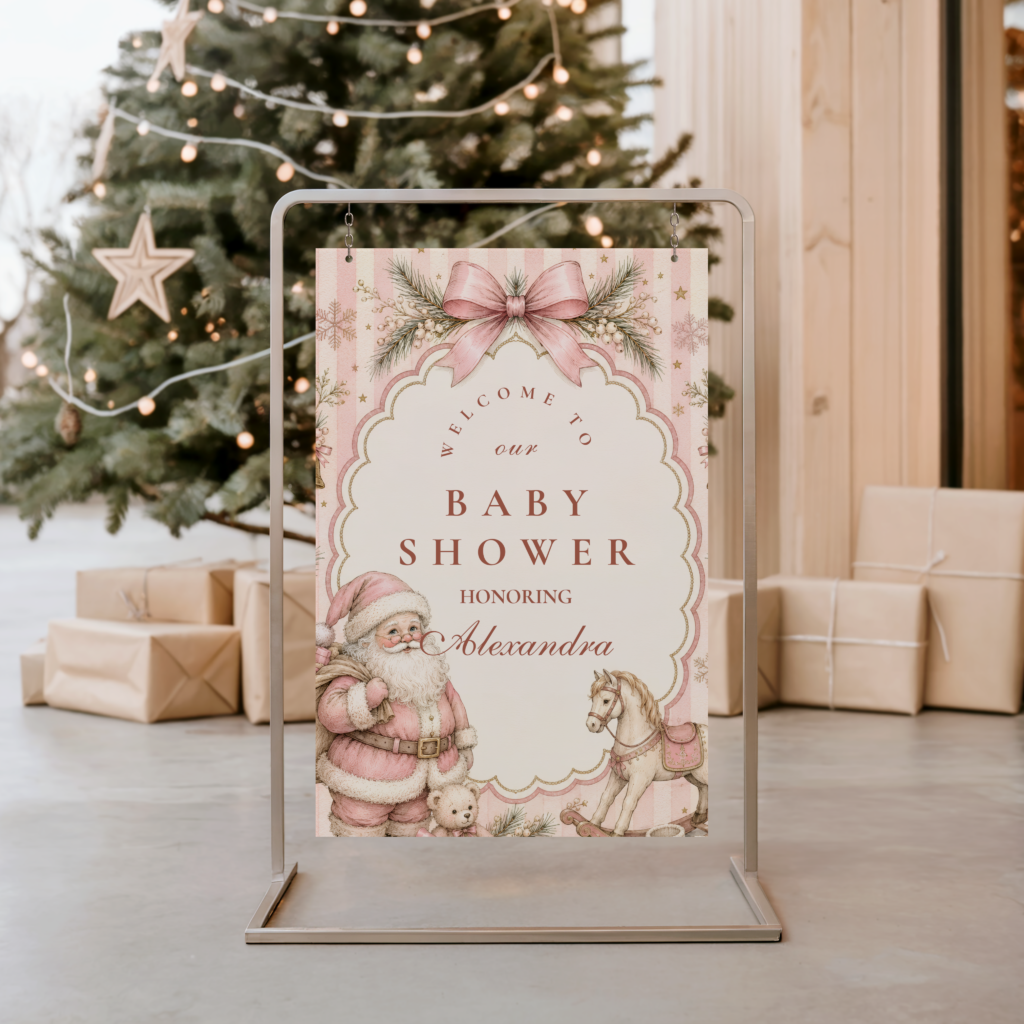
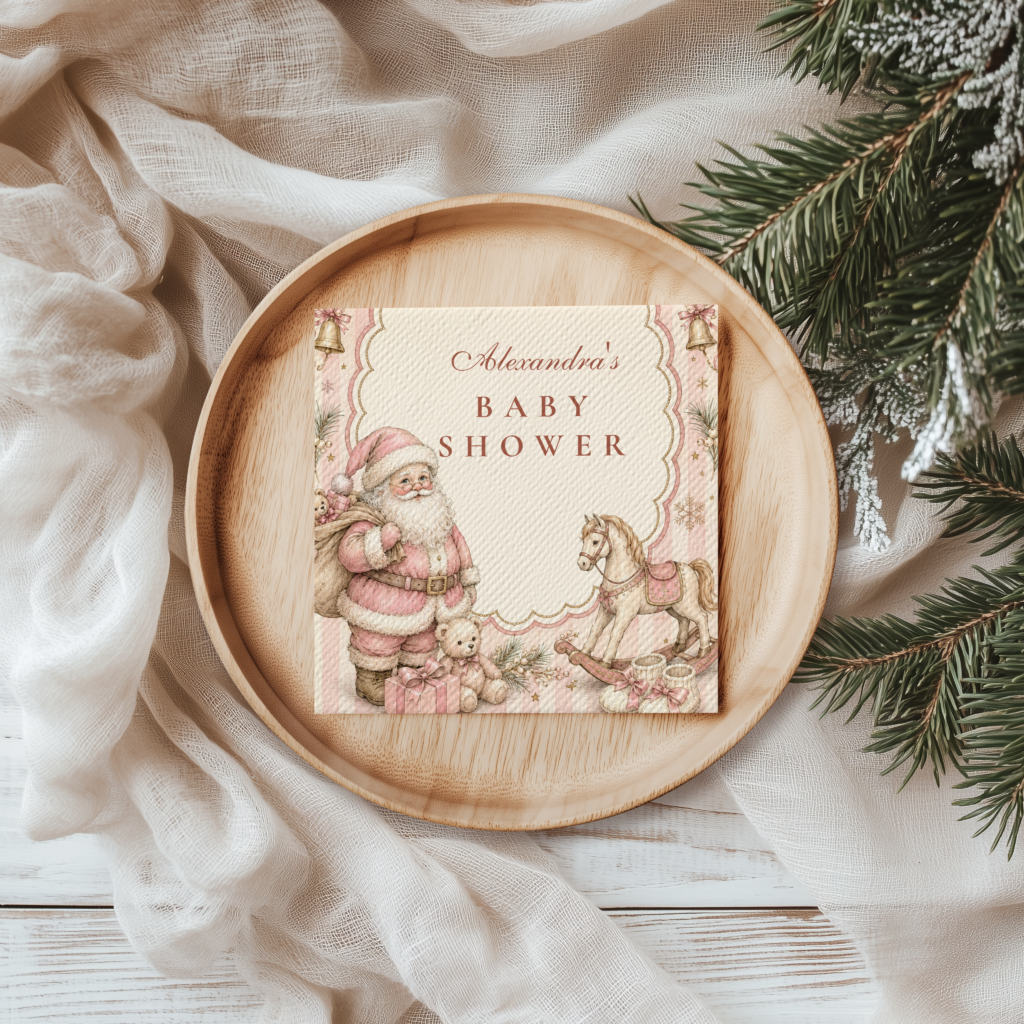
The Winter Baby Shower collection — cool, elegant stationery designed for the full November-to-February winter window.
Section 02 Five Winter Baby Shower Directions
Each direction below applies the winter palette principles to a distinct aesthetic register. The common elements across all five: pale, cool, or soft tones as the primary palette; gold as the mandatory warming accent; candlelight as the most important atmospheric element; and winter-natural motifs rather than Christmas-specific ones.
Direction 2.1
Classic Winter Wonderland
Soft white, silver, pale blue, and warm gold — the most versatile and most broadly appealing winter baby shower direction. Winter Wonderland works for any gender, any guest list size, and any January or February date equally well as December. The palette’s cool luminosity photographs exceptionally well, which makes it the most Pinterest-consistent winter baby shower direction available.

❄ Styling Tip
Winter Wonderland works best when gold warms the palette. Pure silver and white without a gold element reads as cold and clinical — closer to a medical aesthetic than a celebratory one. One warm gold element per zone — a gold candle holder, a gold-edged place card, a gold ribbon on the centrepiece — is the minimum required to keep the cool palette reading as atmospheric rather than sterile.
Direction 2.2
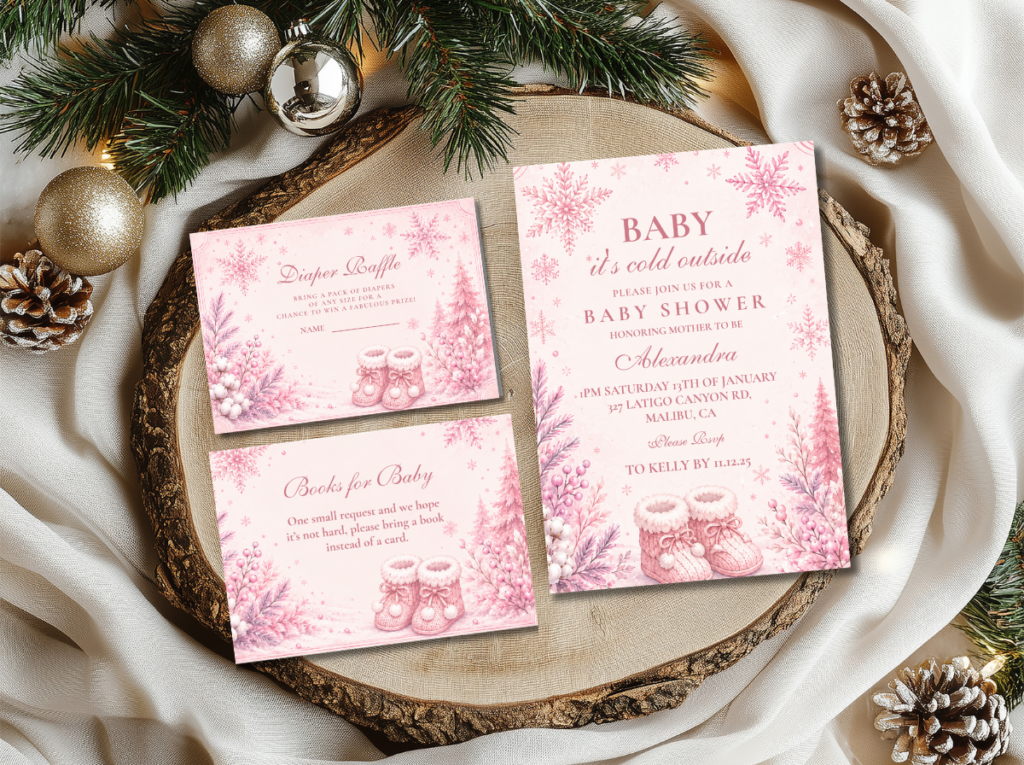
Pink Winter Wonderland
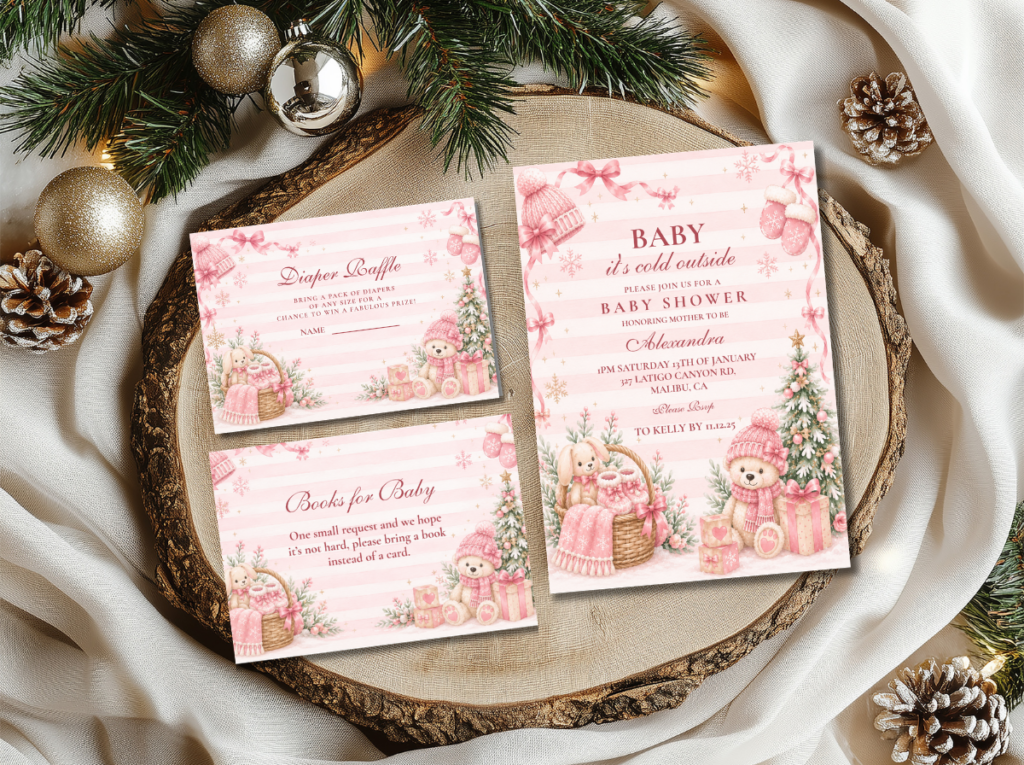
Blush, soft white, and rose gold — the most feminine and most girl-specific winter direction. Pink Winter Wonderland takes the ethereal quality of Classic Winter Wonderland and warms it significantly with blush and rose gold, producing a palette that is simultaneously wintry and warmly feminine. The most appropriate direction for a girl baby shower hosted in any winter month.
Direction 2.3
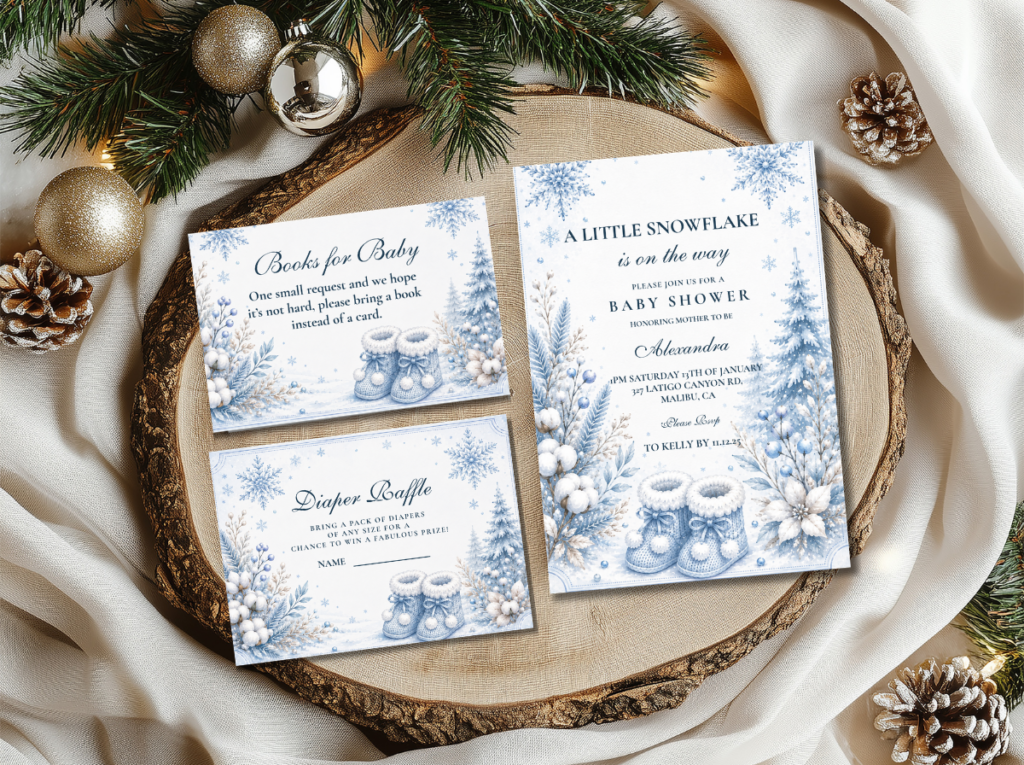
Little Snowflake
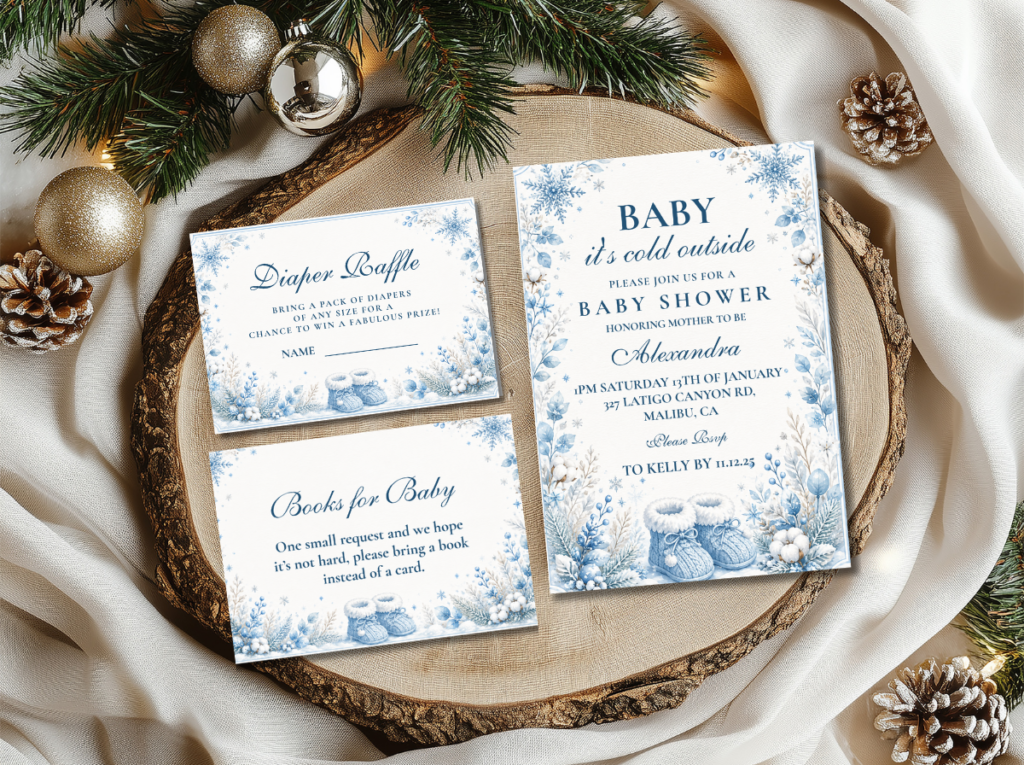
Pale blue, silver, white, and warm gold with delicate snowflake motifs as the primary design language — the most whimsical and most specifically baby-oriented of the five directions. Where Classic Winter Wonderland is broadly atmospheric, Little Snowflake is specifically about the baby arriving into the winter world: the motif communicates ‘a unique and perfect little one’ in a way that no other winter motif does as directly.
Direction 2.4
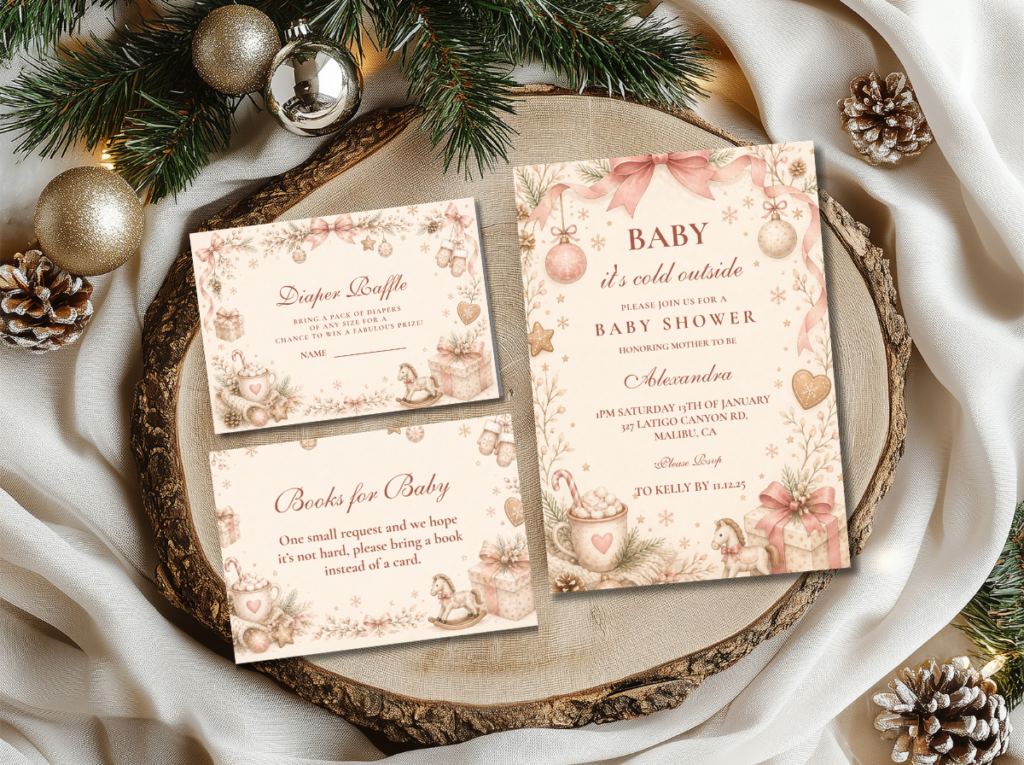
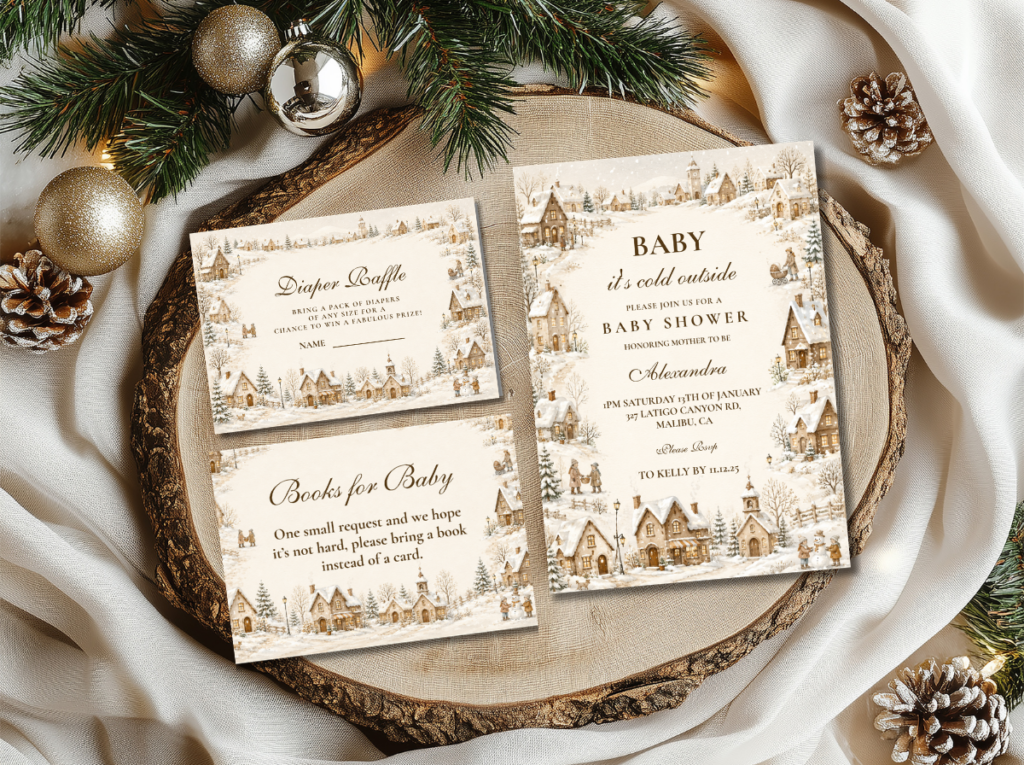
Baby It’s Cold Outside
Warm neutrals, plaid, and cozy indoor aesthetic rather than the cool luminous palette of the other four directions — the most narrative and most distinctly different winter baby shower direction. Baby It’s Cold Outside reframes the winter shower around the indoors rather than the outdoors: the warmth of the room against the cold outside, the texture of plaid and linen and wood, the amber glow of firelight. The palette is warm amber, cream, and soft brown rather than cool blue and silver.
Direction 2.5
Elegant Blue Winter Baby Shower
Deep navy, silver, white, and gold — the most sophisticated and most editorial of the five winter directions. Where Classic Winter Wonderland is soft and ethereal, Elegant Blue Winter is structured and dramatic: the deep navy grounds the palette and prevents the cool tones from reading as pale or washed-out, while silver and gold provide the luminous accent layer that connects it to the winter season’s specific light quality.
Section 03 Decor, Cake & Table at a Glance
The winter baby shower table follows the same layering discipline as any other considered shower table — foundation first, then individual setting details, then centrepiece last — with one winter-specific addition that applies across all five directions: candlelight.
Centrepiece: A low arrangement of white or pale flowers and silver-tipped botanical elements — white spray roses, dried cotton stems, silver eucalyptus, and white amaryllis are all appropriate across the cool winter directions — in a silver or clear glass vessel, with a cluster of white and warm-cream taper candles in silver or gold holders at varying heights beside it. For the Baby It’s Cold Outside direction, the centrepiece shifts to warm-toned elements: cream florals, dried botanicals in natural tones, and plaid ribbon at the vessel rather than silver. For the Elegant Blue direction, a low arrangement of white blooms in a dark ceramic or navy vessel with gold accent elements.
Cake: A semi-naked or smooth buttercream cake in soft white or pale cream — not bright white, which reads as harsh against the pale winter palette — with a single decorative topper in the direction’s motif and fresh or dried botanical accents at the tier base. Silver or gold leaf at the tier divide applies across all five directions. For the Baby It’s Cold Outside direction, a warm cream cake with amber-toned elements; for the Elegant Blue direction, a white cake with a navy detail and gold leaf.
Linen and setting: A soft white or pale silver runner across the table rather than a bright white tablecloth, which reads as clinical against the cool winter palette. Pale blue or soft silver linen napkins for the cool directions; warm cream linen for Baby It’s Cold Outside. Silver or gold charger plates at each setting provide the reflective element that allows the candlelight to carry across the full table surface.
❄ Styling Tip
Candlelight is mandatory for a winter baby shower — and it is the single most impactful atmospheric element available at any budget level. Warm white candles in silver or gold holders transform a winter table from decorated to atmospheric. In photographs, candlelight makes the entire pale palette glow rather than sit flat. Without it, a white and silver winter table reads as a cool surface that needs more decoration; with it, the palette’s restraint reads as deliberate elegance.
Section 04 Invitations & Stationery
The winter baby shower invitation sets the tone for the palette and direction before any other design decision is visible to guests. The most effective winter baby shower invitation communicates two things simultaneously: the season’s atmospheric quality — the cool luminosity, the quiet warmth, the sense of gathering indoors — and the baby’s arrival as the celebration’s reason. A pale blue card with a delicate snowflake motif and warm gold lettering accomplishes both; a generic white card with a blue border accomplishes neither.
The stationery suite should apply the direction’s palette consistently from the first piece the guest receives to the last: invitation, place card, food label, welcome sign, and thank-you card should all belong to the same cool or warm winter world. The six collections below cover every winter baby shower direction from the most classical to the most architectural.
Umbrella Collection
Winter Baby Shower
Cool, elegant winter stationery for the full November-to-February window — the broadest and most versatile winter baby shower collection.
Classic Direction
Winter Wonderland Baby Shower
Soft white, silver, and warm gold — the most versatile and most gender-neutral winter baby shower stationery suite.
Girl Direction
Pink Winter Wonderland
Blush, soft white, and rose gold — the most feminine and most girl-specific winter stationery direction.
Baby-Specific Motif
Little Snowflake
Pale blue, silver, and gold with delicate snowflake motifs — the most specifically baby-oriented winter stationery direction.
Cozy & Narrative
Baby It’s Cold Outside
Warm amber, cream, and plaid-adjacent warmth — the most cozy and most narrative winter baby shower stationery direction.
Editorial & Sophisticated
Elegant Blue Winter Baby Shower
Deep navy, silver, and gold — the most sophisticated and most architecturally structured winter baby shower stationery direction.
Browse the full winter baby shower stationery range — five directions from classic winter wonderland to cozy narrative to editorial blue.
Frequently Asked Questions
What colors are used for a winter baby shower?
The core winter baby shower palette is pale blue, soft silver, icy white, and warm gold — with the gold serving as the mandatory warming accent that prevents the cool tones from reading as cold rather than atmospheric. Specific variations apply per direction: Classic Winter Wonderland uses soft white, silver, pale blue, and gold; Pink Winter Wonderland adds blush and rose gold; Little Snowflake deepens the pale blue slightly toward periwinkle; Elegant Blue Winter replaces the pale blue with deep navy; Baby It’s Cold Outside replaces the cool palette entirely with warm amber, cream, and natural tones. Across all five directions, the gold accent is constant and mandatory — it is the element that makes any cool winter palette read as celebratory rather than austere.
How is a winter baby shower different from a Christmas baby shower?
Three specific differences: timing flexibility, palette, and motifs. Winter theming works from November through February; Christmas theming works only in December. The winter palette is cool — pale blue, silver, soft white, and warm gold; the Christmas palette is warm — deep red, forest green, cranberry, and warm ivory. Winter motifs are natural and atmospheric — snowflakes, icicles, bare branches, frost; Christmas motifs are narrative and cultural — ornaments, reindeer, stockings. The palettes and motifs can overlap in December — a snowflake appears in both — but they read as distinct aesthetic worlds. For any shower outside of December, choosing winter theming produces a more temporally coherent and more seasonally appropriate result.
Can a winter baby shower work for any gender?
Yes — and more easily than most other seasonal shower themes. Classic Winter Wonderland, Little Snowflake, Elegant Blue Winter, and Baby It’s Cold Outside all carry no inherent gender signal: pale blue, silver, navy, and warm amber are all gender-neutral tones in the winter context. Pink Winter Wonderland is the specifically girl-directed direction in the five. For a boy-specific winter shower, Elegant Blue Winter’s deep navy is the most naturally boy-adjacent direction. For a gender-neutral shower before the baby’s gender is known, Classic Winter Wonderland is the most broadly appropriate and most consistently beautiful choice.
What are the best months for a winter baby shower?
Any month from mid-November through February works well for a winter baby shower, with the sweet spot being late November through January. Late November gives the winter season enough presence to feel genuinely appropriate without the December crowding that makes scheduling difficult; January is the single most naturally suited month for a winter shower — the season is at its quietest and most atmospheric, and the post-holiday lull in social commitments means guests are genuinely available and genuinely glad to attend a warm, intimate gathering. February works well for the Baby It’s Cold Outside direction particularly, which leans into the cozy-indoor quality that February produces more acutely than any other winter month.
Pale Blue · Silver · Warm Gold · Candlelight · Five Directions
Shop Winter Baby Shower Stationery
Invitations, place cards, and favour tags for every winter baby shower direction — from classic wonderland to cozy narrative to elegant blue.