Wildflower Baby Shower Centerpiece Ideas
Baby Wonderland Studio · Baby Shower Decor Guide
Wildflower Baby Shower Centerpiece Ideas
The vessel rules, the height principles, and the asymmetry test that separate a wildflower centrepiece from a florist arrangement — plus four directions and the one table detail that reads meadow for almost nothing.
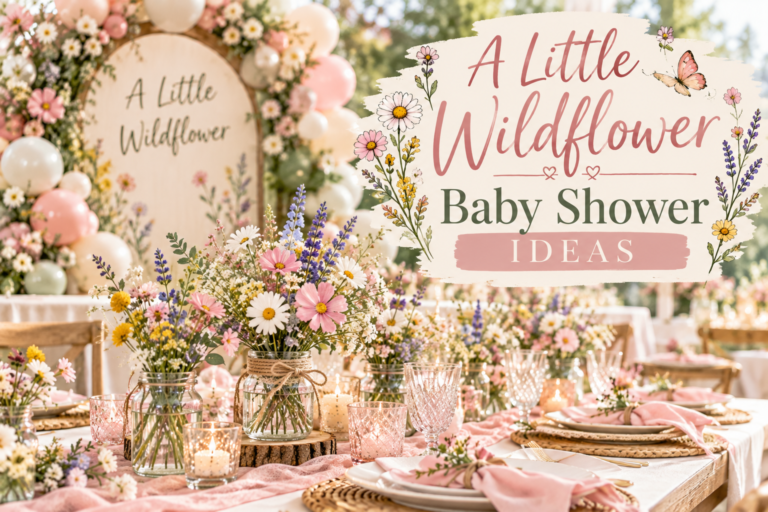
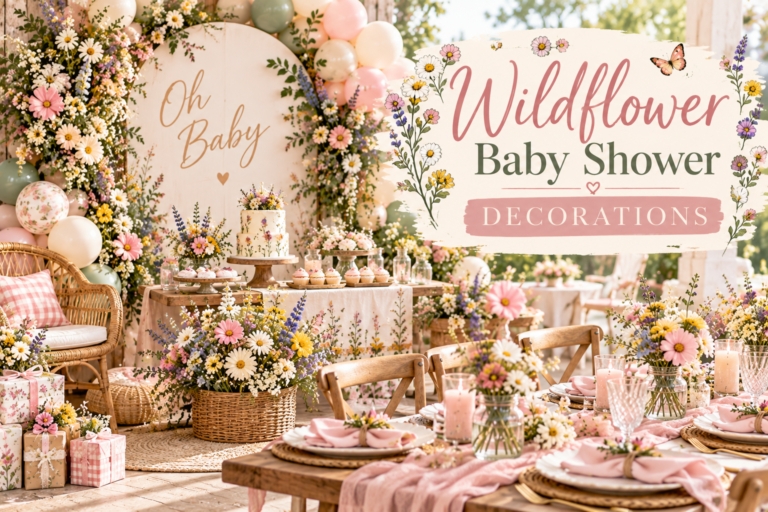
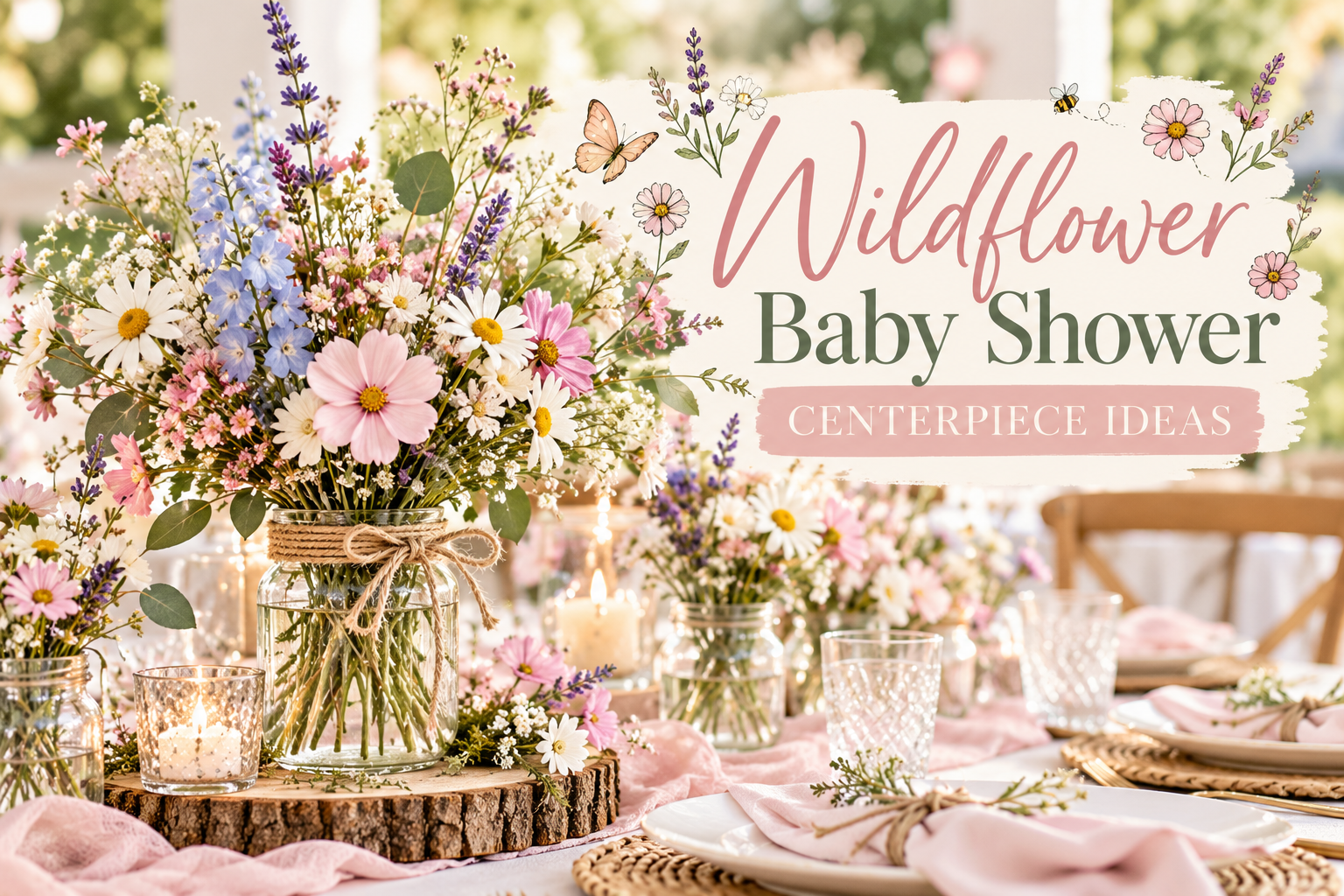
The wildflower baby shower centrepiece is where the mismatched-vessel principle is most visibly either present or absent. A centrepiece with three different vessel types at three different heights, filled with loosely arranged wildflower stems that extend beyond the vessel edges and lean in different directions, reads as meadow-gathered and specifically botanical. The same flowers arranged tightly in a single matching vase read as a florist bouquet placed on a table. The centrepiece is not about the flowers — it is about the vessels, the heights, and the asymmetric arrangement style that communicates ‘gathered’ rather than ‘arranged.’
Wildflower stationery to pair with the centrepiece table — six directions at Baby Wonderland Studio:
Watercolor Wildflower
Watercolor Wildflower Invitations
Loose brushstroke botanical — the natural stationery companion for a mixed wildflower centrepiece cluster.
Pink Wildflower
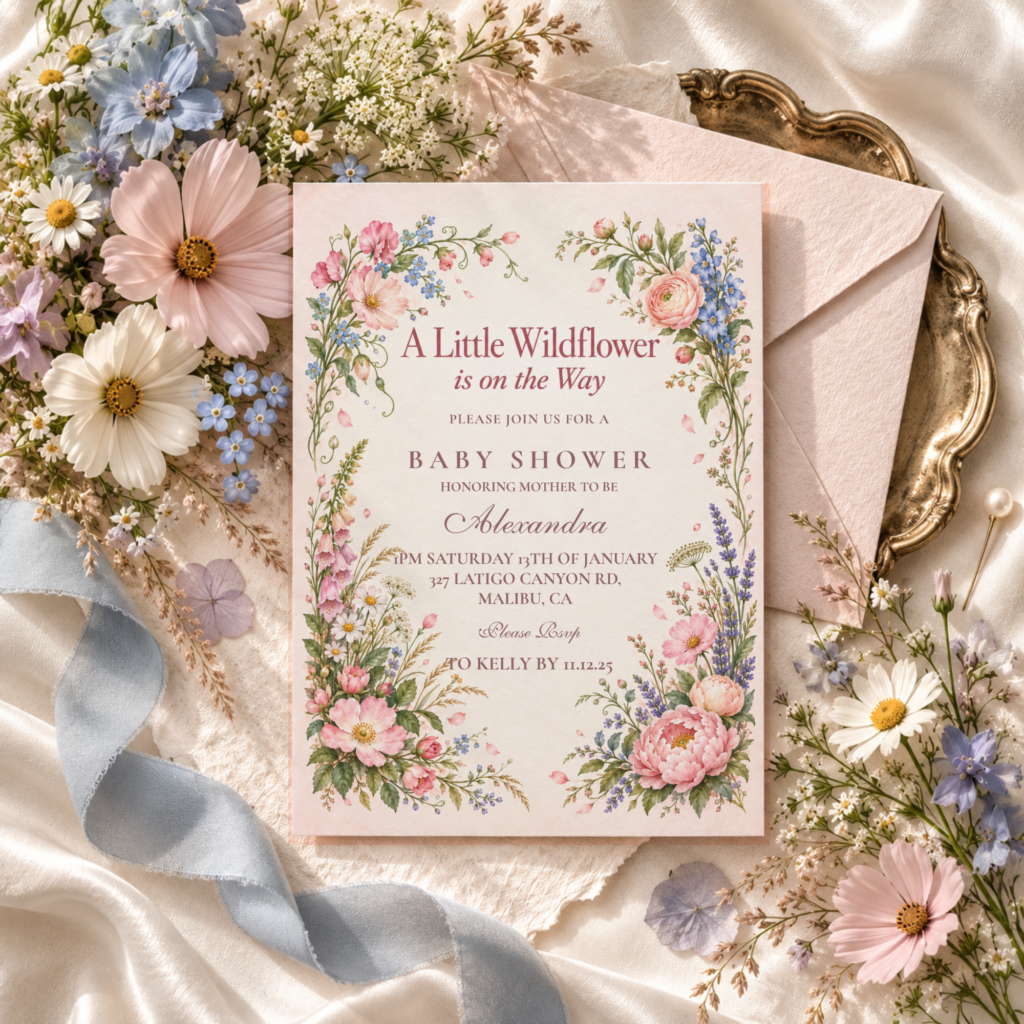
Pink Wildflower Invitations
Dusty rose and blush palette — stationery for the most feminine mismatched-vessel centrepiece direction.
Cottagecore Wildflower
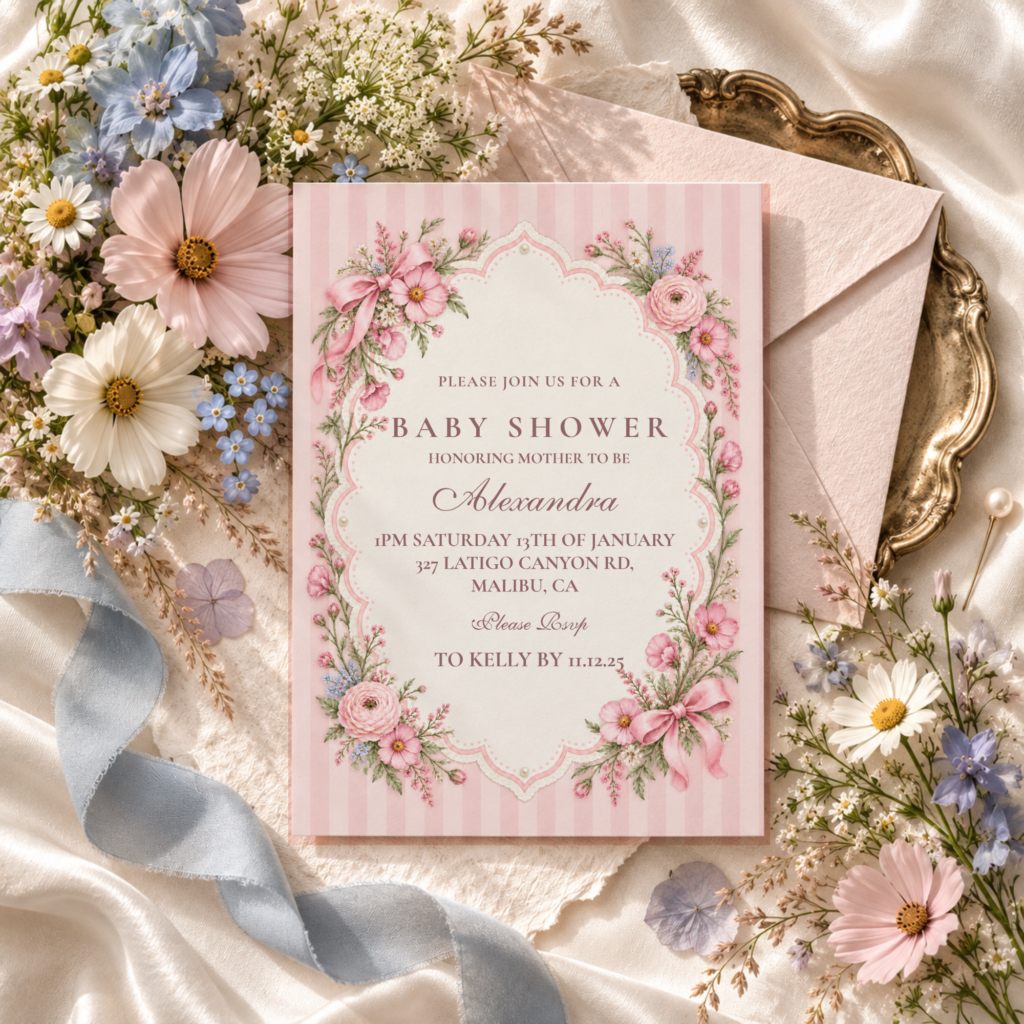
Cottagecore Wildflower Invitations
Cottage garden botanical — stationery for the rustic tin-can and mason-jar centrepiece direction.
Vintage Wildflower
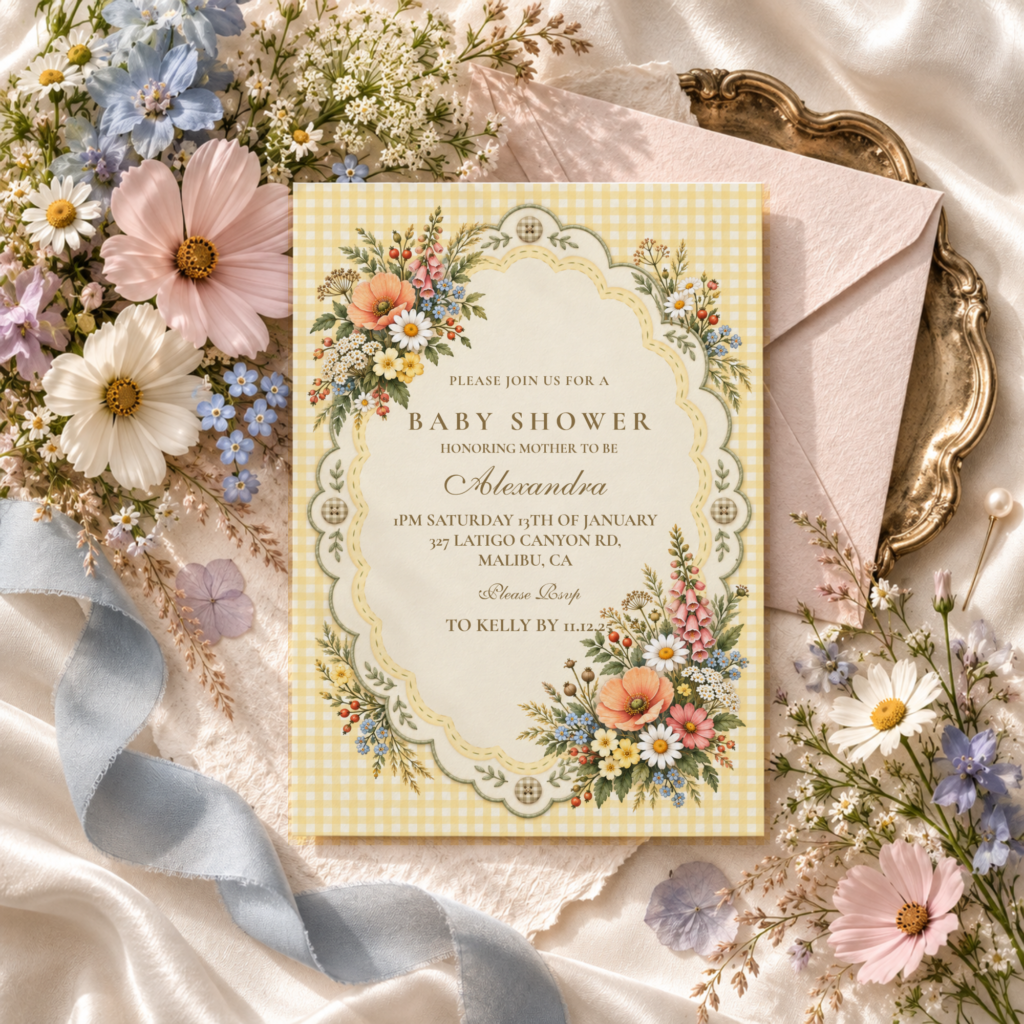
Vintage Wildflower Invitations
Antique botanical illustration — the stationery match for a scattered-petal and scattered-detail table styling.
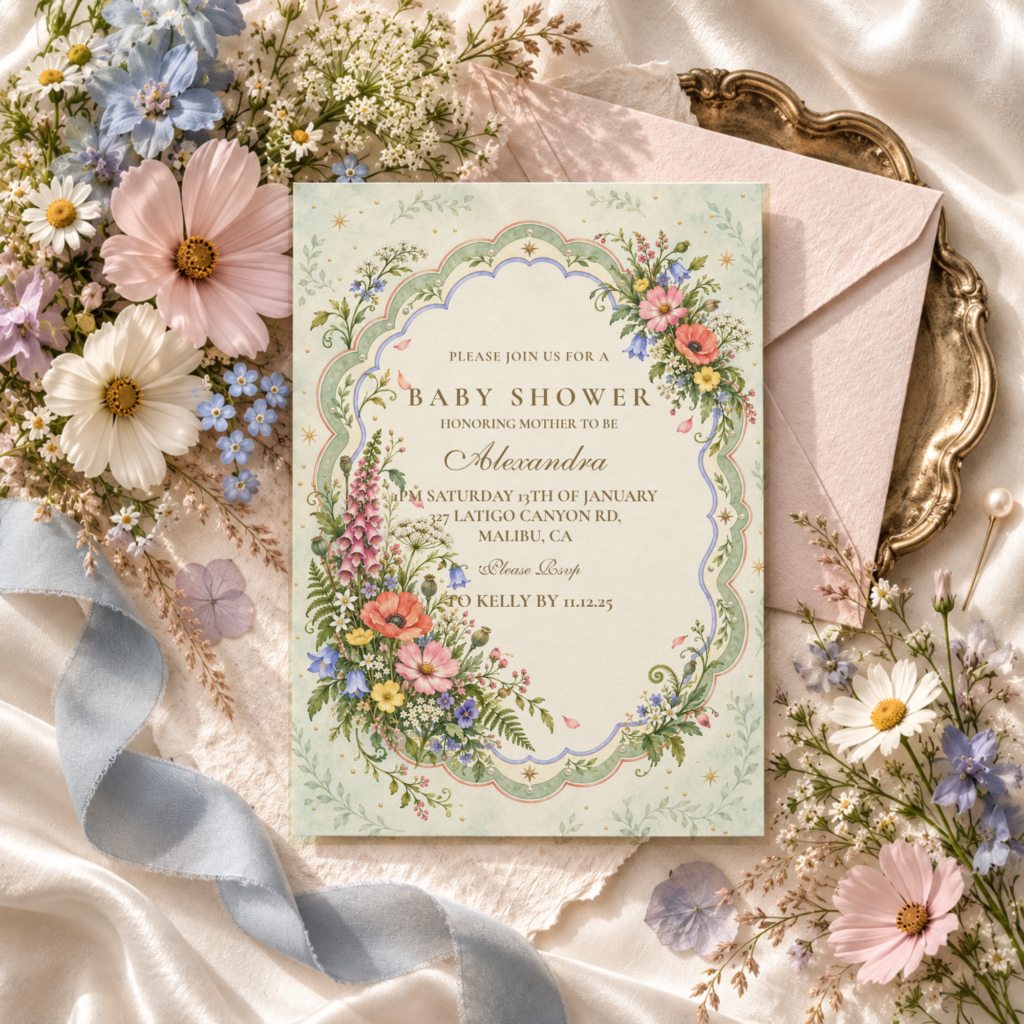
Sunflower Wildflower
Sunflower Wildflower Invitations
Sunflower-led botanical palette — the natural stationery companion for a sunflower hero-stem centrepiece.
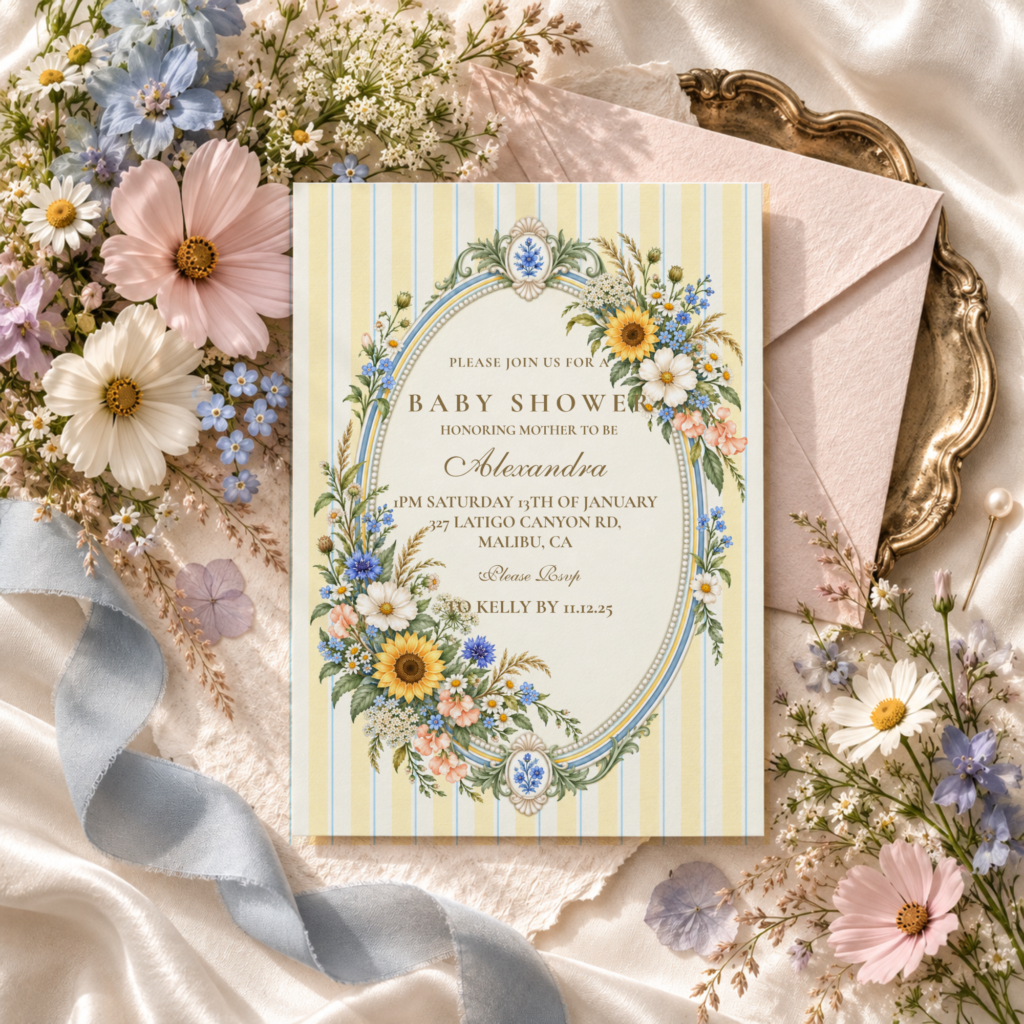
Wildflower Theme
Wildflower Theme Invitations
The broadest wildflower stationery range — works with any centrepiece direction and any palette family.
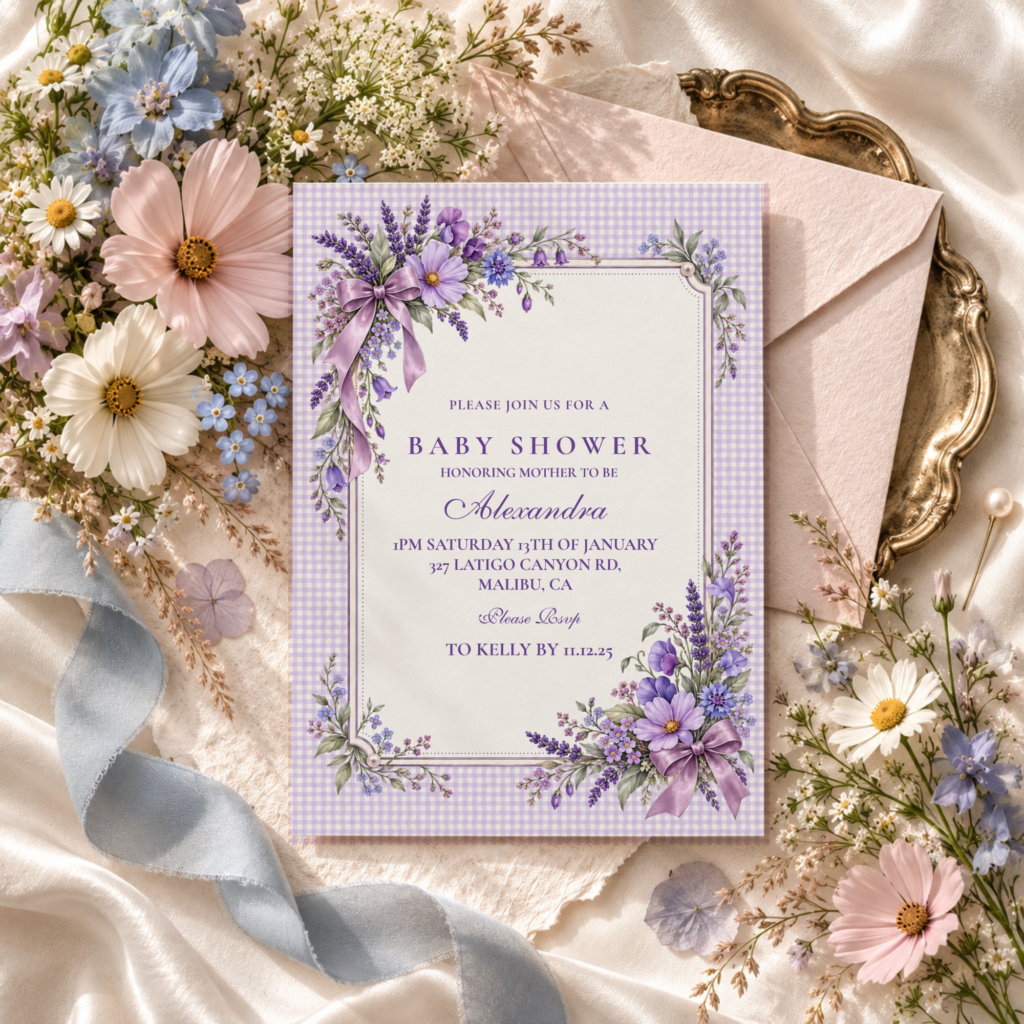
Browse the complete Wildflower Theme stationery range at Baby Wonderland Studio — invitations and party details for every wildflower centrepiece direction.
Section 01The Wildflower Centrepiece Rules
Five rules govern every wildflower baby shower centrepiece, regardless of direction, palette, or vessel choice. Apply all five and any wildflower centrepiece reads as specifically botanical. Ignore any one of them and it drifts toward a generic floral arrangement.
Mismatched vessels are mandatory. A glass bottle, a rattan basket, and a terracotta pot on the same table reads as wildflower meadow. Three matching ceramic vases reads as florist. The vessel mismatch is the single most important decision in the entire wildflower centrepiece: it communicates ‘gathered from different places’ before a single flower stem is placed. The mismatch should be genuine — different materials, different shapes, different textures — not simply three vessels of the same type in different sizes.
Three heights always. Every wildflower centrepiece cluster uses three height levels: a tall vessel (at least thirty centimetres) for the highest stems, a mid-height vessel (fifteen to twenty centimetres) for the secondary arrangement, and a low vessel or spread element (under ten centimetres) at table level. The three heights together create the visual movement that makes a centrepiece read as a composition rather than a grouping. All vessels at the same height reads as a supermarket bouquet cluster, not as a wildflower table centrepiece.
Asymmetric arrangement only. No element of a wildflower centrepiece should be centred, mirrored, or symmetrically balanced. The tall vessel is placed to one side of the cluster, not in the middle. The stems lean in different directions rather than radiating symmetrically from the vessel centre. The cluster itself sits slightly off-centre on the table rather than at the precise midpoint. Asymmetry communicates meadow; symmetry communicates formal arrangement regardless of the flowers used.
Odd numbers of stems, flowers extending beyond the vessel edge. An odd number of stems in each vessel — three, five, or seven — reads as more naturally abundant than an even number. More importantly: the stems in each vessel should extend beyond the vessel edge in at least two directions, with some stems leaning outward rather than standing upright. A stem that leans beyond the vessel lip communicates ‘placed loosely’; one that stands straight communicates ‘arranged.’
🌼 The Vessel Test
Test any centrepiece with the cover-the-vessel method: place your hand over the vessel and look only at the stems and flowers above it. If the arrangement still reads as beautiful and wild, the stems are doing the botanical work and the vessel is a supporting element. If nothing remains of visual interest once the vessel is covered, the vessel is doing all the work and the stem arrangement needs to be looser and more abundant.
Wildflower Theme stationery at Baby Wonderland Studio — the printed element that completes every wildflower centrepiece table.
Section 02Four Wildflower Centrepiece Directions
Four centrepiece directions, each applying the five rules from Section 01 in a different palette and material register. All four use mismatched vessels, three heights, asymmetric arrangement, and odd-number stems. The direction determines which specific vessels, which palette, and which botanical materials are chosen.
2.1 — Watercolor Botanical Centrepiece
The most meadow-authentic wildflower centrepiece direction: loose mixed wildflower stems in mismatched glass vessels, with the botanical variety and natural abundance of a field cutting rather than a florist selection. The watercolor botanical centrepiece uses five to seven different flower varieties at varying heights and in the watercolor wildflower palette — dusty coral, sage green, soft lavender, cream, and warm amber — mixed with botanical greenery stems (eucalyptus, sage, small olive branches) to provide the green structural element that every wildflower arrangement requires. The glass vessels allow the stem colour and texture to be visible at the lower level of the arrangement, which adds to the botanical quality of the centrepiece in a way that opaque vessels cannot.
Watercolor Wildflower stationery at Baby Wonderland Studio — loose brushstroke botanical illustration for the most meadow-authentic centrepiece direction.
🌼 Three Heights Rule
A watercolor botanical centrepiece cluster needs three different vessel sizes: a tall glass bottle (thirty centimetres or higher) for the hero stems, a medium rattan or ceramic vessel (fifteen centimetres) for the secondary arrangement, and a low terracotta pot or small jar (under ten centimetres) for the ground-level element. All three at the same height reads as a supermarket bouquet arrangement regardless of how beautifully the individual flowers are chosen.
2.2 — Pink Wildflower Centrepiece
The most feminine and the most specifically girl-appropriate wildflower centrepiece direction: blush, dusty rose, and sage in mismatched vessels at three heights. The pink wildflower centrepiece uses the same mismatch and height principles as the watercolor direction but restricts the flower palette to the soft garden tones: blush sweet peas, dusty rose cosmos, cream ranunculus, soft pink wildflower varieties, and sage botanical greenery. The vessel selection for this direction leans toward soft-finish ceramics in warm cream or blush alongside a simple glass bottle and a small rattan element — the vessel palette mirrors the flower palette in warmth if not in colour.
Pink Wildflower stationery at Baby Wonderland Studio — dusty rose and blush botanical for the most feminine centrepiece direction.
2.3 — Cottagecore Centrepiece
The most rustic and the most narratively rich wildflower centrepiece direction: wildflower stems in cleaned vintage tin cans, mason jars, and small ceramic crocks, each with a different label removed and the natural metal or glass surface left visible. This direction is the most specifically cottagecore of the four because the vessels themselves communicate a domestic, found quality — objects repurposed from the kitchen cupboard rather than purchased from a party supplier. Wildflowers in a tin can that still has its seam visible reads as specifically gathered and homemade in a way that the same flowers in a purchased rattan basket does not.
Cottagecore Wildflower stationery at Baby Wonderland Studio — cottage garden botanical illustration for the most rustic centrepiece direction.
2.4 — Sunflower Wildflower Centrepiece
The most cheerful and the most immediately botanical of the four wildflower centrepiece directions: sunflower as the hero stem in the tallest vessel, with sage green botanical foliage, warm cream wildflowers, and small yellow accent flowers in the lower vessels. The sunflower centrepiece works because the sunflower is large enough to read as the hero element from across the room — it provides the visual anchor that the centrepiece needs to read as a composition rather than a cluster. Three sunflower stems in the tall vessel (odd number), leaning in three slightly different directions, with sage and eucalyptus foliage at mid-height and a small terracotta pot of mixed yellow and cream wildflowers at the base: this arrangement applies all five centrepiece rules and reads as specifically wildflower meadow in any light condition.
Sunflower Wildflower stationery at Baby Wonderland Studio — sunflower botanical palette for the most cheerful wildflower centrepiece direction.
Section 03Wildflower Table Styling Around the Centrepiece
The centrepiece cluster is the hero element of the table, but three supporting details complete the wildflower table in a way that photographs as cohesively designed rather than as a centrepiece on an otherwise plain surface.
Wildflower linen table runner. A natural linen runner in warm ivory or sage green down the centre of the table provides the base layer that the centrepiece cluster sits on and the botanical context that connects the centrepiece to the rest of the table surface. The linen runner should be slightly crumpled rather than pressed flat — the natural texture and slight irregularity of an unpressed linen runner reads as part of the wildflower aesthetic in the same way as the asymmetric flower arrangement does.
Mismatched place card holders. Small mismatched elements as place card holders — a small terracotta pot, a tiny glass bottle, a small folded card in the botanical stationery design — extend the mismatched-vessel principle of the centrepiece down to the individual place setting. The place card in the wildflower stationery direction is the printed element that connects the centrepiece to the invitation and completes the three-texture requirement for the wildflower table zone.
Scattered petals as the table detail. Loose dried wildflower petals or small dried flower heads scattered along the linen runner between and around the centrepiece cluster provide the most natural and the lowest-cost wildflower table detail available. The scattered petals should be irregular in distribution — denser near the centrepiece cluster and sparser toward the table edges — as though they fell from the arrangement rather than being placed deliberately.
Vintage Wildflower stationery at Baby Wonderland Studio — antique botanical illustration quality for the most considered wildflower table styling.
🌼 Scattered Petals Note
Scattered dried petals on a linen runner cost almost nothing and immediately read as wildflower meadow. A handful of dried rose petals, dried lavender heads, and small dried wildflower florets scattered loosely along the table runner provides the ground-level botanical detail that connects the centrepiece cluster to the table surface. This is the highest return-per-cost wildflower table detail available: it takes thirty seconds to apply, costs under two pounds of material, and photographs as specifically botanical in every image taken at the table.
Section 04Wildflower Stationery and FAQ
The stationery element at the centrepiece table — a place card, a small framed print, or a banner in the wildflower botanical direction — is the printed texture that completes the wildflower table zone. Six directions at Baby Wonderland Studio cover every centrepiece palette.
Watercolor Wildflower
Watercolor Wildflower Invitations
Loose brushstroke botanical — place cards and party stationery for the watercolor centrepiece direction.
Pink Wildflower
Pink Wildflower Invitations
Dusty rose and blush — stationery for the pink mismatched-vessel centrepiece direction.
Cottagecore Wildflower
Cottagecore Wildflower Invitations
Cottage garden botanical — stationery for the rustic tin-can and mason-jar centrepiece.
Vintage Wildflower
Vintage Wildflower Invitations
Antique illustration quality — stationery for the most editorial wildflower table styling.
Sunflower Wildflower
Sunflower Wildflower Invitations
Sunflower botanical palette — stationery for the sunflower hero-stem centrepiece direction.
Wildflower Theme
Wildflower Theme Invitations
The broadest wildflower range — works with any centrepiece direction and palette.
Frequently Asked Questions
What makes a good wildflower baby shower centrepiece?
Five elements applied together: mismatched vessels (at least three different types and materials), three height levels within the cluster, asymmetric arrangement of both the vessels and the stems within them, an odd number of stems in each vessel, and stems that extend beyond the vessel edge rather than standing uniformly upright. Of these five, the mismatched vessels and the three heights are the most visually decisive: they are what the eye registers first and what determines whether the centrepiece reads as wildflower meadow or as a florist arrangement on a table.
What flowers should I use for a wildflower baby shower centrepiece?
Any flower arranged loosely in a mismatched vessel at varying heights reads as wildflower — the arrangement style is more important than the specific flower variety. That said, the flowers that read most naturally as wildflower are those with an open, casual quality: cosmos, sweet peas, cornflowers, larkspur, ranunculus, daisies, and sunflowers. Mix at least three or four different varieties across the centrepiece cluster, with botanical greenery (eucalyptus, sage, small olive branches) as the structural green element. Avoid using only one flower variety across the whole centrepiece: variety of stem and flower form is what produces the meadow quality.
How do I make a wildflower centrepiece without a florist?
Buy a mixed bunch from a market or supermarket, separate the stems, and distribute them across three or more different vessels from the kitchen cupboard — a glass jar, a small tin can, a ceramic pot. Place the vessels at three different heights using small books or wooden blocks as risers. Arrange the stems loosely in each vessel, allowing three to five stems per vessel in odd numbers, with the tallest stems leaning slightly outward. Add a handful of dried flower petals scattered around the base of the vessel cluster on the table runner. This approach costs less than a florist centrepiece, is achievable with no floristry training, and reads as more specifically wildflower than a professionally arranged centrepiece in matching vases.
Baby Wonderland Studio · Wildflower Baby Shower Stationery
Shop Wildflower Baby Shower Stationery
Six wildflower stationery directions to match every centrepiece aesthetic — at Baby Wonderland Studio.