Boho Baby Shower Decorations
Baby Shower · Boho Decor Guide
Boho Baby Shower Decorations
A zone-by-zone decoration plan with boho-specific rules, five distinct decor directions from classic earthy to woodland and botanical, and the backdrop, balloon arch, and macramé guide that makes the hero wall element work.
A boho decorated room and a boho designed room are not the same thing. In a decorated room, warm earthy colours have been chosen, dried botanicals placed at the centrepiece, and a pampas stem positioned in the corner — and the room reads as a neutral party with boho elements. In a designed room, every material belongs to the boho vocabulary, every arrangement is asymmetric as a matter of design requirement rather than accident, and every zone from the entrance to the favour table has been considered as part of a single organic world. This guide covers how to plan and execute the second kind.
Browse the complete Boho Baby Shower stationery collection.
Invitations, welcome signs, favour tags — warm, earthy, and fully customisable.
“A boho decorated room and a boho designed room are not the same thing — the difference is whether every texture, every material, and every asymmetric arrangement was chosen to build the same organic world.”
Section 01 The Boho Decoration Zone Plan
Zone 1
Entrance & Welcome Zone
✔ Minimum requirement: A welcome sign in a natural material — a wood slice with the guest of honour’s name and a small dried botanical cluster; a macramé frame with a printed or hand-lettered insert; or a kraft board on a raw wood or rattan easel. The surface material of the sign communicates the aesthetic world before any other element is seen. A dried botanical garland rather than a balloon garland at the entrance: eucalyptus, dried pampas tails, dried cotton, and dried grasses on a natural twine base, hung loosely and asymmetrically across the entrance frame or door.
✘ Most common mistake: Acrylic signage, printed banner, or balloon garland at the entrance. Acrylic has a specific manufacturing quality — smooth, reflective, and precisely formed — that belongs to a different material world from rattan, linen, and kraft. A printed banner belongs to the generic party supply register rather than to the boho aesthetic. A balloon garland at the entrance, before any natural material has been seen, establishes the wrong aesthetic frame of reference that all subsequent natural materials will then be working against.
Zone 2
Backdrop & Hero Wall
✔ Minimum requirement: One hero texture element for the backdrop: either a pampas arch (dried pampas plumes assembled in an arch frame or directly on the wall in an asymmetric arrangement — always leaning or spreading in one direction); or a large macramé panel (at least 100cm wide and 120cm tall to read as a hero element rather than a wall accent) hung centrally with dried botanical elements woven into the base. One hero texture only — the single most important rule for boho backdrops.
✘ Most common mistake: Three competing texture elements at the backdrop: a pampas arrangement beside a macramé panel beside a balloon cluster. Each of these elements is individually appropriate for a boho shower. Together in the same frame, they compete with each other rather than creating a single cohesive visual statement. The boho backdrop rule: one hero texture, supported by smaller-scale elements of the same material vocabulary (small pampas tails beside the macramé; dried grasses at the base of the pampas arch). Never three large competing elements in the same visual field.
Zone 3
Guest Tables
✔ Minimum requirement: Oatmeal linen or undyed natural linen as the tablecloth or runner — the most impactful single table decision. A rattan or raw wood vessel for the centrepiece arrangement in the palette direction. An asymmetric dried botanical arrangement in the vessel: taller element on one side (dried pampas, dried celosia, or cotton stems at 30–40cm), shorter element on the other (dried protea cluster or dried grass bunch at 15–20cm). No plastic or metallic elements anywhere on the table surface.
✘ Most common mistake: Smooth white ceramic as the tablecloth base and chrome or metallic serving pieces. Smooth white ceramic belongs to the elegant and contemporary dining register; chrome and metallic belong to the formal events register. Both belong in different aesthetic worlds from the rattan, linen, and terracotta of the boho table. Even one smooth chrome element — a candle holder, a napkin ring — in a field of otherwise boho materials reads as an intruder from a different aesthetic. Metallic elements in the boho world: antique gold and warm brass only. No chrome, no silver, no bright metallic.
Zone 4
Dessert Table
✔ Minimum requirement: Warm wood serving boards and rattan baskets as the primary serving surfaces — the food is displayed on natural material rather than on manufactured surfaces. A linen or cotton runner beneath the serving boards. Dried botanical garnish on every surface: small dried rosemary sprigs, dried flower petals, or a small dried botanical cluster beside each serving piece. The dessert table sign in the boho stationery palette (warm ivory or kraft, in the invitation’s illustration style).
✘ Most common mistake: Smooth white cake stands, plastic serving trays, and printed paper tablecloths as the dessert table surface. White cake stands are appropriate at a garden or elegant shower; on a boho dessert table they read as belonging to a different aesthetic world and make the table look as though the dessert styling was sourced from a different brief from the decoration. Plastic serving trays and printed paper tablecloths break the material vocabulary immediately and are visible in every photograph taken at the table.
Zone 5
Transitional Spaces
✔ Minimum requirement: A single pampas stem in a rattan vase at each transitional space — beside the gift table, at the favour station, in the corridor or hallway between the entrance and the main room. This is the most budget-efficient boho accent available: one large dried pampas plume in a narrow rattan vase placed asymmetrically (not centred on the surface) reads as a deliberate boho design decision in any space and costs almost nothing relative to its visual impact.
✘ Most common mistake: Decorative elements that belong to a different aesthetic world used as transitional accents — a generic balloon cluster, a printed paper banner, or a synthetic floral arrangement. These elements work against the boho atmosphere built in the other zones. The transitional space is the space most likely to be left unplanned — and therefore the most likely to receive a generic decoration that breaks the aesthetic. One natural element is always better than no element; no element is always better than a synthetic one.
✨ Styling Tip
The biggest single boho decoration mistake is buying everything in the same beige tone. Genuine boho has tonal variation — warm oatmeal (the lightest tone), deeper terracotta (the warmest accent tone), muted sage (the botanical accent), and antique gold (the metallic detail) — all in the same warm family but at different depths. A room where every element is the same pale beige reads as monochromatic and bland. A room where the linen is oatmeal, the vessels are terracotta, the botanical material is warm honey-brown and sage, and the metallic detail is antique gold reads as boho: specifically layered, specifically warm, and specifically organic. Buy at different depths within the same warm family, not the same tone throughout.
Section 02 Five Boho Decoration Directions
Five directions, each with a specific botanical vocabulary, vessel and surface material, and accent detail. In all five: dried botanicals only, asymmetric arrangements only, no plastic or metallic elements except antique gold.
Most Authentic
Classic Earthy Boho Decor
Terracotta · Oatmeal · Warm Brown · Muted Sage
Botanicals: Large dried pampas plumes (honey-cream); dried protea in warm brown and rust; cotton stems; dried celosia in terracotta; dried grasses at varying heights
Vessels & surfaces: Terracotta pots and rattan baskets (vessels); raw wood slice and raw wood board (serving surfaces); oatmeal linen (textile); kraft paper (all printed elements)
Accent details: Antique gold taper candles in raw clay holders; small beeswax candles scattered at table base; warm amber honey jar as centrepiece accent
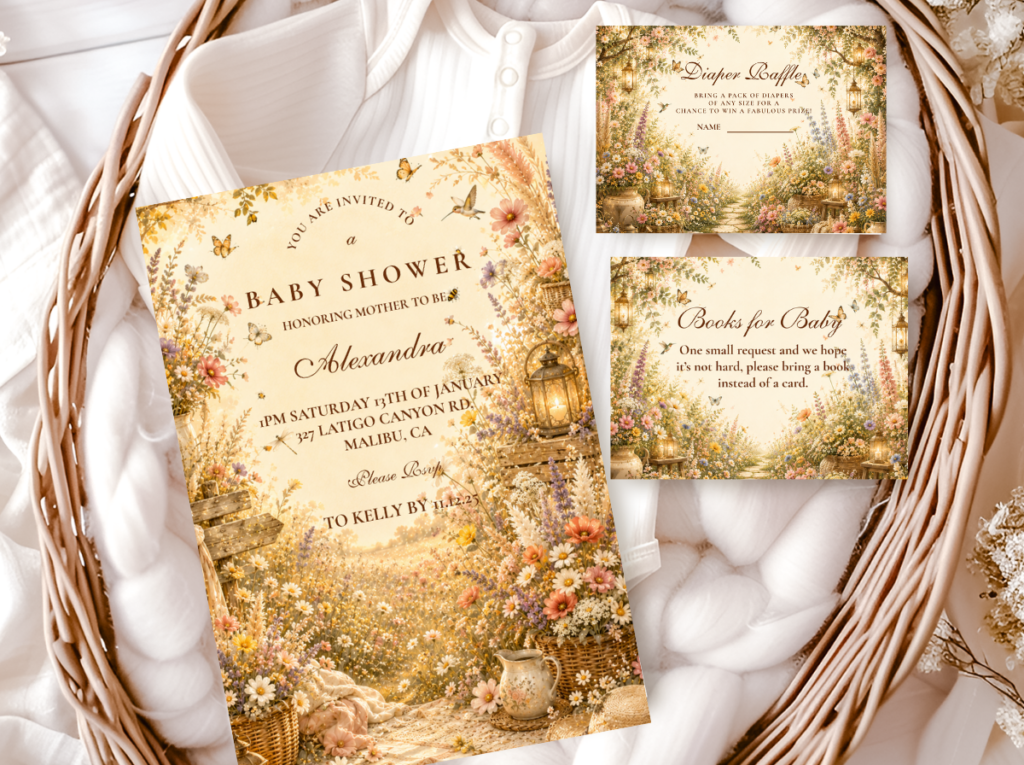
The Boho General collection carries the most authentic earthy illustration style in terracotta and oatmeal — coordinated across invitation, welcome sign, place cards, and favour tags.
Most Seasonal
Fall Boho Decor
Warm Amber · Rust · Pumpkin · Deep Sage · Warm Brown
Botanicals: Dried pampas in honey-amber tone; dried celosia in rust and pumpkin; wheat bundles tied with natural twine; dried autumn leaves; dried seed pods; small cream or white pumpkins as natural props
Vessels & surfaces: Rattan baskets and dark-stained wood boards; oatmeal and rust linen; natural terracotta pots; kraft paper food labels
Accent details: Warm amber pillar candles at varying heights; antique gold lanterns; natural twine garland with small dried botanical clusters
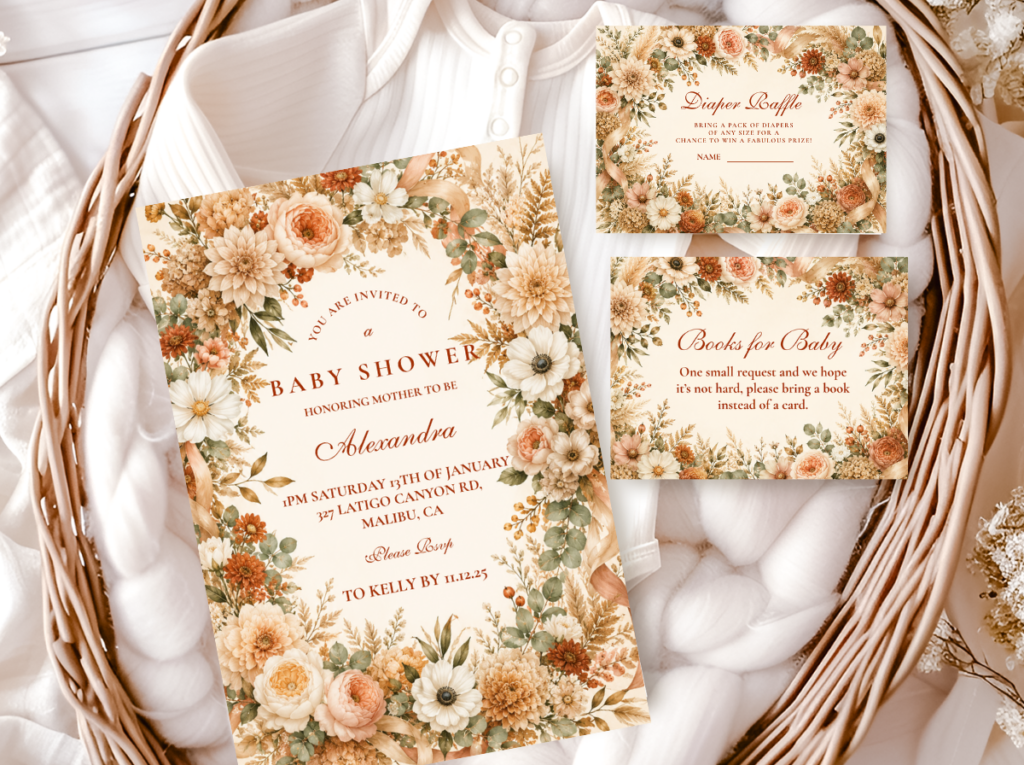
✨ Styling Tip
In fall boho decor, pumpkins work as decoration only when they are natural varieties — cream, white, ivory, and pale green pumpkin varieties feel specifically boho because their natural palette belongs to the oatmeal and warm cream vocabulary; bright orange plastic pumpkins break the aesthetic immediately and irreversibly. One real cream pumpkin styled with a small dried botanical cluster and an antique gold tag does more design work than ten plastic bright orange ones. If real pumpkins are unavailable, omit them entirely and use dried gourds or dried seed pods instead — both belong to the boho material vocabulary without requiring the specific pumpkin form.
Most Nature-Immersive
Woodland Boho Decor
Forest Green · Warm Brown · Oatmeal · Moss Green
Botanicals: Dried eucalyptus branches; dried fern fronds; preserved moss (for vessel lining and table scatter); pine cones on natural twine; dried woodland mushrooms as decorative props; dried seed pods in warm brown
Vessels & surfaces: Raw wood slices and birch rounds (serving surfaces and centrepiece bases); rattan baskets; oatmeal linen; ceramic in warm stone or brown glaze (the one direction in which darker ceramics are appropriate)
Accent details: Small mushroom-shaped taper holders in warm clay; antique gold forest-motif candle holders; small illustrated woodland botanical prints on kraft paper
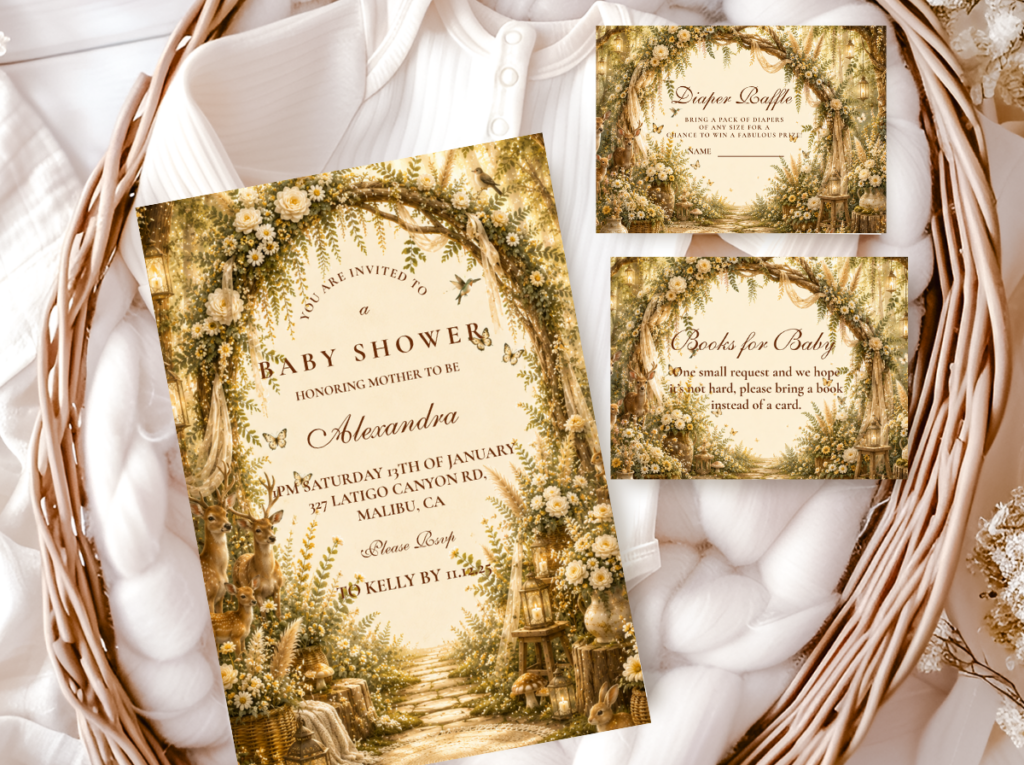
Most Floral
Floral Boho Decor
Warm Rose · Oatmeal · Terracotta · Dusty Lavender
Botanicals: Dried protea (the most dramatically beautiful floral element in this direction; warm rose-brown tone); dried roses in dusty rose and warm blush; dried lavender bundles; dried peonies in warm ivory; dried strawflowers in terracotta and warm gold; dried chamomile
Vessels & surfaces: Wide-mouth rattan baskets for the centrepiece (the abundance of dried florals requires a wide vessel to read as a gathered arrangement rather than as a formal bouquet); warm cream ceramic; oatmeal linen; natural wood frames for botanical prints
Accent details: Dusty rose beeswax candles; warm rose antique gold taper holders; pressed botanical illustration prints on warm ivory kraft paper as table accents
Most Editorial
Botanical Boho Decor
Deep Sage · Warm Ivory · Antique Gold · Warm Grey-Green
Botanicals: Dried eucalyptus in its silver-dollar and cinerea varieties; dried sage botanical bundles; dried lavender; pressed botanical prints (in frames or as table scatter); botanical candles in warm beeswax with embedded dried herbs
Vessels & surfaces: Slim tall rattan vessels for the eucalyptus arrangements; warm stone ceramic for botanical candles; linen in natural undyed state; raw wood for frames and serving surfaces
Accent details: Antique gold hand-lettered botanical botanical name tags attached to each vessel element; warm beeswax candles with embedded pressed sage or lavender; a small printed botanical illustration plate at each place setting in the invitation’s style
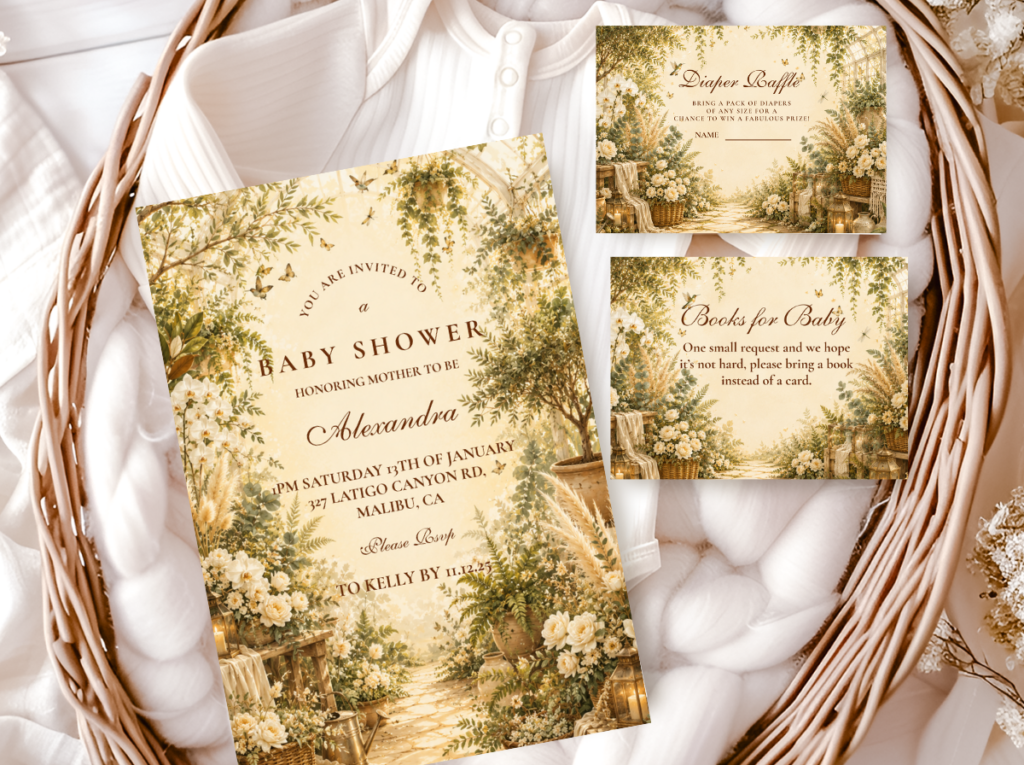
Section 03 Backdrop & Balloon Arch for Boho
Pampas Arch — The Hero Boho Backdrop Element
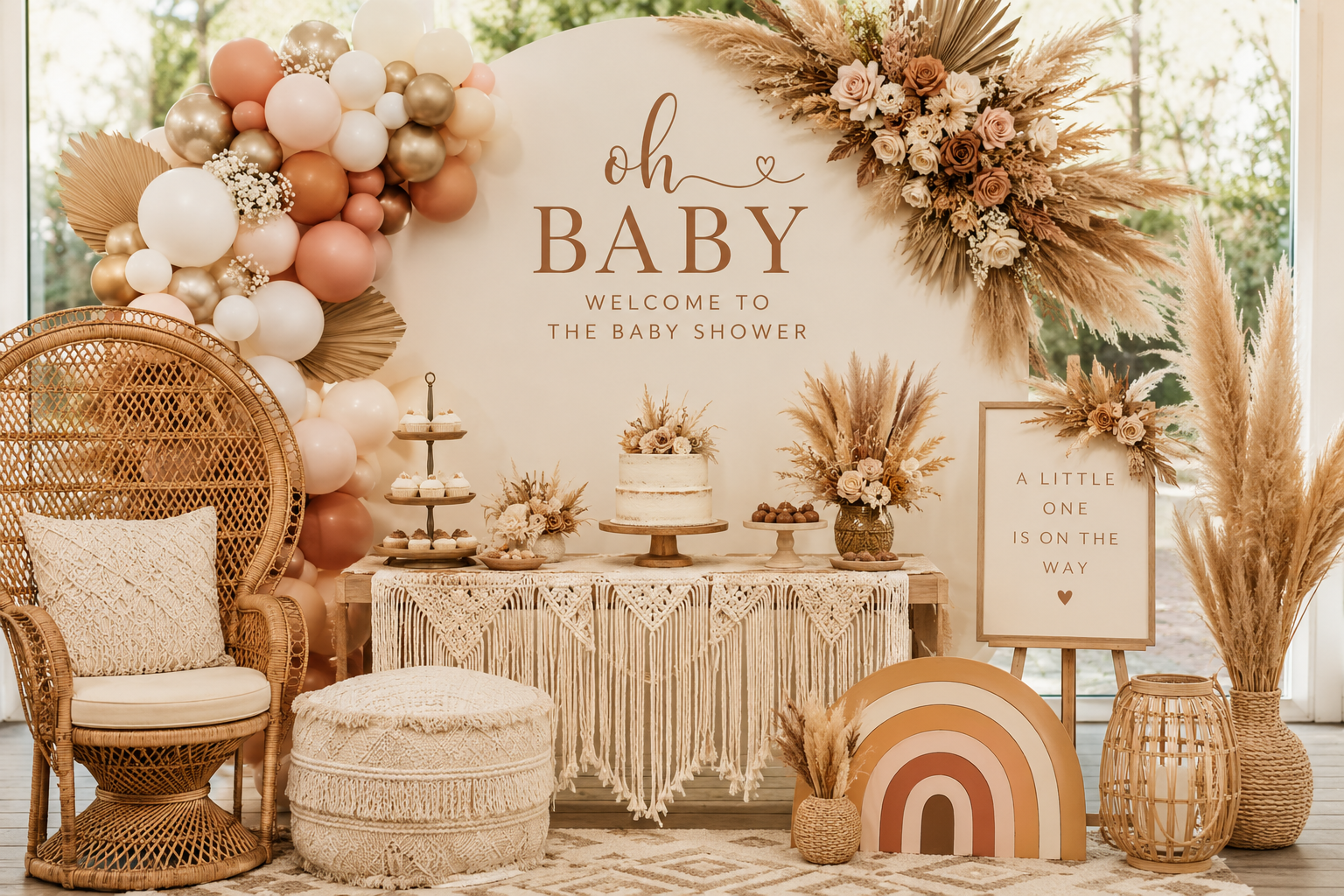
A pampas arch is assembled either on a standing arch frame (available in raw gold or black metal — raw gold only for boho; black is a bold choice appropriate for the woodland or botanical direction) or directly on the wall using adhesive hooks and natural twine to support the plume stems. The most authentic wall-mounted pampas backdrop: seven to eleven large plumes at varying heights, arranged with a clear lean to one side (the left side typically taller with the largest plumes; the right side trailing lower with medium and small plumes) and the arrangement extending beyond a rectangular outline to communicate the organic, grown-not-placed quality of the boho aesthetic. Supplementary elements woven into the pampas arrangement: dried grasses at the base (their finer texture contrasts with the pampas volume); one or two dried protea specimens positioned within the pampas at 60–70% of the arrangement height; and small dried botanical tails trailing from the lower right side. No balloons within the pampas arrangement — balloons and dried botanical material belong to different aesthetic registers and their proximity creates a visual conflict.
Macramé Panel — The Most Authentic Boho Backdrop
A macramé panel communicates the boho aesthetic through its fundamental material quality: natural undyed cotton rope, hand-knotted in the organic patterns of the macramé tradition, belongs to the boho material vocabulary as completely as rattan or linen. Minimum sizing for a backdrop macramé panel: 100cm wide and 150cm tall (anything smaller reads as a wall accent rather than as the hero backdrop element). Placement: hung centrally against the primary wall, with dried botanical elements woven into the base fringe or into the lower section of the knotted panel — dried pampas tails, dried grasses, and cotton stems integrated into the macramé rather than arranged separately in front of it. The integration of dried botanical into the macramé is the element that makes the backdrop read as a single designed object rather than as two separately placed items. A small personalised element at the top of the panel (the baby’s name in natural wood letters hung within the macramé frame) adds the specific personal quality that separates a boho backdrop from a shop display.
Balloon Arch Boho Style — Organic Shape, Warm Palette Only
A boho balloon arch is possible, but it requires three specific conditions that distinguish it from a generic balloon arch placed at a boho shower: an organic rather than structured shape (no geometric arch, no perfect semicircle, no evenly spaced balloons — the arch should look as though it grew into its shape rather than being constructed); a warm neutral palette of at least three tones and four sizes (warm ivory, oatmeal, warm amber, and warm terracotta — no bright colours, no metallics except warm gold; four sizes: large 36cm, medium 25cm, small 18cm, and small 12cm for variation); and the integration of dried botanical garland elements into the balloon cluster (dried eucalyptus, dried pampas tails, and dried grasses woven between the balloon clusters at irregular intervals). Without these three conditions, a balloon arch at a boho shower reads as a generic shower element placed in a boho room rather than as a boho design element. The balloons are the carrier material; the dried botanical integration is the boho element.
✨ Styling Tip
A boho balloon arch must be organic — not structured or geometric. The balloons should look as though they grew into the arch shape rather than being arranged into it. Use at least four different sizes of balloon and three different warm neutral tones (no single tone should exceed 40% of the total balloon count). Distribute the sizes and tones randomly rather than in a pattern: a random distribution reads as organic; a repeating pattern reads as structured. A structured symmetrical arch in the correct warm palette is still not boho regardless of what colour the balloons are — because boho asymmetry is a structural requirement, not a colour one. Add dried botanical elements between the balloon clusters at irregular intervals to connect the arch to the boho material vocabulary.
Section 04 Invitations & Stationery
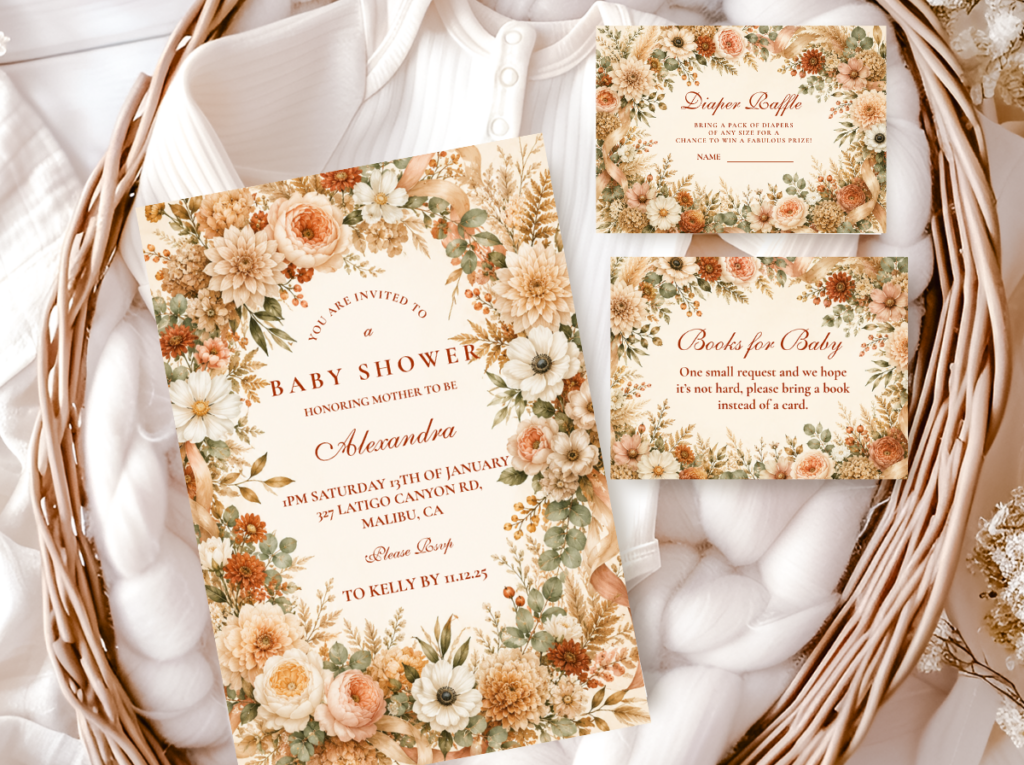
The stationery material decisions for boho: warm ivory or kraft paper stock (not bright white — the warmth of the paper communicates warmth before the design is seen); a hand-drawn or watercolour illustration style (organic line quality that belongs to the same visual register as the dried botanical material on the table); and a warm botanical or pampas motif in the specific palette direction of the shower. Browse all six collections below — each represents a complete boho stationery suite in a distinct palette direction.
Most Authentic
Boho General
Classic terracotta and oatmeal — the most Pinterest-consistent boho stationery direction.
Most Seasonal
Fall Boho
Warm amber, rust, and deep sage — the most specifically seasonal autumn boho direction.
Woodland
Woodland Boho
Forest green and warm brown — the most nature-immersive and most forest-specific direction.
Floral
Floral Boho
Dusty rose and terracotta with dried floral illustration — the most romantic boho stationery direction.
Botanical
Botanical Boho
Deep sage and warm ivory — the most editorial and most refined boho stationery direction.
Wildflower
Wildflower Boho
Loose meadow wildflowers in warm muted tones — the most joyful and most garden-adjacent direction.
Frequently Asked Questions
What decorations are needed for a boho baby shower?
The boho decoration vocabulary is built from five material categories that should be present at every zone of the shower. Rattan: as vessel, basket, serving board, and charger plate. Linen: as tablecloth, runner, napkin, and backdrop element. Dried botanical material: pampas grass, dried protea, cotton stems, dried grasses, and dried celosia as the primary botanical element in all arrangements. Kraft paper: as the material for all printed surface elements. Natural wood or terracotta: as serving surfaces and vessel material. No plastic — anywhere. No synthetic florals. No chrome or silver metallic. Antique gold is the only metallic appropriate in any boho direction. Within this material framework, the specific choices within each category adapt to the five decoration directions in Section 02.
How do you make boho decorations at home?
The most achievable home-made boho decorations in descending order of simplicity: a dried botanical garland (natural twine with dried eucalyptus, dried pampas tails, dried grasses, and cotton stems wired or tied at intervals — no floristry experience required, 2–3 hours to assemble); a dried botanical centrepiece (a wide rattan basket filled with oasis or natural moss, into which dried pampas stems, dried protea, and dried grasses are inserted in an asymmetric 2:1 arrangement — taller on one side, trailing lower on the other); kraft paper food labels (printed or hand-lettered on kraft paper card, positioned in small raw wood or terracotta holders in front of each food item); and a simple welcome sign (a wood slice with a hand-lettered name using a warm brown acrylic or chalk pen, with a small dried botanical bundle wired to one corner — asymmetrically, always to one corner not centred at the base). All of these are achievable without professional decoration skills and produce a result that reads as specifically designed rather than DIY in photographs.
Can you use fresh flowers in a boho baby shower?
Fresh flowers do not belong in a genuine boho baby shower decoration scheme, for a specific aesthetic reason: the quality of fresh flowers — bright, cultivated, at peak bloom, and specifically temporary — belongs to the romantic and garden floral aesthetic register rather than to the boho aesthetic register. Boho’s specific beauty comes from the quality of aged, warm, slightly imperfect dried material — the specific way dried pampas looks, the specific warm rust of a dried protea, the specific organic imperfection of a dried celosia stem. Fresh flowers beside dried botanical material create an immediate and visible aesthetic conflict because they communicate two different relationships with the natural world: the fresh flower says ‘I was cultivated at peak beauty’; the dried botanical says ‘I have aged beautifully.’ In the boho world, only the second statement is correct.
What is the difference between boho and rustic baby shower decorations?
Boho and rustic shower decoration share the natural material vocabulary (wood, linen, dried botanical) but diverge in three specific ways. Palette: rustic uses a wider range of warm tones including red-brown and warm navy accents; boho uses a strictly warm earthy palette of terracotta, oatmeal, sage, and warm brown with no cool-toned accents. Arrangement: rustic arrangements can be symmetrical and formally pleasing; boho arrangements are asymmetric as a design requirement — the 2:1 lean is not optional in a genuine boho aesthetic. Material finish: rustic accepts a slightly rough, imperfect material quality (raw wood with visible grain, chunky linen weave, unfinished ceramics); boho requires the same natural material quality but with a slightly more curated level of material selection — the rattan should be clean, the linen should be oatmeal not burlap, the dried botanical should be beautiful specimens rather than generic bundles. Both aesthetics avoid plastic and synthetic materials; boho is the more specific and the more currently celebrated of the two.
Complete the Decoration World
Boho Baby Shower Stationery — Six Complete Directions
Invitations, welcome signs, and favour tags — warm, earthy, and fully customisable across six boho palette directions.