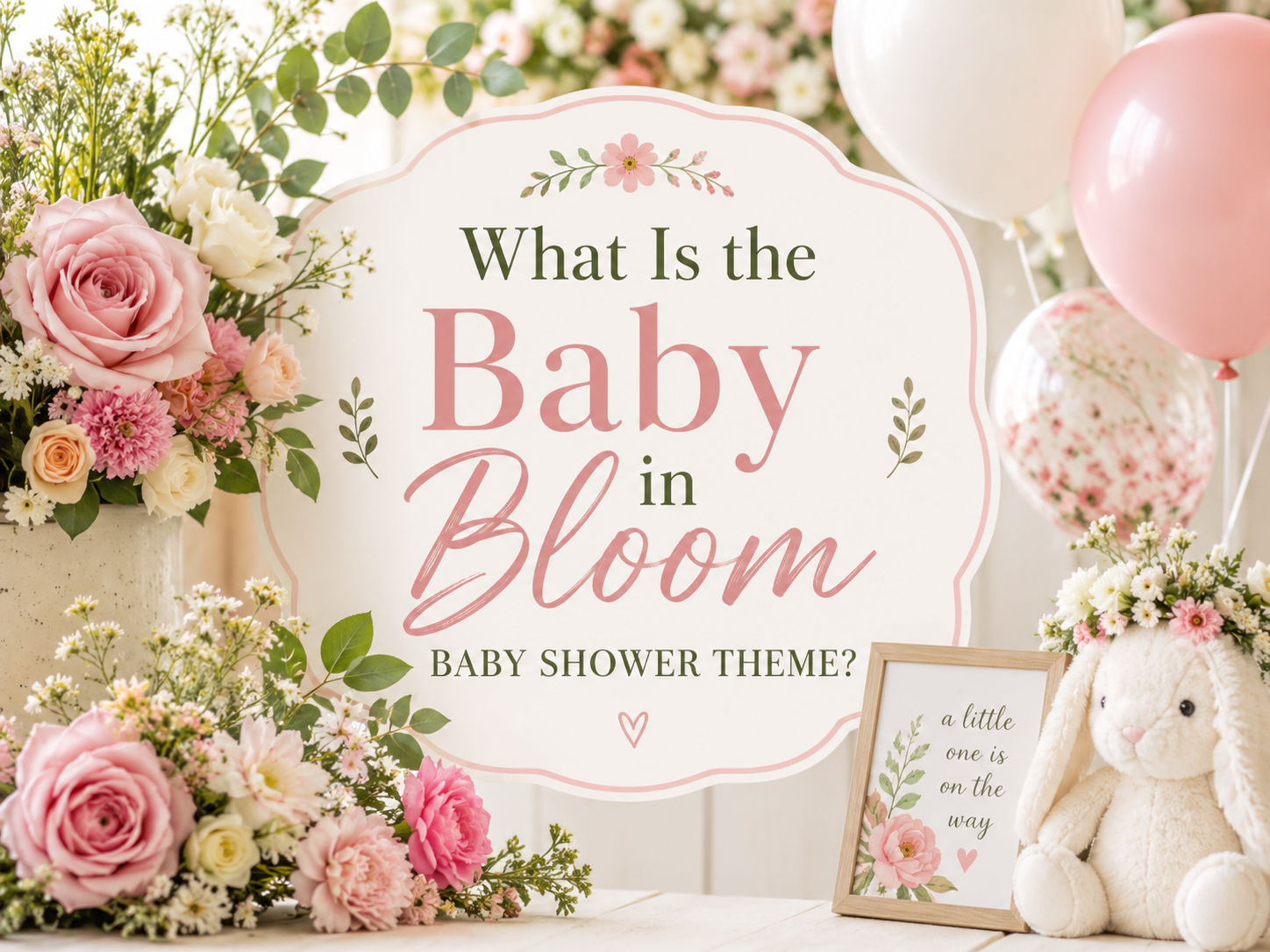
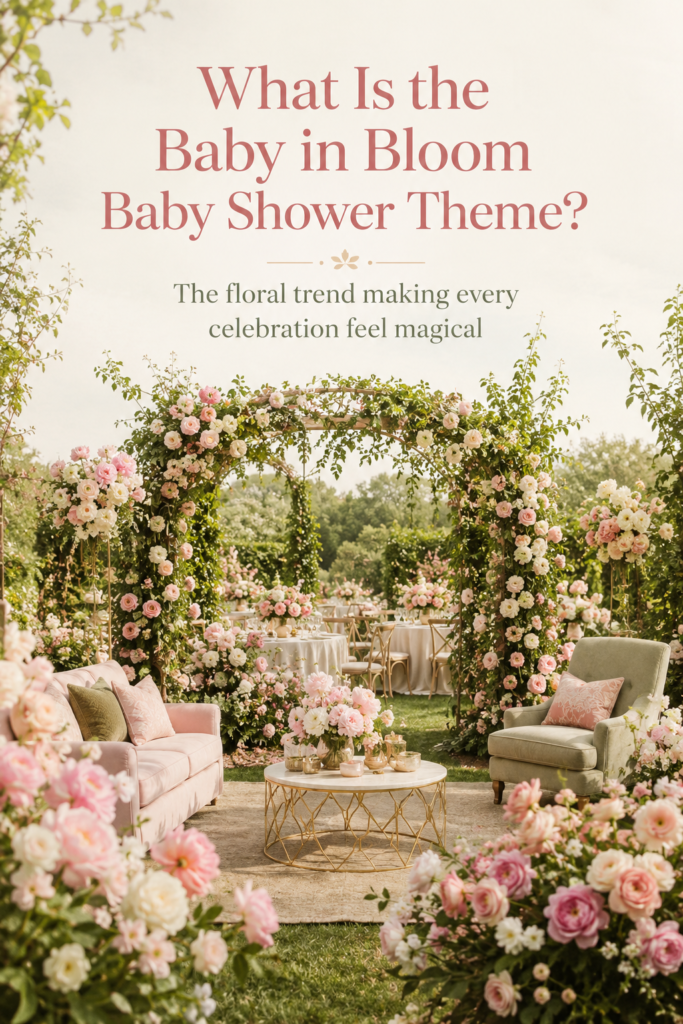
What Is the Baby in Bloom Baby Shower Theme?
Baby in Bloom · 2026
What Is the Baby in Bloom Baby Shower Theme?
A closer look at the aesthetic behind one of the most-loved baby shower themes of the year — where it comes from, what actually defines it, and how to get the look right.
“Baby in bloom” gets used loosely across Pinterest to describe almost any shower with flowers in it, but the actual theme is more specific and more considered than that. This guide goes deeper into the aesthetic itself — the story behind it, the visual elements that genuinely define it, and how it differs from a generic floral or garden party shower. If you’re looking for the full roundup of palettes, decor, food and games, start with Baby in Bloom Baby Shower Ideas: The Ultimate Guide. This article is for understanding the look itself, and getting it right.
A flower in bloom is not finished — it is in the middle of becoming. That, more than any single color or petal, is the whole idea this theme is named for.
Section 01
The Story Behind the Baby in Bloom Trend
The phrase “baby in bloom” has been climbing Pinterest search volume steadily because it solves a problem a lot of other baby shower themes don’t: it gives hosts a genuine concept to design around, rather than just a color scheme. “Blooming” is doing real work in that phrase — it is a metaphor for the baby’s growth, for the nine months that led to this celebration, and for the gentle, unfolding nature of new life itself. A flower in bloom is caught at its most alive moment, not yet fully open, still becoming what it will be. That is a remarkably exact metaphor for a baby on the way, which is part of why the phrase has resonated so widely rather than fading as a passing aesthetic trend.
It also resonates with how a lot of modern parents-to-be want their shower to feel: warm and personal rather than themed in the more literal, character-driven sense that dominated baby shower planning a decade ago. “Baby in bloom” doesn’t require a mascot, a cartoon, or a nursery-matched color story — it asks for restraint, softness, and genuine botanical detail instead. That shift toward quieter, more editorial styling shows up across modern event planning generally, and this theme captures it particularly well because the floral metaphor gives hosts permission to keep things simple without the shower feeling under-decorated.
Section 02
The Core Elements That Define the Look
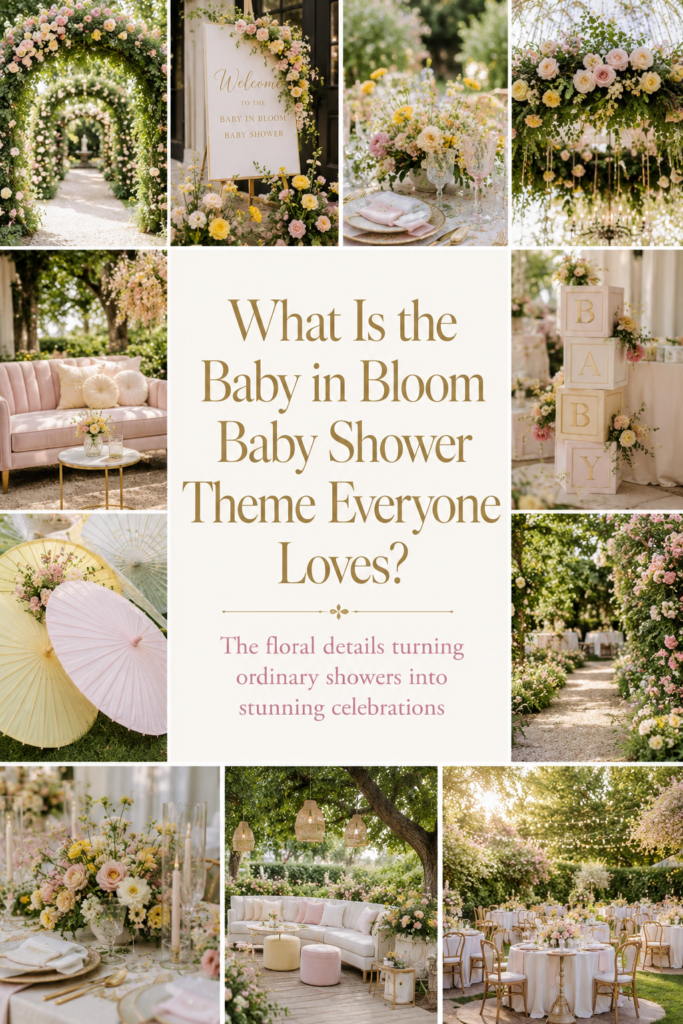
Soft floral motifs are the obvious starting point, but the specific quality that separates a genuine baby in bloom look from a generic floral one is restraint in how those motifs are used: a single trailing stem rather than an overcrowded bouquet of every flower available, blooms shown at different stages of opening rather than uniformly perfect, and plenty of breathing room around each motif rather than wall-to-wall pattern. The flowers are doing narrative work, not just decorative work — each one is meant to read as a small echo of the baby’s own growth, which only works if there’s space around it to actually notice.
Botanical textures — visible paper grain, watercolor bleed at the edge of a petal, the soft imperfection of a hand-painted stem rather than a perfectly vectorized clip-art flower — are what keep the look from feeling mass-produced. This is a textural theme as much as a color theme: the same blush rose printed with crisp, flat digital edges reads as a different, much less considered aesthetic than the identical rose rendered with visible brushwork and soft tonal variation.
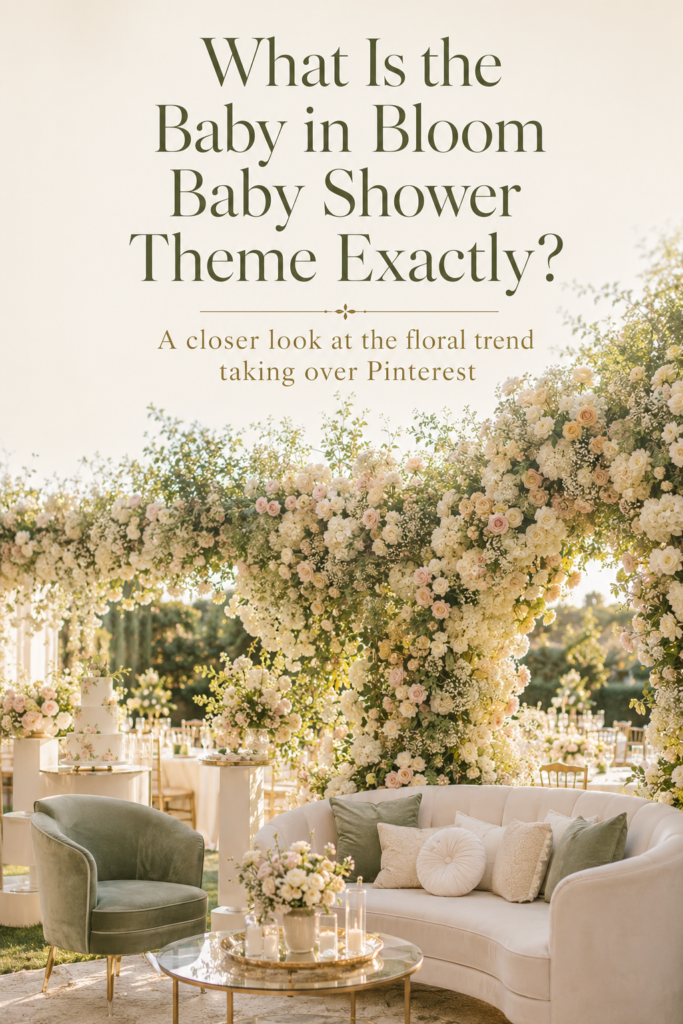
Refined typography completes the look, and it matters more than most hosts initially expect. A delicate serif or a soft, slightly irregular script reads as considered and grown-up; a rounded, bubbly, overtly “cute” typeface pulls the whole aesthetic back toward generic nursery territory, even if the florals around it are otherwise perfect. The theme is pastel-forward but it is not childish — the palette is soft, but the overall styling is closer to a garden wedding invitation than to a children’s birthday party, and the typography is usually where that distinction is made or lost.
Section 03
Baby in Bloom vs. Other Floral Themes
A generic “floral” baby shower theme is really just a color and pattern choice — flowers because flowers are pretty, applied to invitations and decor the same way any other pattern might be. A “garden party” theme leans further into setting and activity: an outdoor venue, a tea-party format, string lights, the atmosphere of the event itself rather than any specific symbolism in the florals chosen. Baby in bloom is neither of these, exactly. It keeps the visual softness of a floral theme and some of the atmosphere of a garden party, but it adds something both of those lack: a direct, explicit narrative link between the flowers and the baby’s own growth.
In practice, this shows up in small but real ways: language on the invitation that uses “bloom,” “blossom” or “growing” rather than generic shower phrasing; florals shown at a specific stage of opening rather than fully bloomed, gesturing at something still becoming; and a more restrained, editorial styling overall, since the theme is built around a tender metaphor rather than around maximal floral abundance for its own sake. A generic floral shower can use any flower in any combination. A baby in bloom shower is choosing its florals, its wording, and its pacing specifically to echo the idea of a life just beginning to unfold.
Section 04
Making the Look Your Own: Palette Directions
The core aesthetic described above holds steady across four genuinely distinct palette directions — a quick recap here, with the full breakdown available in the pillar guide linked above.
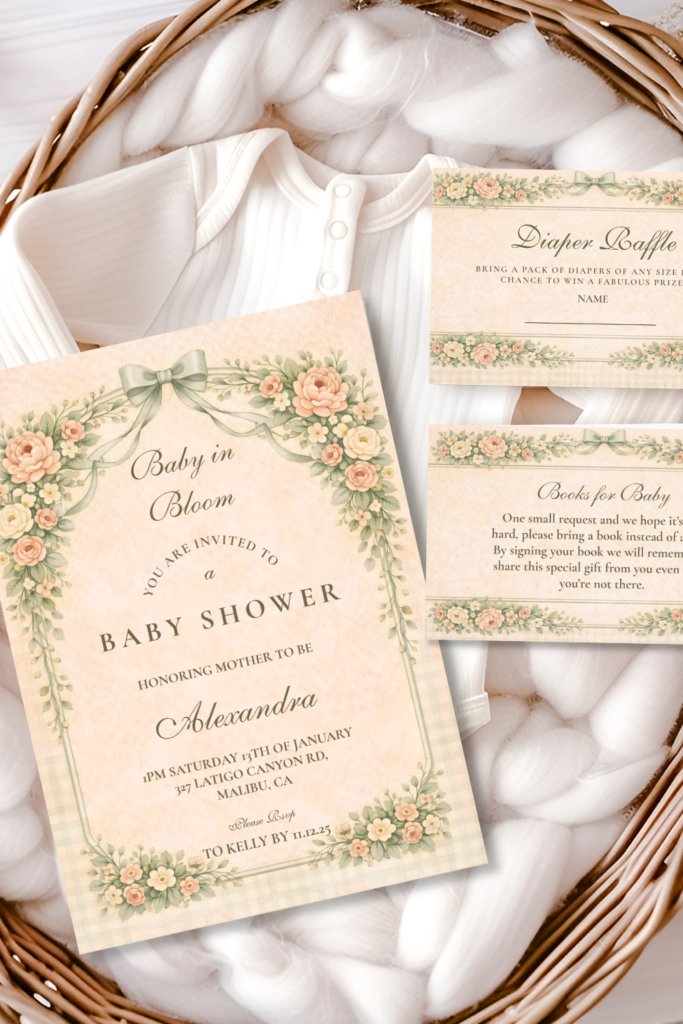
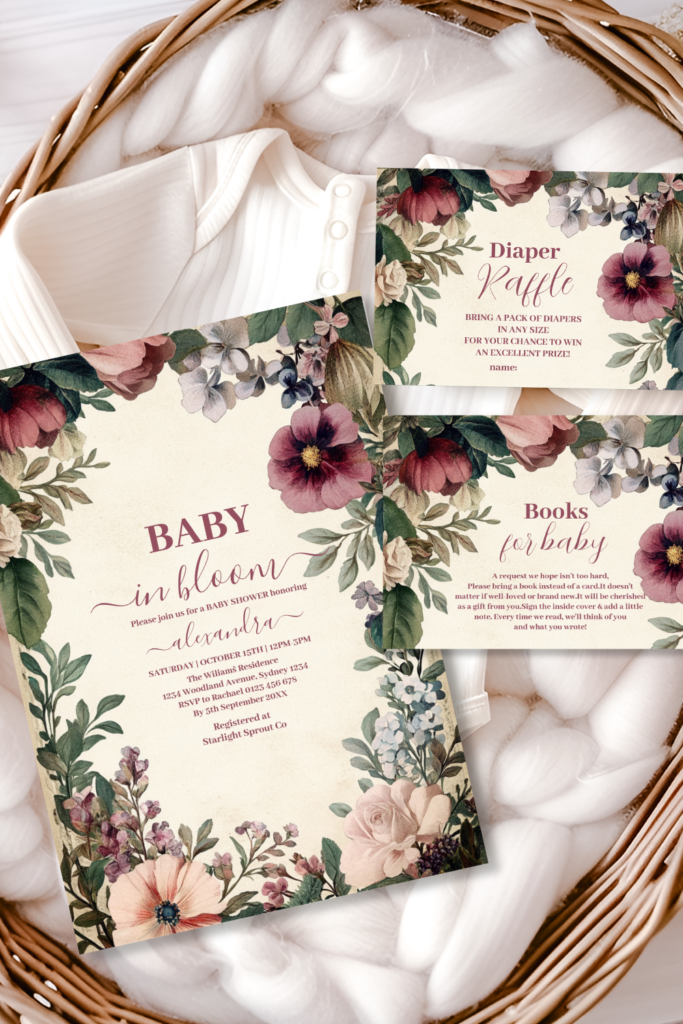
Blush & Sage
Soft pink roses against muted sage — the most classic, romantic direction.
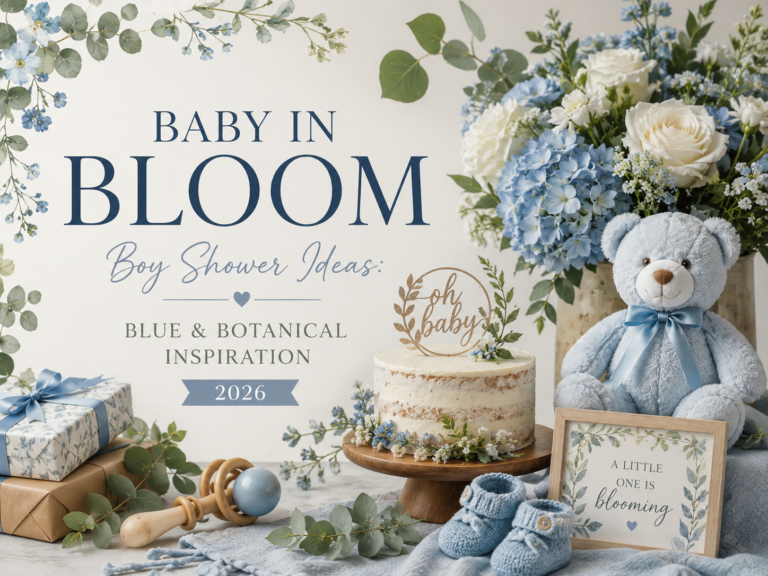
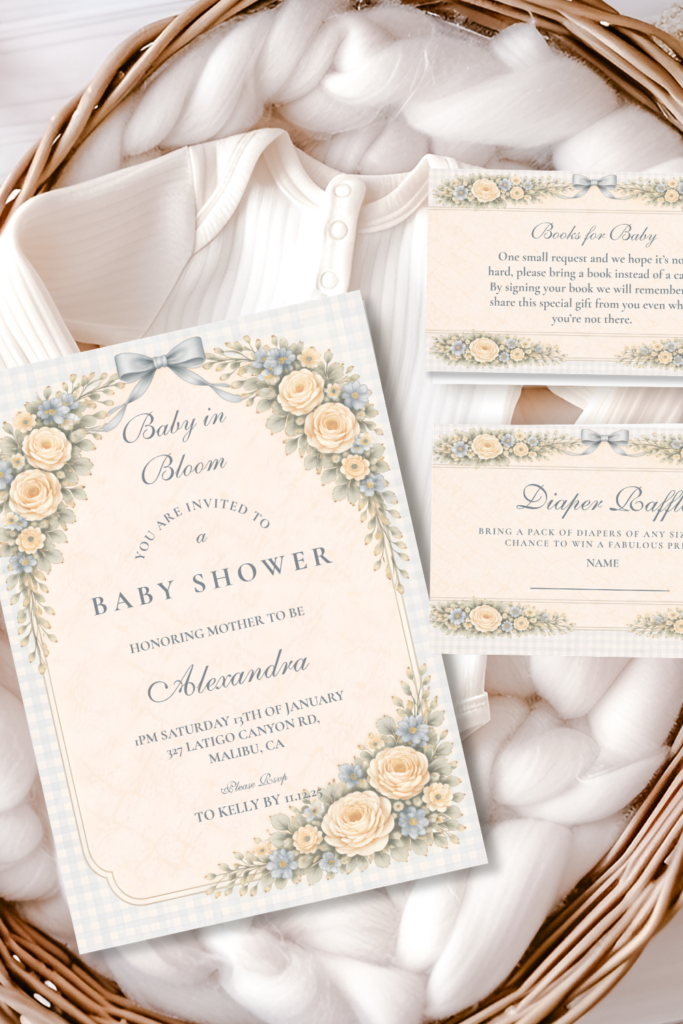
Dusty Blue
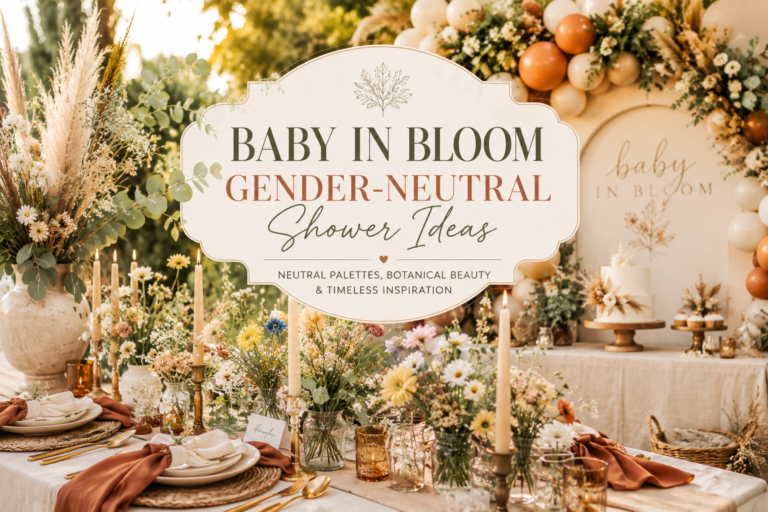
Cooler blue blooms with the same gentle abundance — ideal for a boy or neutral shower.
Wildflower Meadow
Multicolor, just-picked, whimsical — the brightest of the four directions.
Section 05
Styling Tips to Get the Aesthetic Right
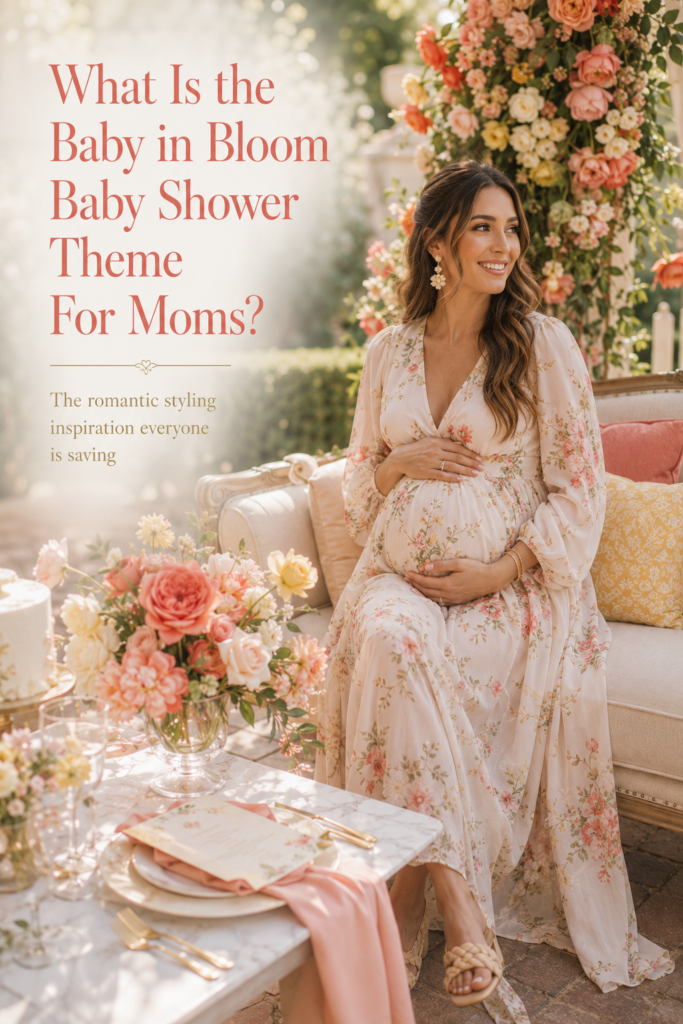
Real florals, where the budget allows, will always read more genuinely “in bloom” than faux ones, simply because real flowers are actually mid-process — opening, slightly imperfect, alive in a way that silk or paper flowers can’t quite fake. If faux florals are the practical choice, look specifically for varieties with visible texture and irregular petal placement rather than the flattest, most uniform options, and mix in real greenery where possible, since foliage is usually easier to source affordably and adds a layer of genuine texture that faux blooms alone can’t provide.
Mixing metallics is one of the fastest ways to elevate the look without much extra cost: a single warm gold thread — in the stationery’s typography, a candle holder, the rim of a dessert plate — carried consistently across the room does more for the aesthetic than scattering several different metal tones (gold, silver, rose gold) inconsistently throughout. Pick one warm metallic and repeat it; resist the temptation to use every metallic finish available just because each one looks nice individually.
Paper texture matters more than most hosts expect when choosing invitations: a matte or lightly textured stock reads as considerably more refined than a high-gloss finish, and it photographs better in the kind of soft, natural-light flat lay this theme tends to generate on social media. Pair it with the restrained typography described in Section 02 — a delicate serif or soft script rather than anything rounded or playful — and the printed pieces alone will go a long way toward establishing the right tone before a single flower has been arranged.
What to avoid: clip-art-style florals with hard, uniform edges; bright, saturated party colors layered on top of the pastel palette (balloons and paper goods are the most common offenders); and overcrowding every surface with pattern, which flattens the “still becoming” quality that makes the theme distinctive in the first place. The aesthetic depends on restraint as much as it depends on flowers — a few well-chosen botanical moments with real breathing room around them will always look more like “baby in bloom” than a room covered edge to edge in florals.
Section 06
Invitations & Stationery
Because the baby in bloom aesthetic depends so heavily on texture and restraint — the visible brushwork, the breathing room around each motif, the right typography — the invitation is where the theme either gets established correctly or doesn’t. It is, for most guests, the very first piece of the celebration they encounter, well before any flower has actually been arranged in the room, and everything described in Sections 02 and 05 above needs to be visible in that single printed piece for the rest of the theme to land the way it’s meant to.
A genuinely well-designed baby in bloom invitation shows florals at a specific, slightly unfinished stage of opening rather than full bloom, uses the soft watercolor or hand-painted texture described above rather than flat vector art, and pairs that botanical illustration with a refined, restrained typeface. Wording that leans into “blooming,” “growing” or similar language — rather than generic shower phrasing — reinforces the theme’s actual narrative rather than just its color palette, which is the distinction covered in Section 03 above.
Matching your stationery to one of the four palette directions in Section 04 — rather than choosing it independently of the rest of your planning — means every printed piece a guest touches belongs to the same considered visual world as the table, the favors, and everything else in the room. All six collections below are fully customizable with the parents’ names, date, and shower details.
Shop the Collections
Six Baby in Bloom Stationery Collections
Baby in Bloom
The complete collection — every palette and style within the broader theme in one place.

Blush Sage Rose Arch Baby Shower
Soft blush roses against muted sage greenery — the most classic and romantic direction.
Dusty Blue Rose Arch Baby Shower
Cooler dusty blue blooms with the same soft botanical abundance — ideal for a boy or gender-neutral shower.
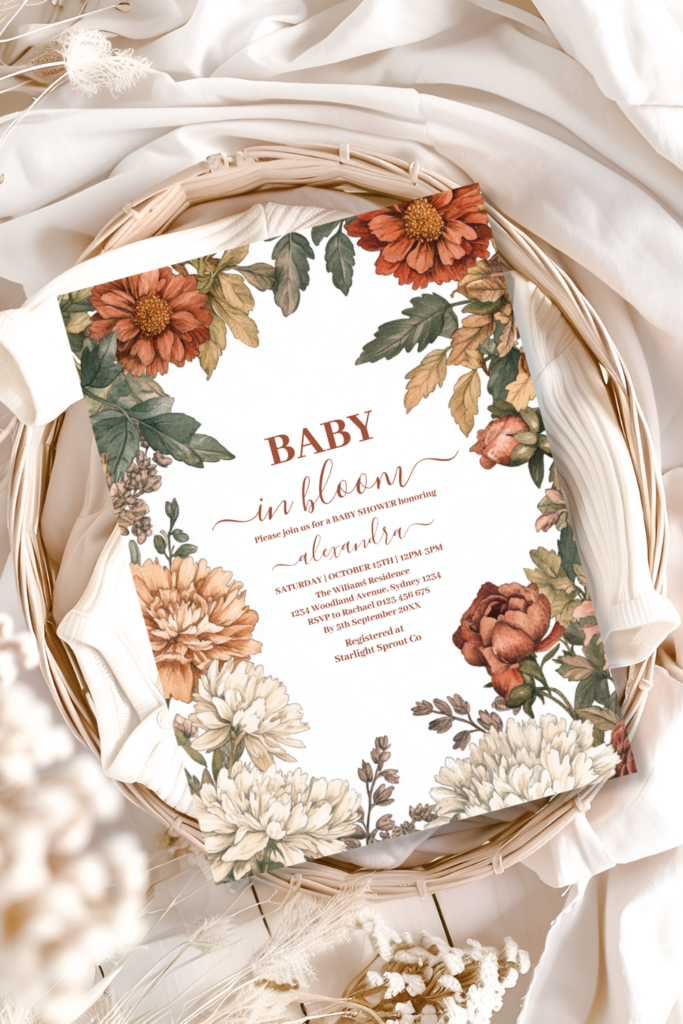
Terracotta Floral Baby in Bloom Shower
Warm terracotta and burnt orange tones against deep green — earthy and beautifully grounded.
Baby in Bloom Spring Wildflower
A true meadow-picked mix of wildflower brights — whimsical, multicolor, full of gathered charm.
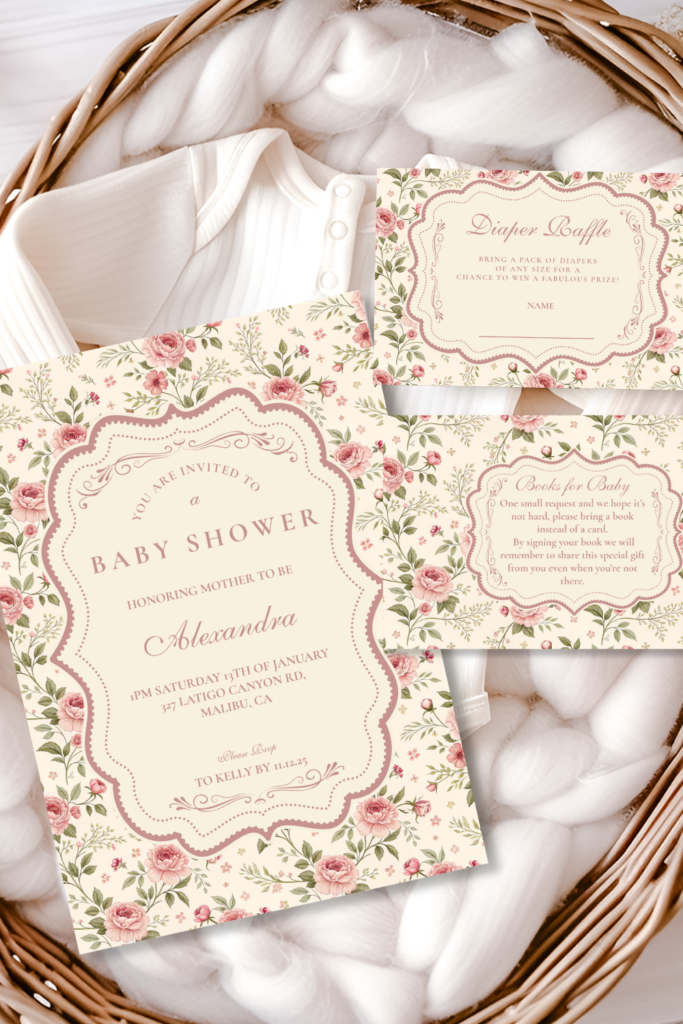
Soft Blush Floral Heirloom Baby Shower
A gentler, heirloom-inspired take on blush florals — timeless botanical illustration with vintage warmth.
Frequently Asked Questions
Common Questions
What colors are used in a baby in bloom theme?
There’s no single fixed palette — that’s part of what makes the theme flexible. The most common directions are soft blush pink with sage green, dusty blue with the same gentle greenery, warm terracotta and burnt orange for an earthier feel, and multicolor wildflower brights for a more whimsical take. A single warm metallic, usually gold, is typically carried through all of them as a connecting thread regardless of which palette direction is chosen.
Is baby in bloom a gender-neutral theme?
It can be, and that’s one of its strengths — the underlying florals-and-growth concept doesn’t belong to any one gender. Sage, cream and warm gold (pulled from any of the palette directions) work beautifully on their own for a neutral or surprise shower, and the Terracotta direction in particular reads as genuinely neutral rather than as a compromise between traditional pink and blue. The theme is just as easily styled toward a clearly girl or boy direction when that’s what the host wants instead.
How is this different from a regular floral baby shower theme?
A generic floral theme uses flowers as a pattern choice. Baby in bloom uses flowers as a direct metaphor for the baby’s growth — shown at a stage of opening rather than full bloom, paired with language like “blooming” or “growing” on the invitation, and styled with more restraint and breathing room than a maximal floral pattern would allow. The visual softness is similar; the underlying concept and the styling discipline behind it are what set the two apart, as covered in Section 03 above.
What flowers are typically featured?
Garden roses and ranunculus appear most often in the blush and sage direction; wildflowers and loose sprigs of greenery dominate the spring wildflower palette; and dusty blue blooms with the same soft greenery carry the cooler direction. Across every palette, the flowers are usually shown at a stage just before full bloom rather than fully opened — a small but deliberate detail that reinforces the “still becoming” idea the whole theme is built around.
Baby in Bloom · 2026
Bring the Aesthetic to Life
Fully customizable soft floral stationery — add the parents’ names, date and shower details online.